In 2025, china surpassed 300 million people aged 60 years and over. A stronger figure is that nearly 170 million of them have no pension. This means that almost three of every five elderly people are old and cannot count on the fixed monthly “life-saving money”。
When society as a whole is anxious about the pension gap, an article entitled " late years without a pension, on the basis of which there is no basis for living " , presents a near “unusual” view: money, perhaps not the only answer to happiness in later years. The true bottom is hidden in three things that are simpler and more difficult to assess。
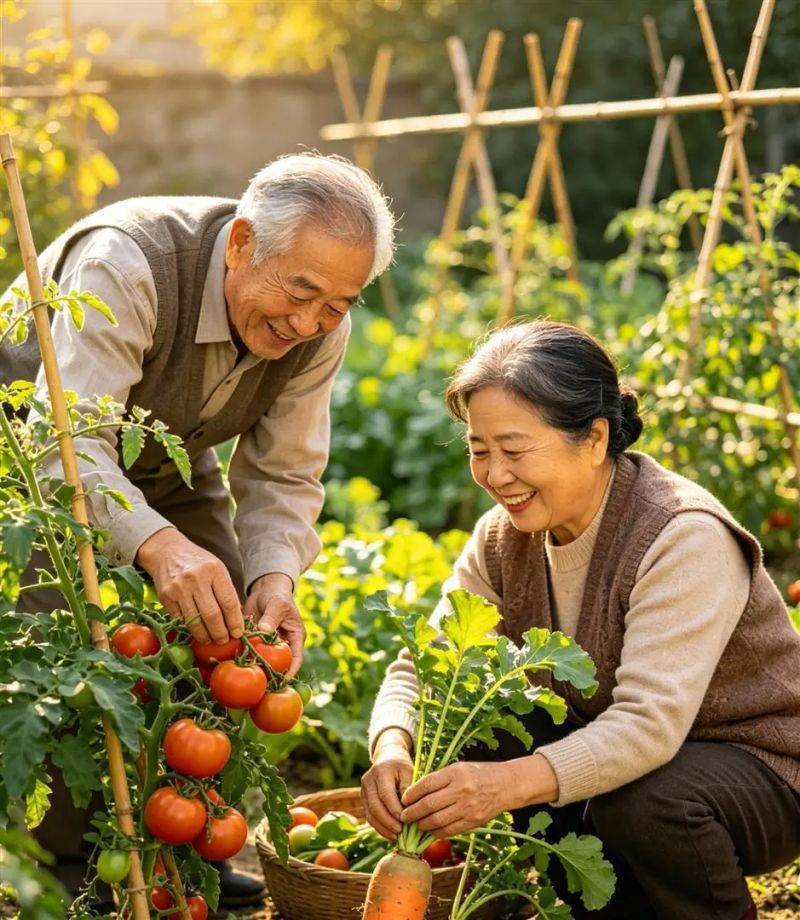
Does that sound like a bowl of chicken soup? But more and more research and real stories are revealing that some of the values of wealth in the second half of life are well above the figures in bank accounts。
Healthy body, your hardest real estate
Community pensioners have seen too many contrasts: millions of elderly people are depressed because they are not talking, while 3,000 old people with pensions are glamorous because they are hard and friends. The hu yun report shows that among the “most desired things” of the high net value population, “health” has been at the top of the list for many years, and its importance exceeds even “money”。
According to one study, in the group of older persons over 80 years of age, healthy people are 47 per cent more happy than those with savings of over $1 million but poor health. This is a direct challenge to the general perception that money is enough to live in old age. The tracking data of the united states national bureau of economic research provide a longer-term perspective: people who focus on health management from age 40 to age 65 spend 42 per cent on average less on health than their peers。
For older persons, the definition of health may need to be updated. A 20-year study by chinese scholars found that older persons over 80 years of age who are overweight or overweight may be the most conducive to a long and healthy life. The risk of death and of self-incapacity in everyday life is reduced by about 20 per cent compared to the risk of overweight and mild obesity between 24. 0 and 31. 9。
This is not an incentive to ill health, but a reminder that for older persons, maintaining adequate nutrition and muscle mass is more important than simply pursuing “skinned old”. The research teams of beijing university and the china centers for disease control and control have found, through a follow-up visit to nearly half a million people for more than a decade, that the persistence of five lifestyles, such as non-smoking, healthy diets and active sports, can reduce the risk of all deaths by 62 per cent。
More critically, health brings not only the length of life but also the quality of life. In 2025, the beijing university team published a study on " the lancet - public health " , tracking nearly 12,000 older persons for 13 years. They found that, when a healthy lifestyle is combined with a good social environment, the longevity of older persons can be increased by almost four years. The freedom and dignity of being able to eat, dress and walk on its own will not be bought for much。
A companion with each other is the most advanced health product
Teenage couple. The power behind this sentence goes beyond emotional comfort. A study conducted in 2025 by the university of economics and economics of sino-south china clearly indicated that the cognitive capacity of spouses to care for the elderly has a significant positive effect. This care improves the functioning of the brain through emotional support, self-aware and personalized care。
The study also compares the effects of different forms of care and finds that the positive impact on cognitive functions is ranked as greater than institutional care and greater than community care. In other words, a reminder from a pillowman, a stubble, may be more effective than a professional nurse. Another study based on data on the health of older persons in china also confirmed that “older companions” can reduce the burden of health care for older persons and that this protective role increases as the health of older persons increases。
The magic of such company is even reflected in the synchronization of biological indicators. A study by the university of california, davis, tracked 321 older couples and found an interesting phenomenon: when the old two are together, the time for true synchronization of joy and relaxation is only 38 per cent of the time spent together. But it is precisely these modest “symmetrical moments” that can significantly reduce the levels of stress hormone cortex in both sides and have effects lasting for hours。
Quality accompanying is far more important than long periods of “physical coexistence”. The “indicator of joint activities for the elderly” presented by the northern group found that, for every 10 points added to the day-to-day business of buying together vegetables and folding clothes, the depression rate of the couple can be reduced by three points each, and the rate of cognitive decline can be reduced by about 1. 8 years. The core lies not in how ambitious the activities are, but in the “common” state。
A demographic survey conducted by the ministry of health, welfare and welfare of japan shows that women live an average of five years longer and men 12 years older than divorced or widowed couples who are in good health and who often have physical contact. A hug, a hand holding, in the eyes of young people, is a “hidden prescription” for the activation of oxytocin and stress hormones in older couples。
A happy mind is a "regulating valve" for happiness
We often believe that it is better to have more. But psychology gives another formula: happiness equals reality minus expectations. When a person is “satisfying”, he has taken the initiative to lower “expecteds” psychologically or to increase the assessment of “realistic” satisfaction. This cognitive adjustment increases the margin of “realistic-desired” and creates a higher sense of satisfaction。
Research at brandis university in the united states found that older persons are more concerned with positive things in life than young people. When images appear in pairs, older people observe images of happiness for a significantly longer time. Another study also noted that while older persons are more likely to be distracted by gender-neutral irritation, they are less likely to be distracted by negative emotions than by unhappiness。
This “fatal pleasure” is not a passivity, but a knowledge and wisdom after the end. It is essentially a very advanced cognitive strategy and emotional reconciliation mechanism. People who are able to be content with normality usually have two types of mental abilities: to compare downwards, to focus on those who are less well off than they are; and to withdraw from comparison, to shift the evaluation criteria from “what others have” to “what i need”。
A long-term study by the university college of london, targeting 9365 participants over 50 years of age, provides strong evidence of “fascility”. The study found that the continued enjoyment of life in old age and the reduction of individual mortality were directly related. Compared to the non-happiness group, participants reporting two types of happiness decreased their mortality rate by 17 per cent; participants reporting three types of happiness decreased their mortality rate by 24 per cent。
A follow-up study by nanjing university, targeting older groups, found that the risk of depression was reduced by 47 per cent among those who continued to engage in interest activities. Whether they are aunts of the calligraphy classes in the community or masters who ride around ancient villages, their happiness stems from a focus on the “self-growing rhythm”. When learning to cut life with a good pair of scissors, and no longer anxious for “what to live for”, everyone can find beauty and stretching in their own place and place。
So when we're worried about a pension that may not be generous, maybe we can stop and see if we're still strong enough to go to the market and pick fresh vegetables. Is there another person around you who can walk with you in the sunset for dinner with noodles or rice? Is there any satisfaction that a bowl of hot porridge and a flower on the window table will open in the morning
If the answer to happiness in old age is really not in that thin bank, then when should our societies and individuals invest in these three truly important “life assets”