We're in the service economy
Our economy began in 2008 with a steady slowdown in growth. There are many analyses of the causes of this trend, such as macroeconomic factors, factors that have lost the demographic dividend, factors that are less capable of science, technology and innovation, factors that are not conducive to the international environment, etc. There is some explanation for all this。
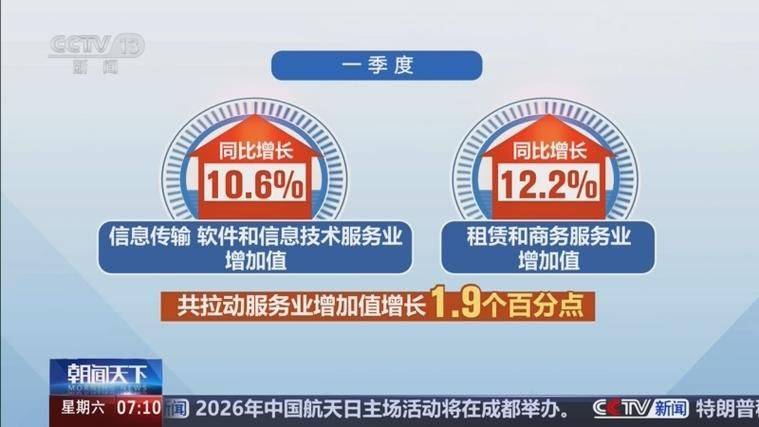
But i think that the more fundamental and weighting factors are the structural changes in the economy, i. E. The rise in the share of services. From the point of view of its share of GDP, since 2012 services have become the largest sector in our economy, with more than 50 per cent of services and more than 60 per cent of employment in services since 2015. In accordance with the common division, we have entered the age of the service economy。
From international experience, when an economy enters the service economy, the pattern of economic growth is essentially a trumpet, with the share of services moving up and down at the economic pace. Moreover, this trend will continue until the share of services is relatively stable and, in contrast, the downward trend in speed will cease。
This pattern is determined by the nature of the service sector. Compared with the upgrading of manufacturing technologies, which has been increasing labour productivity over the years, services are characterized by people-to-people, simultaneous and individualized delivery of services, which makes it difficult to use efficient equipment, so their labour productivity is increasing slowly and even stagnant for a considerable period of time。

For example, education services, medical services, performance services, domestic service, catering services, security services, government services, etc., human capital is the main supply factor, without the use of efficient machinery and equipment, and without economies of scale, thus maintaining a constant level of labour productivity over the long term. There are similar manifestations in productive services such as design services, financial services and business services。
Thus, when the share of services in an economy increases, the efficiency of allocation of total social resources decreases, leading to a decline in growth. It is assumed that the chinese economy will be in a relatively low and declining period of growth for a long time。
Network and digital technology-enabled services economies of scale are significant
But we are fortunate that the age of networking and digital technology has entered a service-based development phase. We can look forward to moving beyond the vanguard model with better growth performance. Networking and digitally supported services have been characterized by significant economies of scale, which stem from the high initial and marginal costs of many network services, especially in replicable cultural and information-based services, which have already exceeded the inefficiency of services。
For example, live performances, a band with hundreds of listeners has remained unchanged for over a century. One of the songs on the network can now reach hundreds of millions or even hundreds of millions of listeners, and the cost of producing it is the same, and the marginal cost of increasing the audience is extremely low。
Moreover, for more than 100 years of modern school education, the ratio of students to teachers, i. E., the average number of students taught by a teacher, has not increased, but is declining in many countries, such as universities, where the ratio is between 12:1 and 14:1. There are now a lot of students who can be taught by a teacher on the internet, and the university of qinghua now has about 280 troupes, with more than 8 million students, one teacher can teach more than 30,000 students and the largest one can have 960,000 students。
In the case of retail services, a large bookstore can have up to 100,000 books, and therefore very few books that are too small and too old to be a “cold door” are placed, but the internet bookstore is completely exempt from this restriction. Such services are even more efficient than manufacturing, a fundamental change。
In addition to making changes in services, networks and digital technologies have also brought qualitative upgrades to manufacturing, and networks and digital technologies are efficient connecting technologies that allow for a good integration of services and manufacturing. The service content, numerical content and value added contained in the present manufactures were completely unparalleled. The internet of goods, artificial intelligence, robotics and so on are industries with a high degree of integration, rapid growth and value added in manufacturing and services。
In a number of industries with the greatest prospects for future development, manufacturing and service integration will be in the majority. My country is a major manufacturing power, with the development of network technology, digital technology, ai technology, etc., which has created very favourable conditions and opportunities for the manufacturing industry to take a new step forward, from big to strong, large and strong。
We have special advantages in developing services

We also have special advantages in developing services in this era. First, china has the largest population, has very low marginal costs for cyberspace services, has a large number of users, has a large flow, has significant economies of scale and, in any case, has great advantages. In my country, many small, regional projects are profitable. One product, one in a thousand of our population is interested in the size of the market for more than 1 million people, and no country has such conditions. This feature also underpins the convergence of economies of scale with competitiveness and diversification: multiple enterprises in an industry can meet the requirements of economies of scale, grow through competition and provide consumers with diversification options。
Secondly, the technological development of our network applications and the chinese love it, or the high penetration rate of the network, and the fact that our average internet time is among the third highest in the world, combined with our huge population, make no one's total internet access time comparable to that of our internet-related industry, which has brought great advantages to the development of our internet-related industry。
Thirdly, we have the world's largest manufacturing industry, which is the market for productive network services, and where there are huge manufacturing industries, it is possible for producer services based on networks and digital technologies to be more disaggregated and efficient. In particular, knowledge-intensive services, a significant proportion of which can be leveraged by information technology to bring together resources from all over the world and are made available remotely to manufacturing enterprises throughout the country and even around the world, such as r & d, design, supply chain management, software and systems integration services, can be decentralized in different locations, while at the same time increasing their specialization and efficiency through instantaneous networking and synchronization。
Technology has also enhanced the global competitiveness of our industries. The advantages and characteristics of our country in terms of population, size of economies, internet technology, innovation in business models, mobile end-of-life coverage, and the support that many industries rely on domestic market development at the initial stage, allow us to achieve both size and competitive advantages, foster high-maturity industries and develop stronger global competitiveness, moving from a market of billions to billions of people。
In short, we believe that services that rely on networks and digital technologies are fundamentally different from traditional services, and that services and the economy as a whole are expected to change. We should vigorously promote technological development and innovation in business models and maintain reasonable optimism about our long-term development。