Today is the first anniversary of zhou gwang's passing. Time travels, and he pursues truth and innovation on the path of scientific research, with courage and courage in the face of difficulties, as well as with respect to the state of his country and his selfless dedication, continuing to light up the path of scientific exploration for generations of scientists。
Zhou guangcheng, a well-known theoretical physicist and particle physicist in our country, was elected chairman of the fifth and sixth national committees of the chinese association for science and technology in may 1996 and june 2001, was awarded the honorary president of the chinese association for science and technology in may 2006 and was awarded the “two-shot one-star medal” in 1999。
In particular, we have produced the chairman's book, " intellectualization, globalization, the two main features of the age of the knowledge economy " , revisiting his deep thoughts and unique insights and deeply remembering the noble ethos of this scientific giant
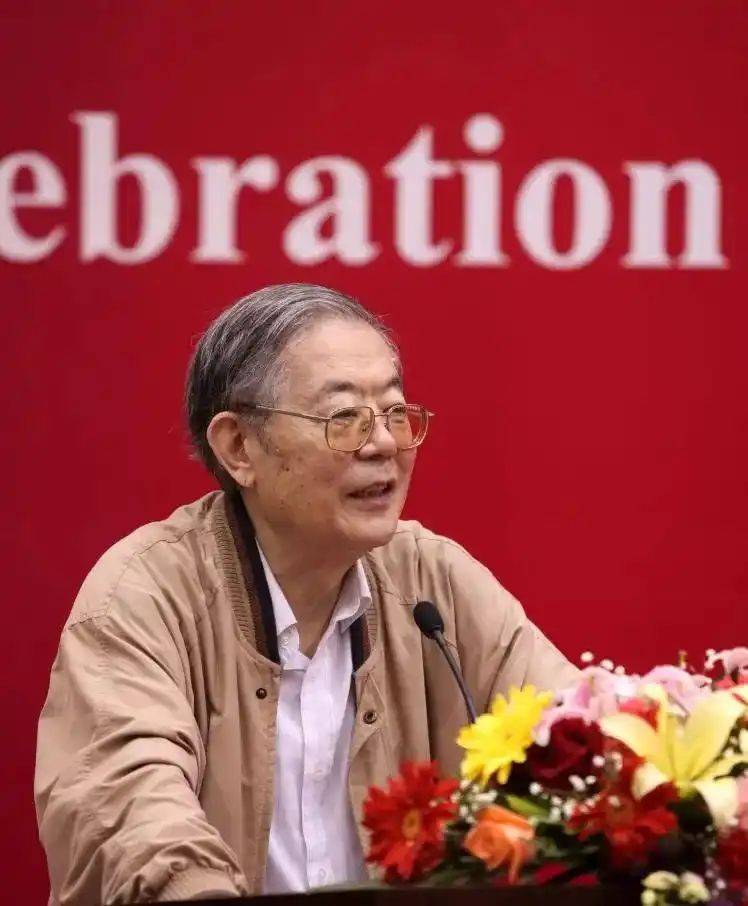
On 9 june 2008, the institute of physics of the chinese academy of sciences was established for the eighth anniversary. This is zhou guangcheng calling on comrades to address the general assembly. Source: xinhua
The age of knowledge economy
Two major features are knowledge-based, globalization
(9 july 1998)
The knowledge-based economy of human society is coming. The era is characterized by two main characteristics: globalization and intellectualization, which are important for the future development of china. In terms of knowledge, since the 1960s, new and emerging industries, such as microelectronics, computers and communications, have developed rapidly, leading to a digital, networked, intelligent and integrated economy that has generated not only the information industry, but has also had an enormous impact on all aspects of the economy, from industrial and agricultural to the way of working. The trend towards intellectualization is under way and will grow even further in the next century。
The trend towards intellectualization is of great significance for our economic development. Of the value created by all products and services, the knowledge content will become more and more important. In the past, the value created by the use of raw materials and the use of mechanical processes will be less and less; in the future, greater value will be created with fewer materials and less energy consumption, as higher knowledge levels are injected。
We anticipate an increasingly important role for knowledge in economic development in the next century. My country has set a strategic objective of attaining a level of per capita gross domestic product (GDP) in the middle-developed countries, and it is difficult to achieve this by increasing production and scaling up in a situation where materials and energy are scarce, like our steel production, which is already among the highest in the world, and it is inconceivable to increase production only by increasing production. The increase in the value of each product depends on the increase in the value of each product and the increase in the knowledge content. It is therefore very timely and important to present the knowledge economy in our country。
Turn your attention to talent building. Let's go
The age of the knowledge economy offers us new opportunities and challenges. We now see that, while the world war cannot be fought, economic wars are already taking place and will intensify, and the financial crisis in south-east asia is an economic war. Competition in globalized markets has increased as a result of the major restructuring of industries worldwide. The survival and development of a country cannot be separated from its economic, scientific and cultural competitiveness. In the past, we attached great importance to political and military competitiveness. And now and in the future, it is more important to increase the combined power of the state, encompassing the economy, science and technology and culture。
In the wave of globalization, capital, technology and talent are moving rapidly, and a country, a people, must have its own competitiveness and its own unique culture to take its place. For our country, with a large population, relatively poor resources, relatively backward economies and technologies, low educational and cultural qualifications, and the challenges of the knowledge economy, we must step up our efforts to quickly transform negative factors into positive ones。
Science and technology culture is mastered by people, and more knowledge is likely to be acquired by people. Our country has a lot of good and, at least, potential talent, and we should now shift our attention from building specific projects to building talent. We need to build a pool of highly qualified and innovative people who can apply innovation to economic and social causes, including managerial talent, scientific and technological development and research at the forefront of science. Building a high-quality workforce will ensure that china's economy is knowledgeable and i am the main player in catching up。
Enhancing national cultural cohesion
Building scientific and technological talent is important, and i think it is also important to build a national culture. Without a national culture, talent cannot be brought together. If talent could not be brought together, it would be rapidly lost in the current era of rapid brain circulation。
Thus, the development of talent is not only about the high quality of the individual, but also requires the formation of teams of talent and a collective of talent as a powerful force representing the chinese nation in international competition。
In the age of the knowledge economy, society is open and knowledge is shared. The openness of society is important and must be built on by learning the best knowledge in the world to accelerate development. If it's closed, it's gonna be slow. At the same time as increasing social openness, building a national culture that has its own value orientation, and distinguishing between what is good and what is bad in a foreign culture, the good should quickly be absorbed and what is bad should be discarded. What we fear most now is that in the process of opening up, the good do not learn much, but the bad do learn much. This is not possible by blocking alone. It must lead to the right, upward, national and strong value orientation。
We need to be innovative and capable, not only in science and technology, but also in culture, in management and in the opening of markets. Only through continuous innovation can our countries and peoples embark on a unique path to catch up with advanced developments in the next century。
In this age of knowledge-based economies, there is no way to introduce and imitate them, and they will not follow them when they reach a certain level. In short, more attention needs to be paid to the innovative capacity of the talent group, drawing more on the outstanding technological and cultural achievements of the outside world, but focusing on me to fully utilize my own innovative capacity。
Ten to 15 years of continuous struggle
In seizing the opportunities created by the age of the knowledge-based economy and meeting the challenges of the new era, we need a long-term perspective, without short-term approaches and visions that are ambitious. Developing talent and developing a knowledge-based economy requires a sound social environment that is guided by the right policies, sustained and active. It takes 5 to 10, 10 to 15 years to achieve results. If short-term practices that take effect within one or two years are not to be expected, then, as in the previous period, there will be repeated construction and bubble-based economic seedlings, which are the product of a rush to deliver. Moreover, it will take some time to build a culture of excellence, and there is a lack of a serious scientific spirit and attitude in society to pretend to be bad. It is difficult to enter the knowledge-based economy if this climate does not change。
The characteristics of the knowledge economy are already clear from the development of the knowledge industry, beginning with a high level of knowledge, a low consumption of materials and energy, and a rapid rate of renewal, such as the semi-annual updating of computers. The development of the knowledge industry has stimulated and helped other industries to move forward at a faster pace than before. In the past, large-scale production of simple models was used to meet demand, and after entering the knowledge economy era, the intellectualization of industrial products increased, and more knowledge technology was injected into them, and the individualized needs of different populations were better served。
There have also been significant changes in management and the introduction of networked management. In the past, vertical management has gradually changed, vertical levels have decreased, horizontal linkages have increased and parallel approaches have taken place。
Thus, the advent of the knowledge-based economy has led to changes in the way of production to the way of management, in so many aspects of society。
We need to reflect
Faced with the age of the knowledge-based economy, it is of paramount importance for chinese scientists to be able to produce truly innovative results in the scientific frontier of the world, as well as results that underpin the nation's industrial development and the ownership of intellectual property rights by chinese。
The chinese are supposed to be smart, but why are some smart people showing their higher creative talents on foreign soil? Now on chinese soil, mainly based on imitation and follow-up, this is an issue that deserves special consideration and reflection. I believe that it needs to be explored and improved in terms of educational methods, ideas, the social environment and academic air. It is crucial that chinese people grow up on their own national soil, emerge and develop their creative talents. It is often said that the brain drain in china is due to the need for adequate nutrients and a good environment, which, if not created, could result in the loss of good talent. A japanese scientist from the united states said that he would not be able to win the nobel prize if he remained in japan. His words deserve thought。
The environment is multifaceted, with different requirements for research units, schools and factories. For scientists, the material requirements are the best possible equipment and a better life; they are open to the outside world, with conditions for continuous exchange and discussion with international counterparts, with a liberal environment, and with different disciplines and perspectives freely discussed and debated. This liberal academic environment is based on scientific spirit and ethics. It was also important to emphasize the scientific spirit and ethics of science, and there could be no new development in science without the scientific spirit and observance of the science ethics themselves。
At the forefront of international science
There is a worldwide competition for talent and knowledge, both for talent and for the right to intellectual invention, including the formation of patents and even norms. The emergence of a new thing, for example, requires the development of corresponding universal norms, and whoever sets them first will gain an advantage. Our country needs to create a good environment, formulate the right policies, rely on the patriotic traditions of chinese intellectuals, bring together the best talent for domestic development and strive to produce results on chinese soil. This pool of talent is internationalized and closely linked to the international academic community and is at the forefront of international science。
There are many layers and structures of talent, and special attention is given to the top talent. I think it's time to build the talent ladder. The best talent must continue to struggle and gradually emerge in the ranks of talent. A prior determination of who will be good-looking may lead to satisfaction and even pride, once appointed, and to a lack of hard work and a failure. There is a need to examine the dynamics of the system and work in all areas. Talent growth is linked to his efforts and opportunities in practice and is a dynamic process。
I'm counting on the younger generation
I think it is important to relax the development, respect and attention of talent. For example, schools now focus on well-rated students, and i see that some students who are seen as naughty and with a slightly less successful academic performance may be more creative. In china, there is a tradition of education based on merit, so as to promote them, motivate them and develop ways of developing many talents。
The hope is for the young generation and for university students, who will become the backbone of chinese society in the next century. It is time for them to work very hard to master the world's advanced scientific and technological knowledge, including new developments in social and managerial science, and to prepare for newer and world-led results based on the latest developments。
It is hoped that schools will not confine their students to the existing knowledge with too many examinations, that they will teach more learning and research methods, and that they will develop the capacity to create, learn for use and learn for creation. It is important to develop basic knowledge, competency-based training, to improve the ability to discover internal patterns of things; to improve the ability to master key and discover internal secrets in complex things; and to develop the capacity to communicate, absorb and innovate。
Comprehensive: liu qianxian
Review: zhang zhongichi
On duty board: tan hua
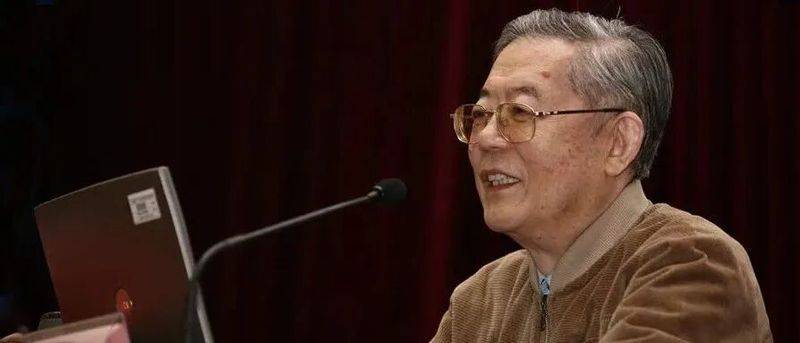
Zhou guangping: what china needs most is “subversive” innovation