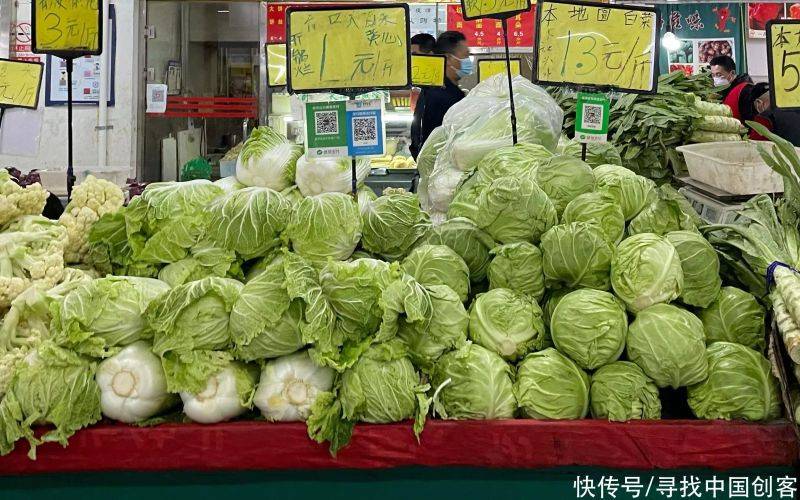
The frosting is over, the winter is coming, and the winter-storage cabbage in the supermarket is on the market as scheduled. However, cabbage is no longer the only “home-career” in winter, and even when it enters the winter month, there will be no reduction in the variety or quantity of citizens' “basket” vegetables. The large supply and variety of “fresh” vegetables in four seasons of the year is a true picture of the market for vegetables in beijing today. And the most familiar cabbage became the citizen's "concert" "dippin'."。
With the increase in the national supply of vegetables, the acceleration of logistics transport and the localization of special vegetables, the daily consumption of fresh vegetables by citizens in beijing during the winter is no longer a rare occurrence. The deputy director of the agricultural technology promotion station in beijing, li hongxiang, introduced the reporter, saying that since the 1980s and 1990s, beijing had begun to introduce rare local vegetable varieties and that vegetables from other regions of the country and even from abroad had entered beijing, “we have called them special dishes, and hundreds of special dishes have been introduced since before and after beijing, and to date more than 100 have been permanently grown

MTt5 downloaded in chinese mt5
The market for yellow vegetables in the chaoyang district and the winter storage of large amounts of cabbage are on the market. Newsman shinkyo, gum leaves
The hoarding is a thing of the past
There is a small variety and limited number of tickets to purchase, and during the planned economic period, beijing citizens are required to prepare a large stock of cabbage for winter. A lot of hoarding means a lot of eating, and at that time, cabbage was the real protagonist。
After 60, li hongxiang came to beijing with his parents when he was young. When i was a child, in the winter, my family dug the cellars, hoarded cabbage, carrots, potatoes, apples, etc., and made tomato sauce, which was a special memory for li hongxiang. Lee hongxiang said it was easy to buy food and food from the supermarket downstairs。
In 1990, li hongxiang university graduated, and the first year of work was followed by large cabbage, with an acre producing over 20,000 pounds of cabbage. When big cabbage matures, vegetable companies and market vendors come to the fields and price it on the basis of its quality, when a pound of cabbage was sold for only a few cents, but a pound less than a a acre. At that time, the supply of vegetables in the beijing districts was planned to be sold to the city streets at their point of view。
The change began at that time, with the rapid development of vegetable production facilities in beijing after 1990 and the gradual development of the production of vegetables in winter with the expansion of the solar greenhouse. In particular, during the period of promoting agricultural development of facilities in beijing, 40,000 acres of vegetable facilities were newly built each year and 200,000 acres of agricultural land were added in five years, providing hardware support for the development of winter agricultural production. Currently, the solar greenhouse in beijing amounts to 300,000 acres。
According to data published by the national institute of statistics, since the 1980s, the total area under vegetable cultivation in beijing has shown an upward trend. In 2020, more than 540,000 acres of vegetables were planted in beijing, yielding more than 1. 3 million tons, reversing the years of continuous decline in vegetable production, and in 2021 beijing continued to expand its support for facilities, promoting the pilot construction of high-efficiency facilities and promoting a significant increase in vegetable production in beijing。
This year, 750,000 acres of vegetables and 1. 8 million tons of vegetables will be produced in beijing. According to data from the agricultural and rural department of beijing, the average daily vegetable production is currently about 6,000 tons, consisting mainly of vegetable varieties such as lettuce, cabbage, carrots, onions, tomatoes and eggplants。
Today, beijing is fully committed to stabilizing vegetable production, strengthening the management of vegetable field production and guaranteeing the supply of vegetables in the winter off season. The department of cultivation of the beijing rural and agriculture department has requested the districts to produce the tailings of the autumn sheds and the solar greenhouses, in a timely manner, so as to sow and sow a herbal vegetable, spinach and fragrance, and cherry carrots. Currently, more than 1,300 acres of new leafy vegetables are grown daily in beijing。
In parallel with the development of a strong facility agriculture in beijing, facilities and agriculture in the country have entered the fast lanes, and the sun-smoking rooms of the vegetable provinces have been uprooted, along with the rapid movement of logistics such as aircraft, heavy iron and cars, which has made it faster to enter beijing。
"specific" to "road"
From a single cabbage to a hundred specials, there is a very important change behind this, with the extension of specials growing techniques。
"don't eat special food at that time. There are so many people who haven't seen it." lee hongxiang graduated with a three-wheeler to deliver green vegetables to the kyoto hotel, which is now common broccoli. It was winter when the green vegetables were covered with blankets to keep them warm. “when the doorman heard the green flower, he never heard it before, he wanted to see it. Once the cotton was opened, he said that you were all green and hairy.”
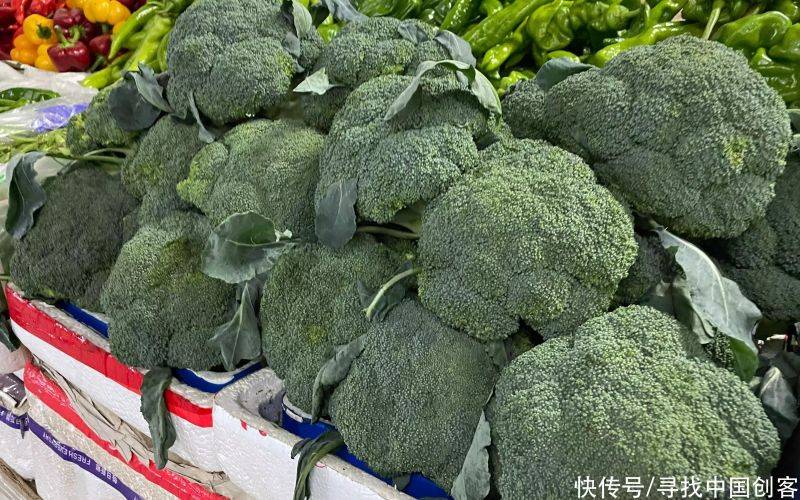
Western blue flowers, sold at the market for yellow vegetables in the chaoyang district, are now common in beijing. Newsman shinkyo, gum leaves
This is a very interesting little thing to remember, but it's also enough to show that there was a pressing need for vegetables. On the occasion of the asian games in beijing, special vegetables, such as green flowers and lettuce, were introduced into beijing. In this process, agricultural technology diffusion plays an irreplaceable role。
A vegetable variety is subject to several tests to be introduced into beijing. First, vegetables from all over the world, which have localized commodities, need to be tested on a trial basis; second, they need to be adapted to conditions such as the climate in beijing, with adaptation tests to improve poor-performing varieties and to grow a second set; then, after successful adaptation trials, they enter the multi-point demonstration phase, with demonstration planting sites in areas such as daeh, changping, tongzhou, and goku, where successful demonstration sites are organized for on-site on-site study by farmers; and, lastly, to enter the roll-out phase, farmers grow on their own and new specialty varieties in order to truly reach the market。
One type of dish, from its introduction to large-scale extension, requires a pilot demonstration extension, which takes at least 10 years, as in the case of local planting of green vegetables. According to lee, over the years, hundreds of special vegetables have been introduced before and after beijing and, to date, more than 100 vegetables have been established and grown over a long period of time, making “special dish” a “road course”。
A year and a quarter with fresh food
As the winter food reserves began to come on the market, beijing merchants and the market for vegetables increased the availability of large cabbage, carrots, onions, potatoes, etc. As the economy evolves, the purchase of winter food reserves has gradually become a matter of concern, with more durable foods being supplied as strategic reserves, for example, by market agents。
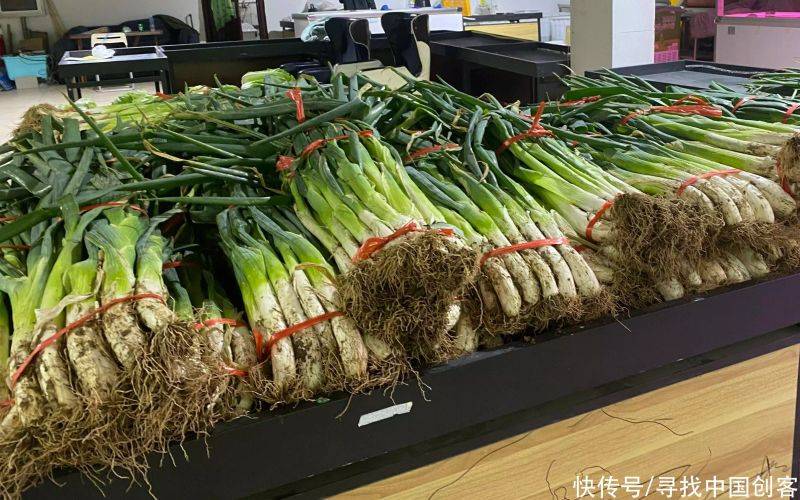
At the yellow market in the chaoyang district, a major onions dealer introduced to the press, and now started hoarding onions, placing them outside the house and eating them for the rest of the year. The onions in the booth are mainly sold from shandong, three pounds a day, and can be sold a few onions a day at a much cheaper price

Chinese download portal for the mt4 software
Onions sold in a restaurant near the bridge are now available in the beijing market for four seasons a year. Newsman shinkyo, gum leaves
It is also “fresh” that businesses are able to sell “fresh” over 365 days a year, underpinned by the power of agricultural technology, which is referred to by agricultural extensionists as “the balanced supply of the anniversary”, that is to say, whenever they go to the market, they can buy the vegetables they want。
“beijing achieved a balanced supply of vegetables on the basis of sufficient supplies and diversity, and most of the vegetable singles achieved a balanced supply on the anniversary.” in may and june of each year, for example, cabbage is a light season for cabbage, but at this point in the year, spring cabbage is now on the market, and it is fully balanced for the anniversary. More rational greenhouses, more mature planting techniques and more scientific plant protection against pests and diseases have enabled balanced supply of vegetables for the anniversary。
“vehicles are moving towards diversification.” according to lee, cabbage is gradually broken down into large cabbages for pickles, cabbage for raw food, more nutritious oranges. Cabbage, etc. These functional cabbages meet different needs. At present, the prices of vegetables in market conditions are subdued, and the balanced supply for the anniversary is expected to progress more evenly, allowing the public to buy the vegetables they want at any time, at a price that is not expensive. In short, the future development of vegetables will continue to be more diverse and more balanced in their availability。