What difference does it make? How do you test each? How do you ask
The high-altitude operating certificate (also known as the high-altitude operating licence) is the legal qualification for the 2-metre and above-high-altitude base operation, which demonstrates that the holder has the security knowledge and operational capability to operate at a high altitude
The high-altitude operating permit is the statutory threshold for the safety of high-altitude operations and applies to the installation, maintenance, demolition, etc., of 2 metres and above. Certification is preceded by training and testing, with emphasis on security norms and emergency response capabilities, and is periodically reviewed after certification to maintain effectiveness! The high-altitude certificates are divided into three main categories, and today, let's talk about the difference between the three electric certificates。
I. High-altitude operations certificate (shoc)
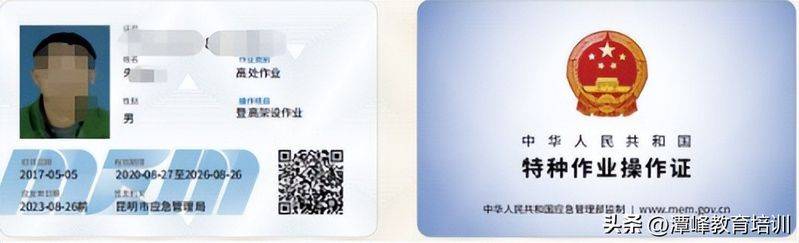
High-altitude operating permits, commonly referred to as “high-altitude operating passes”, “high-altitude operating cards”, are divided into high-level installation, maintenance, demolition and boarding operating certificates issued by the emergency management office. It is the required certificate for the entry of workers in the high-altitude industry and is subject to penalties for non-certification. The certificate is time-barred, three years in first instance, six years in exchange!
High-level installation, maintenance and demolition operations are: the use of specialized equipment for interior and exterior decorating, cleaning, renovation, electrical, telecommunications and so forth; the installation, maintenance and installation of high-level small-scale air conditioners; the installation, overhauling, maintenance of various equipment facilities and outdoor advertising facilities; and the training and appraisal of personnel involved in the demolition of buildings and equipment facilities at high levels。
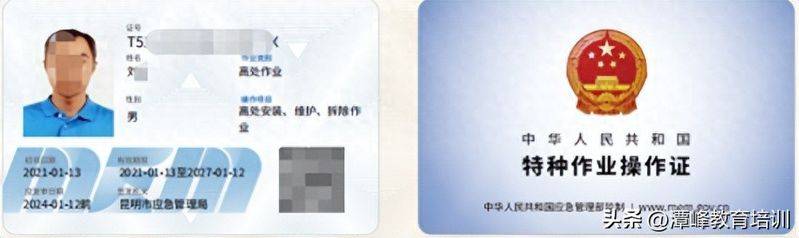
High-altitude installation is defined as scaffolding, crossing or dismantling operations at a height。
Ii. Certificate of vocational skills for seaters
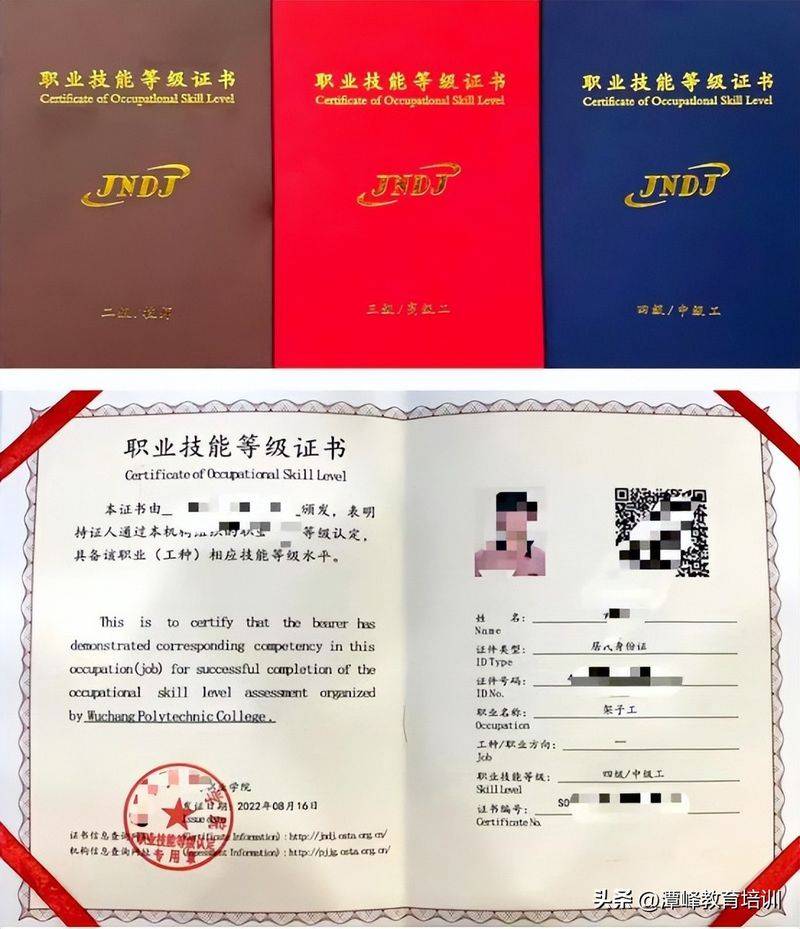
The certificate of vocational qualification of the layman is proof that the worker has the necessary knowledge and skills to engage in the electric industry. Remember that it is not a valid certificate to work。
The skill level certificate is certified by a third party body authorized by the ministry of human welfare. The certificate is divided into five levels: junior (level 5), middle (level 4), senior (level 3), technician (level 2) and senior technician (level 1), which are valid for life and are checked on the ministry of social affairs website and on the platform of government services。
Iii. Construction shelf sub-mandate (special construction operation qualification certificate)
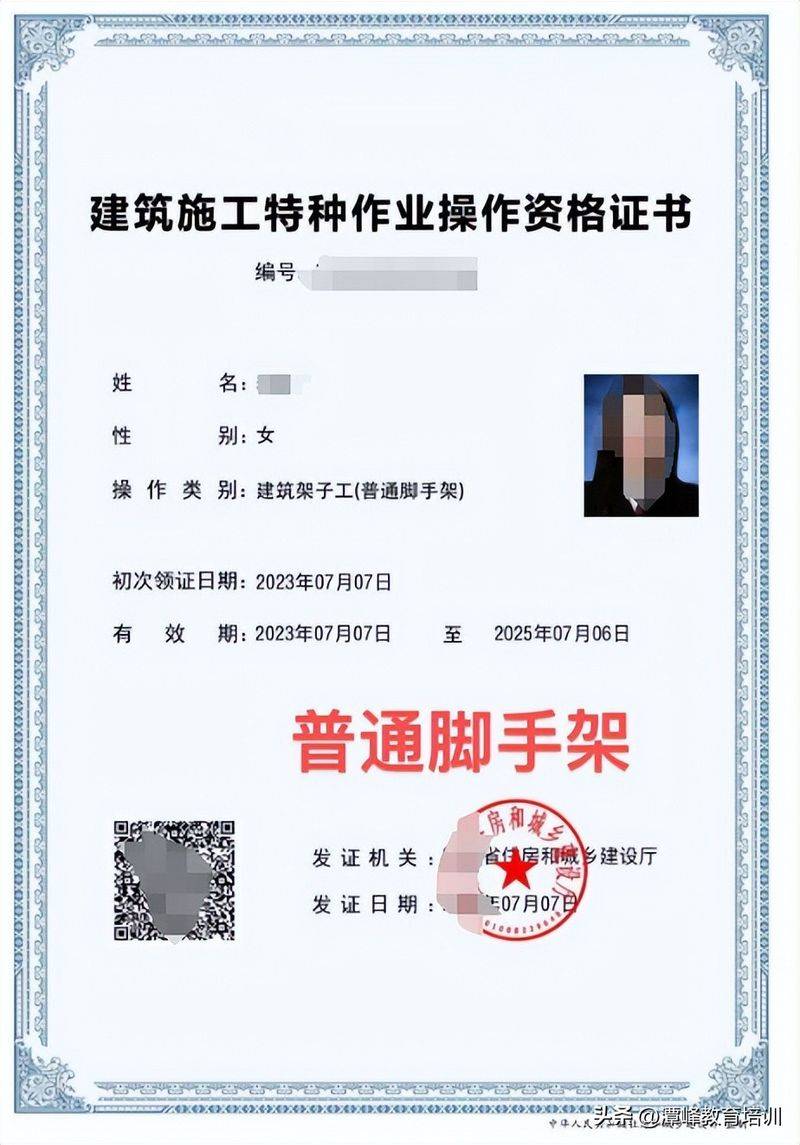
It is a legal certificate of qualification for high-altitude operations such as scaffolding, maintenance and demolition of construction sites, as well as a certificate of qualification for special operations in construction construction, ensuring that practitioners have a safety-standard operating capability and a necessary document for safe access to the construction industry! Issued by the department of housing and urban and rural construction, the review cycle is usually two years. Applications for review and exchange of certificates are usually submitted two to three months before the expiry date。
The building hall scaffolds and accompanying scaffolders set
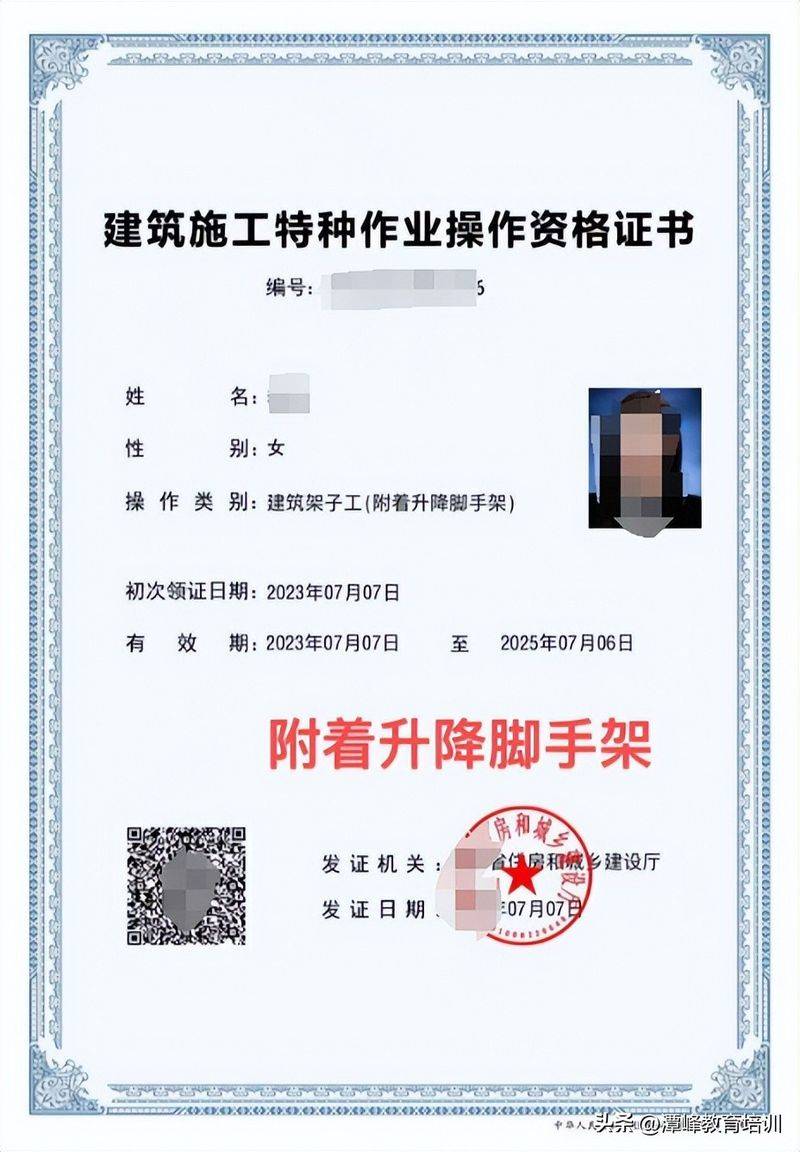
How do you check the authenticity of different high-altitude certificates
High-altitude operations operating operation operating certificate query: http://cx. Mem. Gov. Cn/
2. The ministry of social welfare of the certificate of vocational qualifications for second workers or electro-professional professional professional professional professional professional professional professional professions: http://zscx. Osta. Org. Cn/
3. Architects are available at the building office:
Https://zlaq. Mohurd. Gov. Cn/
Office of emergency management high-altitude certification process:
High-altitude operational certificate points (highly installed, maintained, dismantled and mounted) in the emergency management office。
The application process is as follows:
1) preparation of registration data (identity card, diploma, personal photograph)。
2. Registration fees。
3) to attend the training institutions。
(d) learning theoretical knowledge and practical skills, after the completion of the course, awaiting notice to take the examination。
The examination results were 80 points. One or two weeks after the exam
Process for the examination of building frames:
1) preparation of registration data (copy of identity card, positive and negative, 1-inch colour photograph, health commitment)。
(2) to enrol in training institutions。
3) online courses, online courses and appointment exams。
4) pending arrangements to participate in the unified examination。
The examination is based on a series of 60 successful theoretical scores and 70 successful examinations; both scores are certified for approximately two to three weeks。
The procedure for applying for the vocational skills level certificate (mcs) of the stsc:
There are five levels of qualifications (elevator's junior, electrician's middle, electrician's senior, junior technician, senior technician)。
1. Preparation of registration data。
2. Payment for qualifications through registration。
3) to enroll in the training institutions and take the examination to obtain the certificate。
The examination is based on a series of 60 successful theoretical and 60 successful examinations; both scores are certified for approximately two to four months。