Cable failure tester precision points are determined by the following methods:
(1) acoustic measurement: the use of acoustic measurement of statutory points has been and continues to be widespread from past to present. And the most effective way. Only the instruments used have evolved from the simple acoustic amplifiers of the past to the now commonly used acoustic magnetic synchronometers. Legal points for acoustic measurements apply to high-pressure cables, low-pressure cables, direct-laying cables, cable trenches, etc。
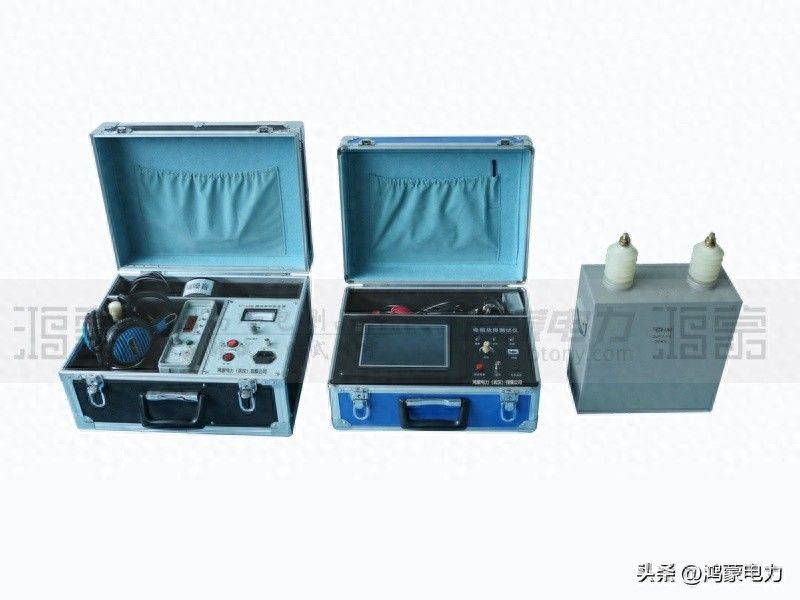
Hm-330a cable failure tester
The acoustic detection legal point is the discharge of arcs from a high-pressure pulse generator to a malfunction cable, the failure point produces an electrical discharge sound and, in the case of a direct burial of a cable, creates an seismic wave, the acoustic detection probe (a sound sensor) of the fixed pointer picks up the seismic wave signals and magnifies them and then exits through the headphone or the header. After extensive on-site testing, the seismic waves were transmitted from the cable failure point to the ground and rapidly decayed to a small fraction of the radius of 2 metres. So, using acoustic measurements of legal points, when we were listening to seismic waves using a fixed-point device, it was usually four metres away once. When an earthquake wave was heard, it was indicated that the failure point was within 2 m and could be precisely identified if the maximum sound point was carefully identified。
(2) multi-step voltage: using the multi-step voltage legal point, which is primarily targeted at the default point of the outer protective shield that requires the insulation of the cable, is now used for the partially buried low-pressure-free cable, the wiring of the wires, and the trans-trip voltage legal point。
(3) electromagnetic and audio methods: it is theoretically feasible to determine a failure point using an electromagnetic wave point or using an audio legal point, i. E. By using changes in an electromagnetic or audio signal before or after a cable failure point. However, as things stand, there are no stationary devices that are reliable and operational. Alternatively, the stationometers using electromagnetic wavepoints are still being developed in various scientific institutions and need to be further validated in practice to achieve actual application levels。
(4) acoustic magnetic synchronization: is a combination of acoustic measurements and electromagnetic wave methods, such as the hmgd-series acoustic synchronization pointer, which uses acoustic statutory point and acoustic synchronization pointing method. During the sound detection of legal points, the fixed-point acoustic header indicates an acoustic waves received by the probe, while the headphone reflects the seismic acoustic waves received by the acoustic probe. Right above the failure point, the sound signal is the largest, leaving the failure point, and the sound signal is reduced or silent. The acoustic surface reflects seismic acoustic waves received by the acoustic probe, and magnetic surfaces and headphones synchronize the reception of electromagnetic waves received by the antenna when the failure point is charged. When acoustic probes are placed above the failure point, the two header indicators of the pointer and the headset sound are synchronized. When acoustic signals are not received, acoustic synchronous electromagnetic wave reception capabilities are used to enable the timely management of inter-spherical electrocution rhythms and to facilitate the identification of weak acoustic signals at fault points in the noise environment. In addition, the audio-magnetic synchronized pointing system allows for the simultaneous detection of malfunctioning points and cable paths, which greatly improves the efficiency of the failure pointing. An audio-magnetic syncordometer is the most widely used cable failure-pointer。
(5) magnetic field predication point technology: the principle of cable failure magnetic field predeterminator technology is to generate an arc from the cable failure point through a high-pressure direct flow pulse generator and inject audio signals into the cable during its existence. This audio signal is at the cable failure point, is short-circuited by electric arc and no longer continues to spread to cable terminals. Using a dedicated receiver to receive radio-radiated audio electromagnetic signals from cables, the purpose of the fast-defined point is achieved by comparing the changes in the size of the audio electromagnetic band before and after the failure point and judging the receiver to be located before or after the failure point。
Cable failure magnetic field reservation point technology is a relatively new fail-pointing tool with a shorter conceptual presentation and shorter instrument development and instrument use. After the point of failure, we still need the point of precision of the point of failure before we can dig。