In the 1940s, a theory of realism, guided by the spirit of “subjective combat”, provoked a lively debate. Mr. Wang xiaoping found that the prevailing view is that its value orientation is to pursue a high level of artistic authenticity, but that if this important discussion is re-examined from the point of view of cultural politics, and its theoretical content and historical subtext are analysed, it will be observed that this literary proposition contains a cultural and political agenda that should be understood in the specific circumstances of modern china. The “revolutionary tradition” of the new “four four” literature created by the “revolutionary civic class” should be the main element of the “national form.” in practice, however, his theory of “subjective fighting spirit” is not merely an emphasis on the realistic theory of the spiritual struggle, but rather a proxy for the struggle for a self-determined space as a “people's” leader for civil-class intellectuals. The discussions reflected significant differences in the cultural claims of different factions within the left and also demonstrated the competitive relationship of cultural leadership among the parties in the cultural arena at the time。
This paper, originally published in theory of arts and arts, no. 1 of 2024, was published with deletions and is being sent in full
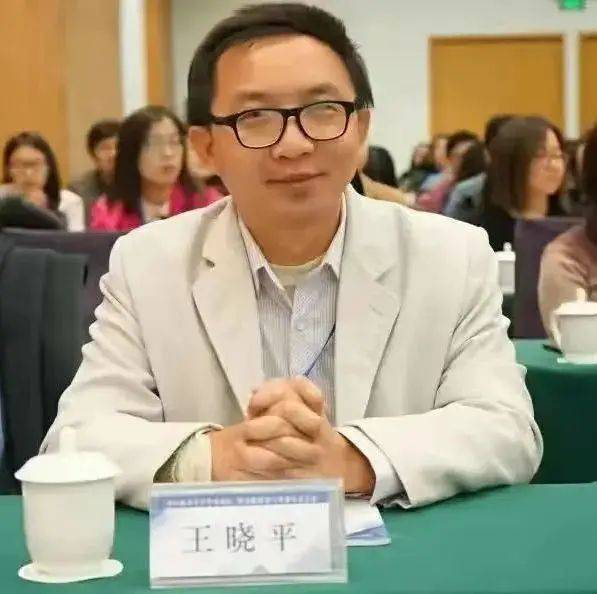
Wang xiaoping
“majorism” and realism
It's a theory
"the subjective combat psychiatry."
Cultural politics
After the war against japan, hu (1902-1985) was a long-standing leader of the all china artistic and artistic association, which produced magazines such as july, hope and so on, evaluating and launching a large number of works of progressive youth writers and authors from the liberated regions of the country. With his guidance and assistance, a group of young writers, such as al-qing, tanya and luang, emerged in the literature and formed the well-known progressive literary “july” sect. At the same time, he has written a large number of literary and literary reviews. Theoretical criticisms of zhu, which relate to a variety of literature and works by foreign and middle writers, theoretical problems that arise in the new “four fours” literary movement, are centred around the principles of realism, practice and its development. Since the late 1930s, he has offered to guide writers in the creation of realistic novels in a “spiritual spirit of combat”. On the face of it, it is only a proposition about how to write a novel in the right way, but it provokes intense debate in the left-wing cultural circles. Although this historical event has been much discussed, it is generally seen as “a uniquely valuable creative aesthetic” and as “a value-oriented pursuit of a high degree of artistic truth”, that is to say, from the point of view of literary creation and of the personality of writers. However, the significance of this theory for left-wing literature and culture at the time and beyond can be better understood when we further explore the apparent cultural/political content of the doctrine。
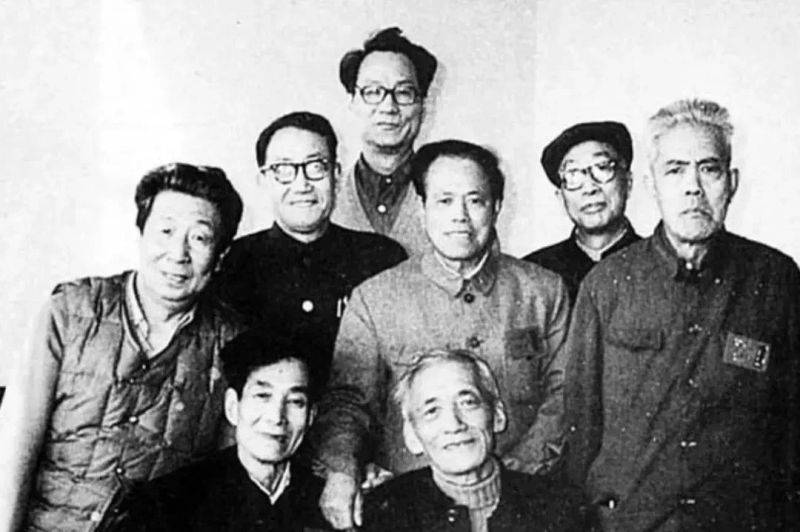
In the 1980s, the author of the “julyist” wrote in beijing. First row, left quinoa, table, second row, left row, quinoa, third row, left row, dou valley, green field, fourth row
In reviewing the interpretation of this important theoretical event, i will first discuss the original purpose of the new realist theory presented by mr. Hu: he saw it at a time when there was a crisis of realism; and then dissect his views on how to create a “good literature”. In turn, this theory (and his view of the culture (and) politics at the time) will be studied under the subtext of politico-historical history, in which he will present a strategy to take advantage of the cultural landscape. All these analyses ultimately lead to an analysis of the cultural-political implications of this apparent cultural move. The theory, in essence, contains a political agenda that should be understood in the complex context of modern chinese cultural politics. The “revolutionary tradition” of the new “four four” literature created by the “revolutionary civic class” should be the main element of the “national form.” the difference between the nature of chinese society (and culture) at that time and the nature of the cultural leaders from janan is the main reason why he has different understandings and ideas about the specific programmes for building a new (democratic) culture. The debate reflected significant differences in cultural claims among the different factions within the left and demonstrated competition for cultural leadership in the cultural arena at the time。
I. Realism in crisis
Although he criticized all kinds of literature at the time - in his view, "the market is full of pornographic works, weird works, idle works, slave moral works" - this theory is essentially a review and evaluation of the creative experience of chinese society, which has been deeply affected by the crisis, using a critical and realistic approach by chinese writers since the year and april. Hu feng quickly glorifies the master of modern chinese literature as an outstanding example of combining the virtues of realism and romance, an assessment based on his negative assessment of most other modern chinese novels. In his view, the five or four periods were periods during which writers had effectively integrated the two literary “isms”, whereas in the subsequent years this laudable combination had collapsed. Particularly in the late 20s and early 30s, there was a bad convergence that separated itself from the world. In contrast to this harmful trend, he submits his theory that he is believed to be able to reconcile his dominant and client relationship。
This “bad” tendency refers to the revolution (or left-wing) literature that has prevailed since 54 years. This literature is dedicated to promoting the spirit and consciousness of the revolution; however, in the view of the wind, it is only useless works by writers from a bourgeois background. These writers are determined to be pioneers of the revolution in order to free themselves from their corrupt habits and to equip themselves with revolutionary doctrines of effective weapons. However, in the mind of the wind, they create only stereotypical and clichéd subjective works. This general assessment of modern chinese literature is only the beginning of a fundamental disaffection with the work of the literature that prevailed at the moment when he presented his theory, especially with the cultural literature created after the outbreak of the war. The road to realism, written in 1948, was the main theoretical work of the period of the zhu feng. In the book, he submits that the literature is currently trapped in two harmful tendencies, the subjectivity referred to above (also referred to as formulaism). This “activism” views (party) doctrine and policy as a determining factor in how to describe reality. Those who advocate this pattern of creation are referred to by him as “subjective formists” and “hegelists”. They apply “revolutionary thinking” as abstract ideas to reality and add their ideas to other writers, making the role and the plot of novels a tool for certain ideas. As a result, literature has become a microphone for the political beliefs of writers, isolated from reality. On the other hand, another group of works seems to be in opposition to this creative trend, but it seems equally harmful in the face of the wind: a writer such as mao li's (1896-1981) has created a novel of “naturalism”, which he considers to be a physicalization of reality, caught in the trap of “objectiveism”, which lacks “subjectivity”. Because of the lack of subjective involvement of writers themselves in their “subject matter”, it merely brings a superficial expression of reality, not only without profound reality, but also by ignoring hidden historical and social relationships。
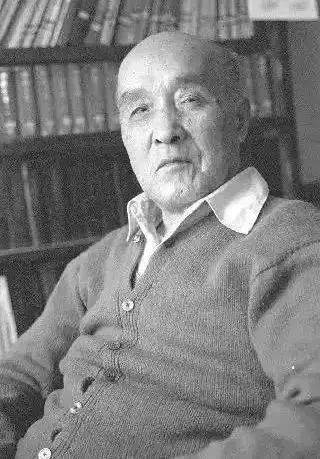
Whirlwind
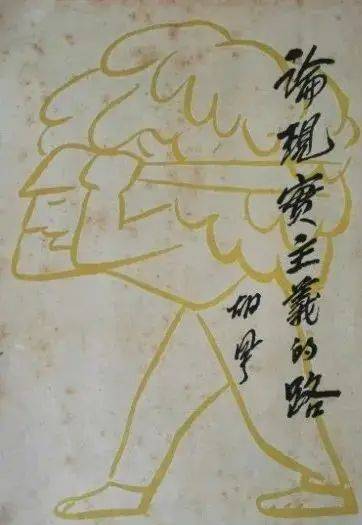
The way of realism
Oh, my god
Dirt society 1951-5
In order to counter these two trends, he presented his own creative ideas. Looking at his literature, entitled “the spirit of subjective combat”, we can see four stages in the process of creation. The first is “learning to life”, or “learning from life's struggle”. A writer should not passively observe or accept things, but should actively and courageously engage and fight them. The process of internalizing the goals in the spiritual world of things or writers begins with a process of mutual reaction
The process of representation of the subject or of overcoming it, in the context of the writer as the subject, is also an ongoing process of self-expanding and self-fighting. In the process of reflection or overcoming, the life of the subject is captured by the spiritual world of the author, which expands the author's own life; but in this “inflow”, the author's subjectivity must, on its own initiative, demonstrate or accommodate or choose or resist the role of the author, and the object must, on its own initiative, use its authenticity to promote, modify or even overthrow the author's or the role of the author's choice or resistance, which gives rise to a deep self-fighting. This self-fighting has enabled writers to expand on the truth of historical demands。
Here, the mind and mind of writers remain essentially unchanged. External things can trigger some of his changes, but they can only “change” or “revert” his “effect”, which means adapting to what he does. In essence, it is a gesture of subjugation and repression that incorporates things into its own control. This “subjectivity” has never questioned its own legitimacy, validity or recognition of its own possible shortcomings or weaknesses。
In this main object relationship, the subject believes that he has the right to “reflect” the object and “overcome” it in order to absorb the latter's strength to enrich himself and to nourish himself. This subject has sometimes shown its generosity, “insisting in the same spirit of certainty as the author” and “insisting in the emotional expression of the subject” (which seems to resemble the words of the party, “in union with the public”, “in the public”, “to learn from the people”), but more often than not, it resists the latter in the form of denial and rejection. This typical attitude of the colonial master towards the subjugated subjects is precisely the modern spirit discussed in detail in the enlightenment debate act by adono and hulkheim. In this classic book, they have told us that this is essentially the subject of a civic class (bourgeois), which has been accompanied by the advent of capitalist methods of production since the industrial revolution and the dawn of modernity. This is further confirmed by terry eagleton in the aesthetic ideology
Citizens of the civil class need others to prove that their power and property are not illusory and that their activities are meaningful because they take place in a shared, objective world. But that other humanity is also intolerable for the subject, and it must be expelled or integrated。
What we need further attention here, however, is what this “object” as “others” means in our context; or what is the object of a writer's work of realistic literature or the object of real life. If the dominant ideal is to rise with the rise of the bourgeois class in the eighteenth century, when it defeated the ruling feudalist and church power and took its place at the heart of the world’s historical stage, and if the latter’s philosophical expression of self-image (which is typically reflected in kant’s perception of the individual as independent, rational, self-reflective) has its own particular counterpart in the modern chinese context. Modern chinese intellectuals are generally considered to be mostly small bourgeois classes. Because the bourgeois or middle class — the civic class in western history — is slow to develop in modern china, it has never matured as in europe and america. The process of entanglement with “others” to build their own “subject” is always problematic compared to the west: if this other person is accusing the imperialists, or the native authorities, which are often reactionary in their eyes, then their own power is so weak that they cannot support their sense of ownership in the political and economic sense (although there is a sense of moral superiority). Thus, in the actual struggle, they have directed this “other” more towards the hard-working population, because for the latter they feel not only morally, intellectually, but also in their property identity, but also a natural mission to lead them out of a state of national crisis. By doing so, they also defused their sense of mental crisis。
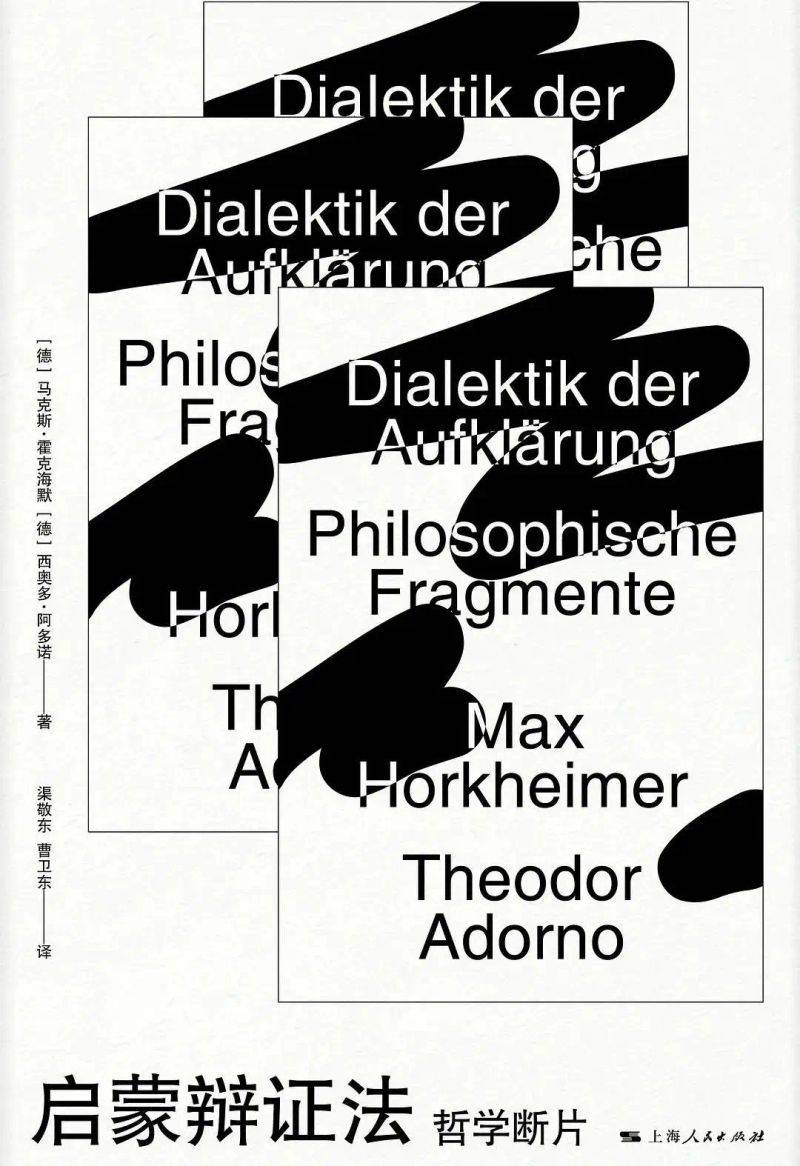
Law on the enlightenment of defence
Adono/hockheimer
To tsao waidong
Shanghai people's press 2020-7
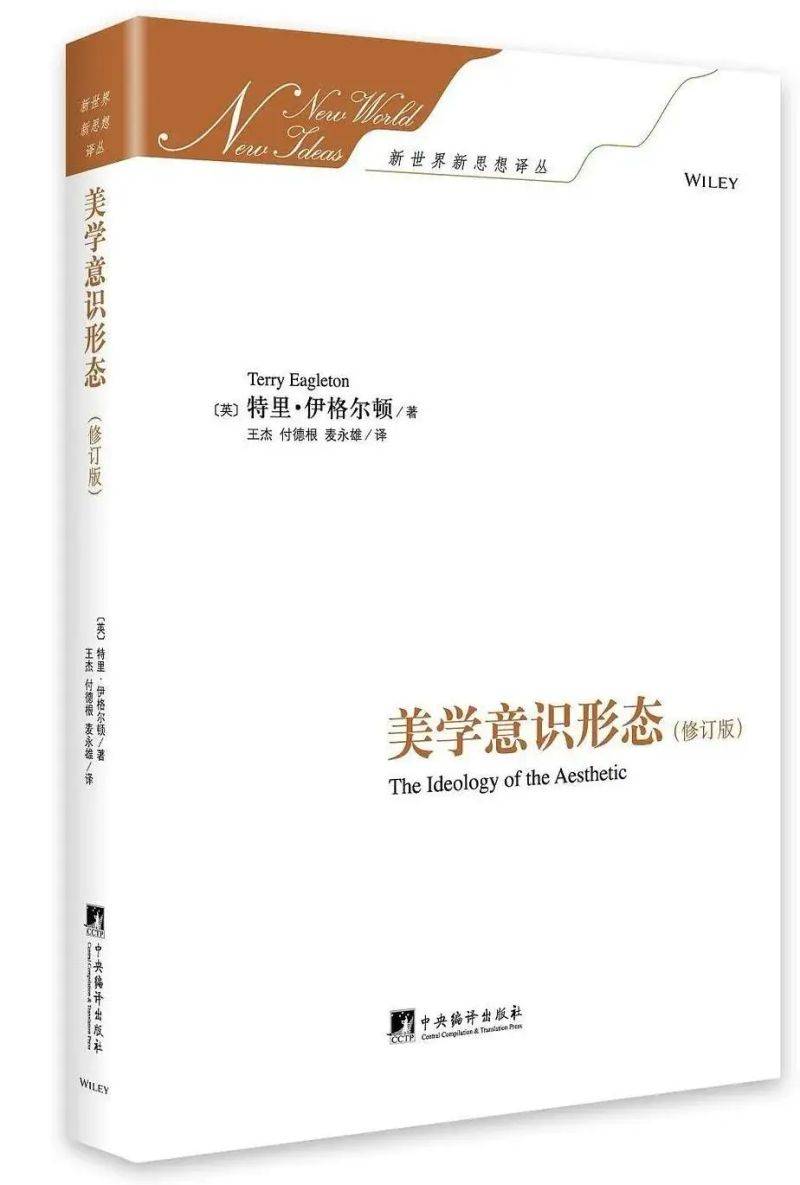
Aesthetic ideology
By eagleton
Translation by wang jie
Central compiler 2014-3
In that case, let's look again at the correct ways in which a writer is asked to do it. In the process of “learning life” and “absorption objects” (but in our analysis, it may be considered “third step”) it is the “extension” of the “mental power” of writers through their “complex self-fighting”. It allows writers to expand themselves through “reality of historical requirements” (which is considered to be “a source of artistic creativity”). At the end of the day, this self-expanding self-expanding (after the “internalization” of the outside world) was considered to have naturally created a real world:
This makes it possible to create an artistic world that is truly a reflection of history in its real, living, sensory expression and that does not become a cold mapping exercise of abstract concepts。
While believing that he is “psychologically ready” (if not at the same time physically and mentally prepared), he is essentially not yet in possession of the correct knowledge of the objective world (although he may be entangled in a rude and barbaric manner with objective outsiders). We need to note that there are three concepts that are treated here as the right idea, without conceiving it, and that are applied without argument: what is called “history”, what is “historic truth” and the credibility of a “real realism world”. It is clear that what the writer himself considers “real” does not guarantee that it is a “historical requirement”, which he needs to be justified himself。
According to the writer, “the so-called reality, the so-called life, must not stop at what is left of the artist, as long as he sees, chooses, collects, but has to go through the artist's inner body and be confirmed by the artist's spiritual desire, possession, steam and promotion”. He attaches great importance to the “subjective power” of writers, to their “spirit of spirit” and to their “image”, and to the idea that the author's imagination should be used to achieve the “convergence” between the author and his life: “the role of the author's imagination is to integrate all the living materials that are prepared into the subjective flames, so that the author's own views, desires, ideals, are embedded in them.” in other words, in his own words, the truth here is the self-inflicted “objective reality” of self-aware in the author's heart, which is considered “realism itself”. The latter, therefore, cannot be exempted from his own ideology or class affiliation. This eager appeal is therefore nothing more than his desire to capture and conquer objects of desire in reality at this (creation) stage. Moreover, it is easy to see what is true and what is true here, which is determined by the individual as an individual intellectual, without any theoretical guidance, let alone any outside party direction or guidance。
The “psychological state” of “experienced people” and “typical”