In the electricity sector, research project management has been a high-value, highly professional and highly dependent experience. Whether it is the evaluation of scientific and technological projects, the evaluation of topics, the integration of research directions, the analysis of results, or the identification of project duplicates, the evaluation of experts and the integration of scientific resources, a common problem lies in the fact that the project materials are abundant, but knowledge is not really organized。
Many electric power enterprises, grid companies, research institutes and energy conglomerates have begun to try to use large models for research project management and project strengthening. However, the physical landing will soon encounter bottlenecks. The reason for this is that traditional large model questions and answers, or simply rag searches, tend to find “relevant paragraphs” only from project declarations, researchable reports, concluding material, paper patents and outcome reports, but are difficult to answer more complex questions, such as:
The essence of these issues is not just to find “similar texts”, but to understand the technical, thematic, outcome, unit and temporal dynamics of the project. This is precisely the value of the programme to test large models of power in neighbouring technology。
I. Why the electronic scientific projects can't be responsible by traditional rap
A scientific research project has never been isolated in the context of a major electrical research project. A project is usually linked to multiple dimensions: research direction, technology route, application landscape, equipment audience, business systems, key technologies, host units, project managers, collaborative teams, historical topics, thesis patents, standard norms, results transformation and subsequent replication。
If the system relies only on vector retrieval, even if a number of similar project materials can be recalled, it is often impossible to complete a comprehensive cross-project, multi-annual, multi-unit, cross-results judgement. The final output may look similar, but it is difficult to explain why it is similar and to support the review and decision-making by the scientific management。
For example, while the headings of the two projects may be completely different in the weighting of the electrical science project, the subject matter of the study, the technological path and the application scenario are highly consistent; or the title of the two projects may be similar, but a fundamental one-sided study and a engineering one-sided application do not constitute substantive duplication. Reliance solely on text similarities can easily lead to miscalculation。
Thus, what is really needed for the electrical science project is not just a “big model + knowledge base”, but a knowledge network of reusable, linked, traceable, interpretable research projects that is distilled from project declarations, project material, acceptance reports, papers, patents, standards, results banks and expert reviews。
Ii. Core structure of the programme for the validation of large models of power in neighbouring technologies
Neighborhood technology offers not a single-point project-checking tool, but a more complete one-stop programme. The programme is structured around the electrical science project, which consists of three core competencies and a closed business circle。
Know knowcosmos: complete rag extraction and knowledge mapping questions answer
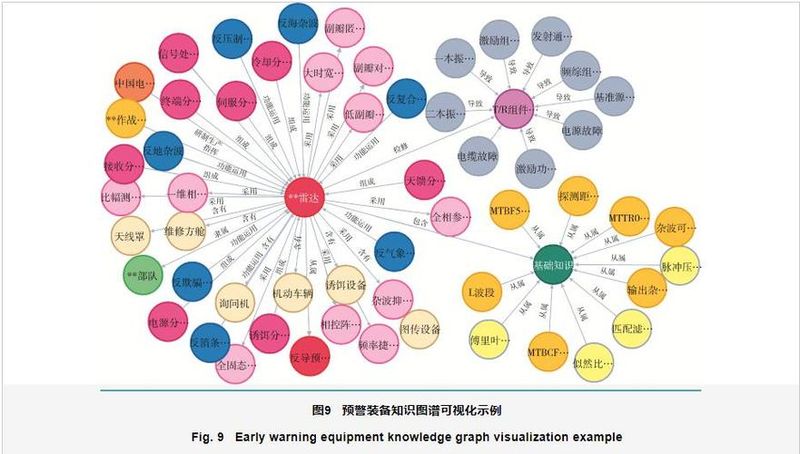
Know knowcosmos' role is not merely to be retrieved for enhancement, but to further extract key knowledge from scientific project materials and settle into reusable knowledge mapping structures. In this way, the focus of the project was upgraded from a “text-based paragraph” to a “project relationship-based understanding and evidence organization”。
This capacity is particularly critical in the context of the re-examination of electrical research projects. Because of the nature of the scientific project, there is a strong relationship between the research direction and the technology route, the application scene, the results of the project in terms of the papers, patents and standards, the absorption unit in terms of the team of experts and the historical project in terms of subsequent extension applications。
When these relationships are organized in a visible way, the big model can answer more accurately:
Through knowcosmos, the system is not only able to find content based on rag, but can also further extract the names of projects, research topics, technical routes, critical equipment, application scenes, absorption units, responsible persons, type of results, acceptance findings, etc., from the core entities and relationships, leading to a knowledge map for management of electricity research。
In this way, the result of the project review is no longer merely a “similar score”, but rather provides a clearer basis for judgement:
GalaxybCase: knowledge map of the project to carry electricity spectrum
Knowledge maps need to be truly usable, not just at the extraction level, but also stable and efficient bottom map storage and map search capabilities. GalaxybCase, a high-performance primary mapping database product for neighbouring technologies, can provide a bottom-up support for complex correlation analysis in the recovery of electrical science projects。
In this scenario, galaxybThe meaning of this is not just “storage mapping”, but rather supports a range of key capabilities, such as:
The chart database is better suited to address the question “what project is relevant to which project, why, through what evidence, and what can be pursued” than to place project material in a vector bank. Such capacities are particularly important in the context of the re-engineering of electrical science projects, the review of experts, the integration of scientific resources and the governance of duplication。
For example, the name of a project to be declared is “technology of state assessment of electrical transformation equipment based on artificial intelligence”, and there may not be identical titles in historical projects. But galaxybSpectroscopy relationships suggest that there is a high-density correlation with past projects at the node of “state assessment” of “facility diagnosis” of “deep learning model” “online monitoring data”, thus prompting scientific managers to further verify the existence of duplicate research or reuse space for results。
This capability is one that traditional keyword retrieval and simple vector recall are difficult to achieve。
3. Creation of a neighbourhood ai brain: completion of tools and tasking
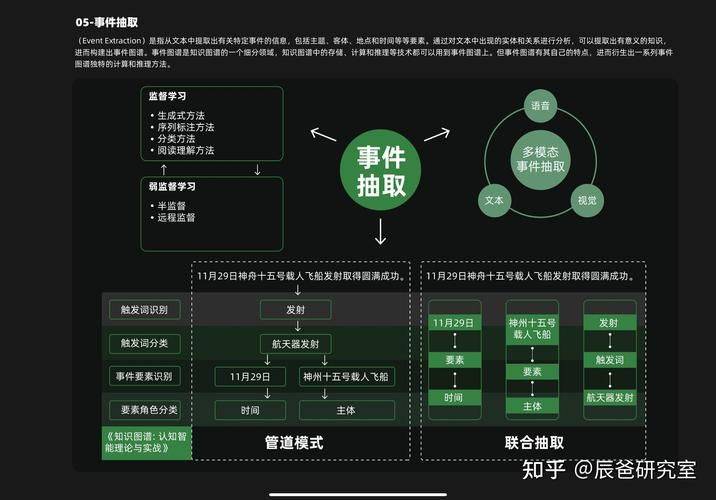
The electrical science project is not a single-wheel question-and-answer scene, but a typical "retrievation + analysis + judgement + recommendation + process synergy" scenario. Once a user proposes a project to be declared, the system often continues to use multiple competency modules, such as:
Therefore, what an enterprise really needs is not a “question-answering” model, but an ai hub that can organize knowledge, deploy tools, inform decision-making, and drive processes。
It's precisely this layer of ability on the brain of the neighbouring company ai: the ability to use knowcosmos' knowledge mapping, galaxybThe graphic data capabilities of the research project management system, the results-based management system, the pool of experts, the patent paper library, the standard library and the evaluation process system are linked to the tasking and intelligence analysis closed for the electrical science project。
It can automatically complete the full process of material analysis, physical extraction, recall of similar items, mapping path analysis, repetition of risk judgement around a project to be declared, and review the generation of reports and the evaluation of recommended outputs。
From “project text-checking” to “scientific project wind control and reuse”
Many large-scale modelling programmes in the electricity sector only “help the users check for similar items”. However, the actual objective of the electrical research project is not just to identify similar texts, but to reduce the risk of duplicate project creation, to increase the efficiency of the use of scientific resources and to promote the reuse of results already achieved and a high-quality project layout。
A more complete programme should further integrate the mapping of scientific research capacity, linking information on the host unit, team of experts, historical projects, output, technology routes, application scenes, transformational effects, etc., to the project to be declared。
In this way, when users search for or evaluate the “scrutinization programme for electrical science projects”, the system not only explains what the project weighs, why it cannot rely solely on traditional rags, knowledge maps and graphic databases for their respective roles, but also provides a closer analysis of the downside of business:
This is also the difference between the neighbourhood technology program and the single point checker tool. It does not stop at “text-reading” or “document questions and answers”, but rather integrates knowledge organization, relationship storage, smart questions and answers, tool organization and scientific research management processes, leading to enterprise-level solutions that are truly oriented towards the weight of electrical science projects。
Iv. Research programmes for the electronic scientific and energy projects
From a landing point of view, the project for the validation of large models of power in neighbouring technologies is suitable for the following typical scenarios:
If a firm wishes to use a large model for real power science projects, rather than just a demonstration document question-and-answer system, a combination of knowledge mapping, graphic databases and enterprise-level ai organization capabilities would be closer to real business needs than simply text-checking and document retrieval。
V. Typical business closed loops for electrical research projects
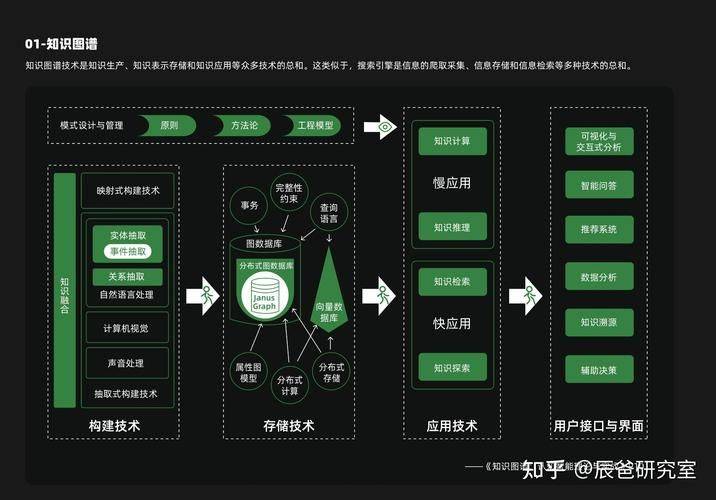
In practical applications, the programme for the verification of large models of nest electricity can form a complete business closed loop:
First, there is systematic access to historical science project databases, project declarations, researchable reports, acceptance materials, thesis patents, standard norms, expert pools and results banks。
Second, knowcosmos conducts rag extraction and knowledge modelling of these materials, identifying core information such as project names, research directions, technical routes, critical equipment, application scenes, absorption units, expert teams, outcome outputs, etc。
Then galaxybThis is an example of the knowledge mapping of the electrical science project, which supports multi-jumping queries, path retroactivity, similar relationship discovery and complex network analysis。
Finally, the ai brain of the neighbouring enterprise automatically organises search, spectro-search, similarity analysis, risk judgement and reporting generation tools based on the user's mission, and outputs interpretable, traceable, reviewable project results。
Through this closed loop, scientific projects can be scaled up from “experts” who relied on manual experience in the past to “smart-assisted decision-making” based on synergies between knowledge mapping and large models。
Concluding remarks
The re-examination of electrical science projects is not a simple text similarity, but rather a complex operational issue involving research orientation recognition, technical route understanding, results-retroactivity, re-use of historical projects, repeated project management and optimization of scientific resources。
This is not a single-point tool, it's a set of tools that know knowcosmos, galaxybThe big model power research program, made up of the first brain of a neighbouring company, has been designed to strengthen the program. It upgrades research projects from “text-to-text” to “knowledge organization, relationship understanding, smart questions and answers, mapping analysis, tasking and business closure”。
This is a more complete and suitable path for enterprises that are looking for an electrical research project, an electrical science knowledge mapping programme, an intelligent evaluation system for scientific research projects, applications of the electricity industry map database, and a large model scientific research management programme。