In the early summer hours, i walked into the international butterfly lands nursery centre in the rui yuen city, with a series of smart-temperature indoor green onions, a row of butterflies growing incongruents, a green bottle, a strong pellets full of rags, and full of lively eyes。
Walking into a large, open, intelligent greenhouse, without the sights of the traditional growing sheds of hot, wet and uncomfortful work, the various types of smart equipment are operating in an orderly manner and the whole process of automating seedlings is advancing efficiently。
“our project has invested a total of $260 million, 145 acres of land, with three high-standard smart greenhouses and complementary integrated service areas, all of which are at the top of the industry in terms of both size and level of intelligence.” zhang kyung-tao, managing director of the agricultural development group ltd. In pieroxiang, introduced journalists to the project, which is a comprehensive modern agricultural demonstration project for seeding, intelligent production, export sales and integration of agro-farmers, all of which are delivered after childbirth and can produce up to 10 million good-quality butterflies。
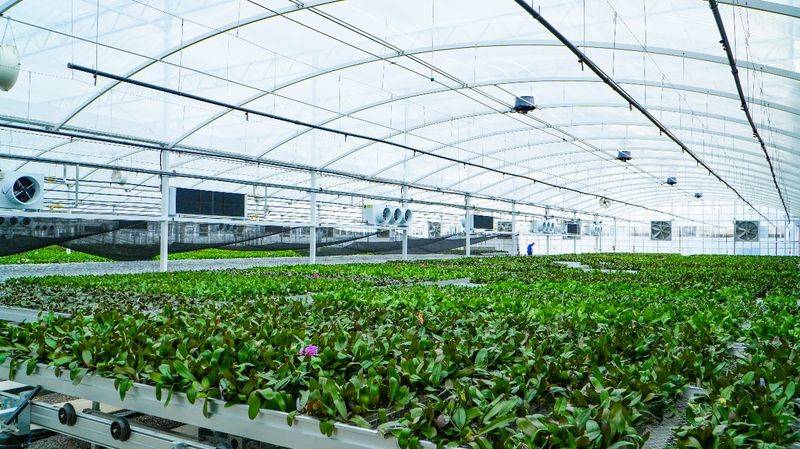
Smart greenhouses, a row of butterflies growing up. Wang qinglong
“the greenhouses i and i, 21,000 square metres, have been planted with 50,000 butterflies and 100,000 orders are being lined up; the greenhouses ii and ii have produced 700,000 seedlings covering 30 high-quality domestic and foreign varieties.” zhang gyeongtao pointed to a series of nursery plants saying that, after the commissioning of greenhouse 3, the base would complete the whole chain of nurturing, production and marketing and form a closed circle development system。
For a long time, the domestic flower industry has been characterized by problems of “high sales, light research and development” and high-end butterflies are highly dependent on imports, with high procurement costs and limited choice of varieties. In response to the pains of the industry, the base has adopted autonomous breeding and technological breakdown as its core development orientation。
“in the past, high-quality seedlings in the country were largely monopolized by foreign firms, and our local growers were able to attract seeds at high prices.” zhang gyeongtao told journalists that, in order to break the technical barriers, the base built its own international standards team training laboratory, which independently produced 400 new varieties with independent intellectual property rights, filling the gap in the market for high- and middle-end seedlings in the country。
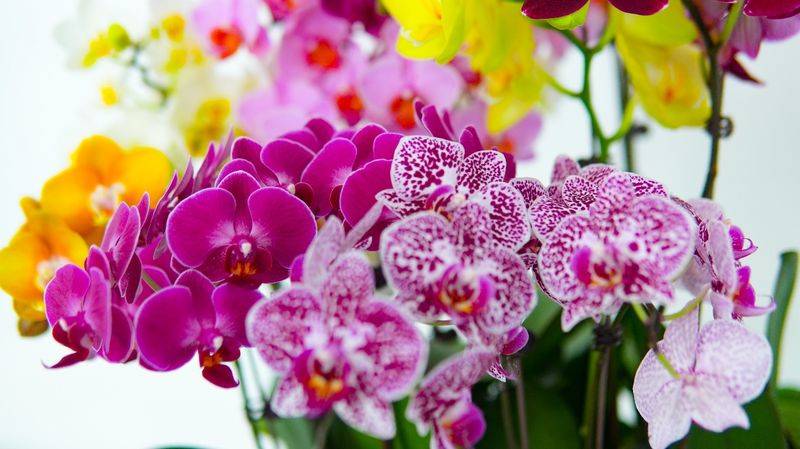
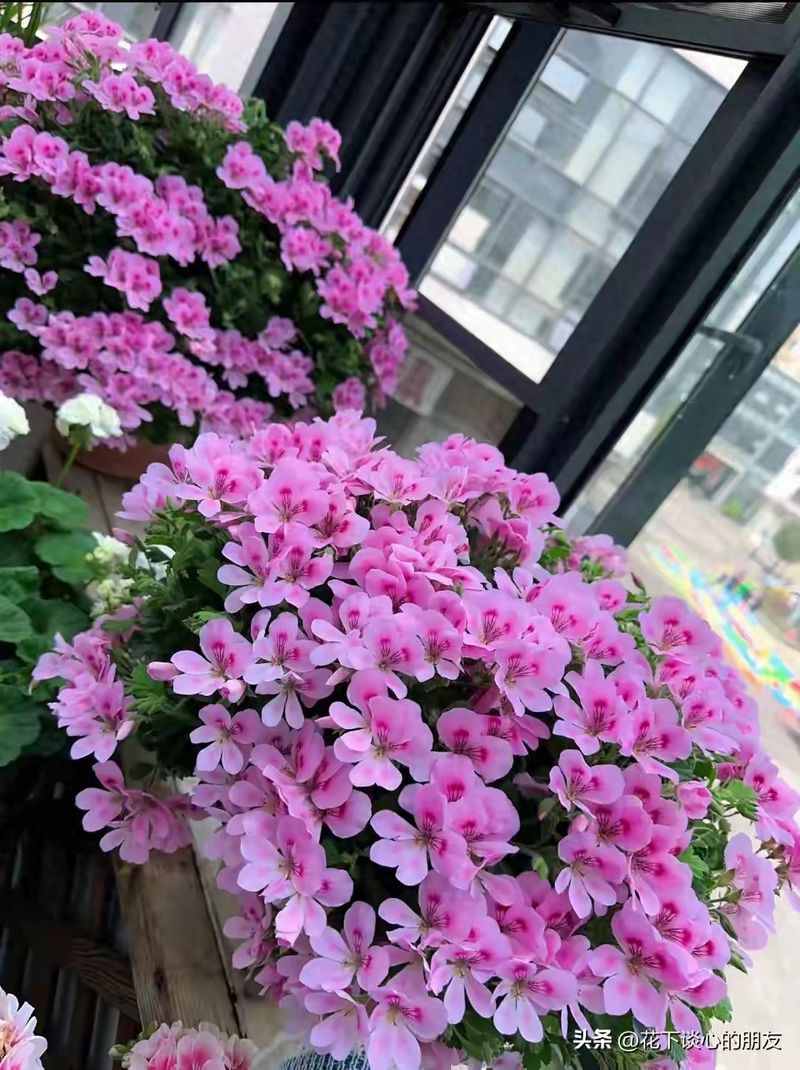
Butterflyland new varieties selected by the base. Chang lin
“as previously `terrestrially fed, managed by experience', with large temperature differentials and uneven water fattening affecting the survival of seedlings, it is now intelligently regulated throughout the course, with a fertilizer concentration of not more than 5 per cent and a seedling survival rate of over 98 per cent.” zhang kyung-tao described the base's smart environment control system as having 24-hour real-time monitoring, precision control of temperature humidity, light, co2 concentrations, strict control of temperature fluctuations at ± 1°c and a 40 per cent improvement in temperature control accuracy over traditional greenhouses。
The base's synchronized automated up-basket equipment can treat 3,000-5,000 seedlings per hour, plant precision and uniformity, and rely on a smart-growing system. The base achieves a 30 per cent increase in acre production, while saving water, reducing precipitation and reducing the incidence of pests and diseases。
Green low-carbon, circular efficiency is also a feature of the project. Journalists have learned that the base has innovatively adopted the industrial residual thermal recycling model, relying on the vapour heating of surrounding thermal power plants to replace traditional boiler equipment。
“this green model saves 6,000 tonnes of standard coal per year and reduces 15,000 tonnes of carbon dioxide emissions, reducing production costs and safeguarding the ecological environment.” zhang gyeongtao stated that the base had built a low-carbon, efficient and sustainable modern nursery system with a combination of precision drip irrigation and water fertilization recycling technologies, achieving both ecological and economic benefits。
When the project is fully operational, it is expected that annual sales revenues will amount to 130 million yuan, bringing more than 300 people closer to employment。
In addition, the base has established research and practical bases with primary and secondary schools in the district, regularizing agricultural science activities, and linking the flower association and the civil affairs department to explore the new business of the agro-engineer。
“we will do our utmost to create a world-class butterfly-land nursery, to allow the autonomous `saplings' to travel all over the country and overseas to continue to inject new scientific and technological energy into the overall renewal of villages.” turning to the future, zhang gyeongtao has full confidence。