Ball valves and butterfly valves are the two most common types of turning valves in industrial pipelines. Both can be rotated rapidly to shut down at 90°, but each has a focus on structural principles, sealed performance, regulatory properties and economics. From a practical engineering perspective, this paper combines the miller valve product examples to help engineers quickly select their shapes。
I. Technological rationale: reverse of the same, very different construction
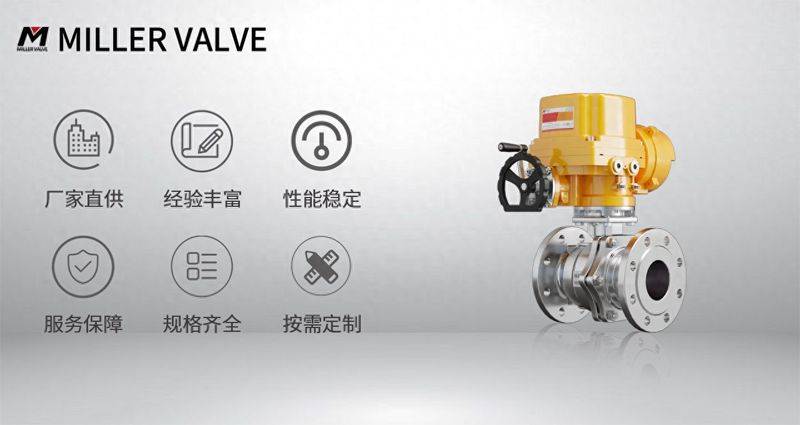
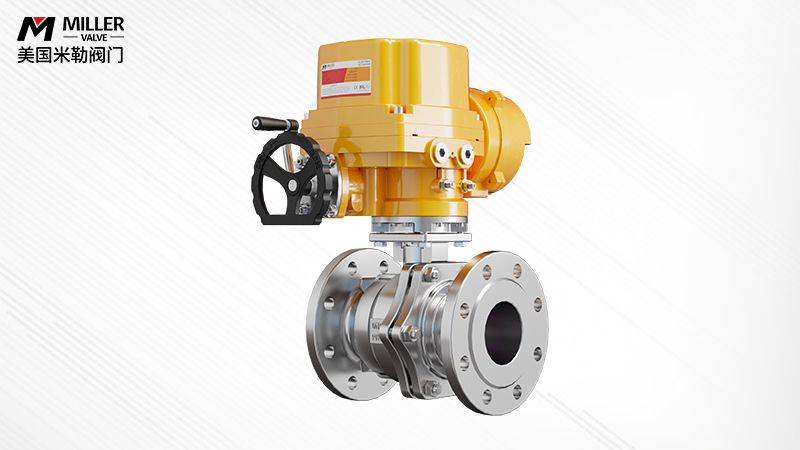
The ball valves are derived from the rotor valves, with the openings being the bodies with the flowways. The sphere rotates 90 degrees to break. They are divided into floating (small and medium calibre) and fixed (high pressure, large calibre) valves. The miller kb50g series of aerodynamic fixed ball valves are designed with a two-axis upper and lower support axis, with small twists and long lifespans。
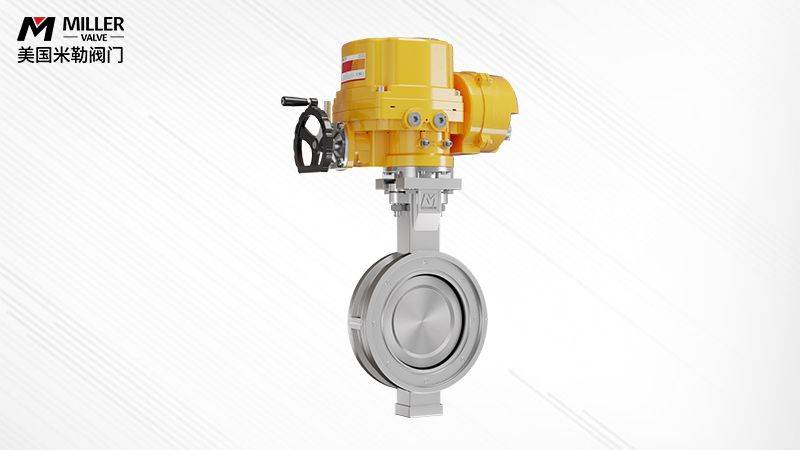
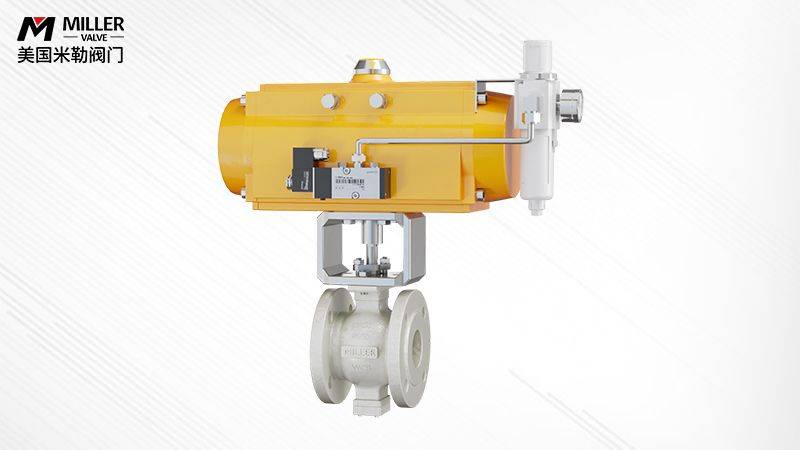
The valves are closed in a circular plate. The butterfly plate rotates 90° to switch. The sealing structure evolved from a soft seal of the same heart line to a hard seal of the tricentric metal. The miller ef70d series electric tripolar hard-sealed butterfly valves achieve zero friction of the full course of the butterfly plate, using stainless steel plus graphite multi-layer metal stacks with temperatures above 420°c and pressure covering class 150 ~ 1500。
Ii. Sealability: the ball valves are traditionally superior and the high-performance butterfly valves have come close
The ball valves are capable of zero leakage under the api 598 standard, particularly in highly toxic, lng, vacuum and other high-risk situations. Miller kb50g uses pre-retardation self-sealed seals with leakage levels up to ansi vi。
The traditional butterfly valves are less capable of sealing, but the triocular hard-sealed butterfly valves have crossed this gap. Miller ef70d can also reach ansi vi leakage level and replace a ball valve in high temperature and high pressure conditions. Selective principles: high-risk zero leak priority ball valves; regular water, heating, sewage etc., with a butterfly valve sufficiently competent。
Experience: there is no substitute for the two-way sealing capacity of a fixed ball valve under a high-pressure large calibre, at the expense of structural reasonableness。
Iii. Flow resistance and regulation: low oscillation and excellent flaring
Flow retardation: the full permeable ball valve resistance factor is only about 0. 05 ~ 0. 1 and is suitable for long energy consumption sensitive pipes. The full-time plank is still in the stream, with a flow resistance factor of about 0. 2 ~ 0. 3。
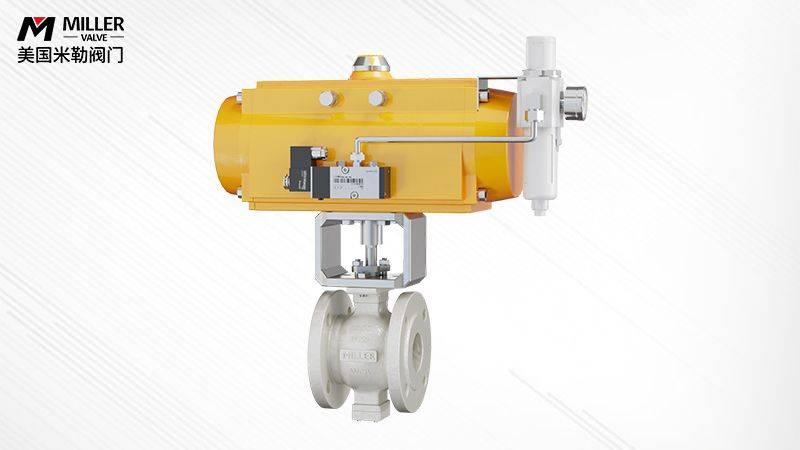
Regulating performance: the butterfly valves have the same percentage flow characteristics, are smooth, repertoireable and suitable for frequent throttle. The ball valve is suitable for rapid cut-off and is regulated by a v-type ball valve, but is still less linear than the butterfly valve。
Experience: frequently regulated butterfly valves; long-duration energy-saving ball valves; particle-containing media can consider v-type adjustment valves。
Iv. Economicity and maintenance: the ground quite
The threshold within the industry is typically dn300. Over nn300, the cost of the butterfly valve is only one third to one fifth of a fixed ball valve and is fast and light. For example, the dn600 hot water pipeline is 45 per cent less expensive than the ball valve and 30 per cent shorter. In high-pressure settings (e. G. Pn25, 300°c), the ball valve has a low failure rate and a more cost-effective life cycle; after more than 10 years of operation, the total cost of the ball valve is 25 per cent lower than that of the butterfly valve. The butterfly valves are simple and can be replaced online; the ball valves need to be dismantled as a whole and maintenance costs are high。
Ultra-calibre (dn 800 or more) ball valves are not mature products and should be selected decisively for rigidly sealed eccentric butterfly valves. Miller ef70d's diameter covers nps 2 "~120", perfect complementarity with the ball valve series (dn15~dn1000)。
Experience: low-pressure trachea for butterfly valves; high-pressure small-calibre ball valves, focusing on full life-cycle costs。
Material and situational responses: more than type selection
Sealed materials determine valve limits. Ptfe applies to low- and medium-temperature particles-free media; high-temperature high pressure or hard particle-containing conditions are subject to metal seals or rigid alloys. Miller's valves provide ptfe, metal hard seals, rigid alloys, valves covered with carbon steel, 304/316 stainless steel and corrosive alloys such as inconel, monel, hastelloy and ti。
Special occasions: pharmaceutical/food health-grade ball valves (no dead angles, easy to eject); hard-particle media giving priority to grinding hard-sealed butterfly valves; temperature-conserving pipelines need to verify heat transfer and heat impact data。
Vi. Possible squipment
Performance dimensions
The butterfly valve
Ball valve
Selection recommendations
Common diameter
Dn25~dn3000
Dn15~dn1000
Low priority for the sn300 and above
Temperature range
-50~420°c
-196 ~800°c
Very high-temperature
Pressure range
Pn16~pn250
Pn16~pn420
High pressure differential to select the ball valve
Leak level
Midline / tripolar to ansi vi
Ansi vi
Zero leaks
Flow resistance factor
About 0. 2~0. 3
About 0. 05~0. 1
Long pipeline priority ball valve
Reconciliation performance
Good
General (quick release)
The throttle adjusts the butterfly valve
Procurement costs
Low (1/3 ~ 1/5)
Low-pressure tube routing for the butterfly valve
Full life cost
Low and medium pressure is good
High pressure
Analysis of operating costs for more than 10 years
The values in the table are for reference purposes only and are selected on the basis of the formal technical specifications of the valve brand。
Concluding remarks
The ball valves and the butterfly valves are not absolutely superior or inferior, and the selection is subject to three core variables: calibre, pressure, medium properties. The performance boundaries of the two valves are becoming increasingly blurred with the application of new technologies, such as graphene for increased sealing and super-water-drink coating. However, the engineer's underlying logic remains the same: complete mastery of the performance parameters, tracking of product measurements and rational retention of safety margins。
It is hoped that this paper will provide clear, practical and selective guidance to engineers. For further technical details, please consult the official specifications of the manufacturer, such as the miller valve。