The year 2026 marks the beginning of the “fifty-fifty-fifty” period, which is the critical stage in the refinement of the macro “planning map” into a viable “construction map”. In this process, we are often confronted with a range of technical terms that sound professional and cutting-edge, such as "green supply chains" and "clean low-carbon hydrogen". These terms are not empty concepts; behind them are the true direction of technological breakthroughs, industrial transformation and life evolution in the coming years。
So what exactly do these words mean? How will they specifically change our daily lives? Today, let's go into the term “carbon emissions accounting”。
What is carbon accounting
Carbon emissions accounting (carbon accounting), often exchanged with greenhouse gas accounting (greenhouse gas accounting, ghg accounting), is a systematic process for quantifying direct and indirect greenhouse gas emissions within organizational, product or activity boundaries, with the core objective of tracing carbon emissions sources and providing data support for emission reduction targets, carbon trading, carbon neutrality and pathways。
Categorized information on carbon emissions accounting
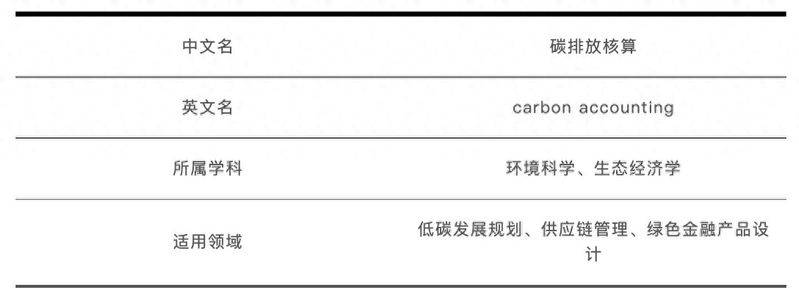
Detailed explanations for accounting for carbon emissions
“carbon emissions accounting” is often used intermingled with “greenhouse gas accounting”, both of which are methods of quantifying organizational carbon emissions and are used to assess the carbon footprint of activities such as energy consumption, transport and manufacturing processes. The difference is that carbon accounting is only for carbon dioxide emissions, while greenhouse gas accounting covers all greenhouse gases。
Processes for accounting for carbon emissions are broadly: organizational boundary definitions (setting reporting cycles, consolidation of reporting methods, identification of subsidiaries/joint ventures/equity investments included in accounting); reporting boundary establishment (identification of relevant emission sources, justification for exclusions, classification of emissions by range 1-3, as explained below); data collection and quality control (collection of raw data for operational activities, facilities, procurement/services and supply chains, with strict adherence to methodological requirements for quality verification in conjunction with emission data reported by suppliers/first-hand sources/second-hand sources); and carbon emission calculations (quantitative calculations based on applicable methods and emission factors). In these links, “data collection” is essential because the completeness and accuracy of the underlying data directly determine the reliability and credibility of carbon accounting results。
The range of accounting for carbon emissions includes three categories:
Category i: direct emissions (i. E., generally described as “range 1” emissions) covering greenhouse gases generated by sources of emissions owned or controlled by the enterprise, including fuel combustion (e. G., carbon dioxide from fossil fuels consumed by boilers, kilns), industrial processes (e. G., carbon dioxide from limestone burned out of cement production, nitrogen oxide emissions from the chemical process) and fugitive emissions (methane spill from hydrocarbon extraction, fluorinated gas leaks from refrigerants, etc.), which are accounted for in accordance with the greenhouse gas accounting system (ghg protocol, published by the world resources institute (wri) and commonly used as a standard for enterprise carbon accounting)。
Category ii: indirect emissions (i. E., generally referred to as “range 2” emissions) are the corresponding upstream emissions of externally purchased energy, i. E., greenhouse gases generated at the energy production chain (e. G., carbon emissions calculated using grid average emission factors) when an enterprise consumes electricity, heat or steam, quantified in accordance with the ipcc guidelines for national greenhouse gas inventories。
Category iii: value chain emissions (i. E., generally referred to as “range 3” emissions) extending to the entire chain of indirect emissions from the enterprise's upstream and downstream activities, covering upstream (raw material extraction transport, supplier production), downstream (product use energy consumption, waste disposal) and other indirect emissions (e. G., staff commuting, business travel, investment activities, etc.) are systematically accounted for according to the relevant criteria, which typically accounts for more than 70 per cent of the enterprise's total carbon footprint, but are often more difficult to quantify. Carbon emissions are usually expressed in weight units, such as tonnes of carbon dioxide per year (tco2/a.) or carbon dioxide equivalents (co2 equivalent, co2e.)。
According to the ipcc guidelines for national greenhouse gas inventories (2006 and 2019 revisions), carbon emissions at the national level are “the total greenhouse gas emissions from all sources within a country over a specified period of time (usually one year), including all greenhouse gas emissions from household consumption, public services and investments, less carbon sink uptake, expressed in terms of carbon dioxide equivalent”。
At the organizational level, the carbon footprint refers to the systematic quantification of the total ghg emissions generated by a given enterprise in its operations. The iso 14064 series of standards provides a general normative framework for this purpose, the core of which consists of two parts: iso 14064-1:2018 greenhouse gases part 1: guidelines for quantification and reporting of greenhouse gas emissions and removals at the organizational level focuses on greenhouse gas emissions and removals at the organizational level, covering both direct and indirect sources, applicable to corporate carbon inventories. Part 2 of the iso 14064-2:2019 greenhouse gas emissions reduction and removal increase quantitative, monitoring and reporting guidelines at the project level address the quantification of ghg emission reductions and removal enhancements at the project level, providing methodological support for the organization to achieve carbon neutrality and provide project level methodological support。
In recent years, we have established a more developed organizational (enterprise) carbon accounting methodology, represented by more than 40 national standards, such as the general accounting and reporting of greenhouse gas emissions by industrial enterprises gb/t 32150-2015 and part 1 of the accounting and reporting requirements for greenhouse gas emissions gb/t 32151. 1-2015: power generation enterprises, which regulates emissions accounting for industries that may have higher carbon emissions。
Carbon emissions from products during their life cycle are usually expressed as “product carbon footprints”, which are quantified in four steps, in strict compliance with the life-cycle evaluation criteria (iso 14040/44): purpose and scoping, inventory analysis, impact evaluation, outcome interpretation。
Currently, there are many methods of calculating the carbon footprint of products in the world, such as the pas 2050: 2008 norms for assessing greenhouse gas emissions from goods and services within the life cycle, launched by the british standards association, which is the first global product carbon footprint standard, and the iso 14067:2018 greenhouse gas product quantification requirements and guidelines, which are more widely applied international standards. We have also drafted and implemented the quantification requirements and guidelines for the carbon footprint of gb/t 24067-2024 greenhouse gas products, while national standards for the quantification of the carbon footprint of several subdivisions have been implemented。
Accounting for carbon emissions
Applications and development prospects
Carbon emissions accounting, as a fundamental quantitative tool for a green low-carbon transition, plays a central supporting role in policy formulation and market mechanisms, and generating complete and accurate carbon emissions data is a scientific prerequisite for standard systems, corporate regulation and the design of carbon market quota allocation mechanisms。
Through systematic accounting, enterprises can be guided in identifying the key components of emission reductions with precision, driving the optimization of production processes and synergistic management of supply chains; enabling organizations to break international barriers to trade, for example, in the framework of the eu carbon border regulation mechanism, where certified low-carbon products can circumvent the costs of carbon tariffs; and guiding green consumption choices through carbon labelling systems that allow low-carbon products to gain competitive market premiums and create double-benefit mechanisms for economic and environmental benefits。
At present, our policy system is gradually improving. In 2023, the ministry of ecology and the directorate-general for market supervision published the voluntary greenhouse gas reduction trading management scheme (pilot) to form the national carbon market base. In may 2025, the ministry of ecology, together with 14 ministries, such as the national commission for development reform, developed the national climate change standards system building programme, which calls for active participation in the development of relevant international standards, the enhancement of the international impact of standards, the promotion of international convergence of standards, and the inclusion of a national climate change standards system consisting of a base capacity support standard, a climate change mitigation standard and a category 3 standard subsystem, further subdivided into 15 categories of secondary and 45 categories of tertiary standards, based on a full interface with carbon-capture-neutrality systems。
Difficulties in greening carbon emissions accounting
Currently, the area of carbon accounting faces the following pressing issues:
First, the system of relevant standards is not yet complete, accounting boundaries are vague, data quality is uneven, does not facilitate accurate quantification of the carbon footprint, does not favour exports abroad for products, and exposes industries and organizations to the risk of overtaxing carbon。
Second, the weak data base, the paucity and age of indigenousized data, and the reliance on offshore databases for carbon accounting do not reflect the country's recent situation and the risk of data disclosure。
Thirdly, market regulation mechanisms are lagging behind, and regulatory systems are not yet nationally introduced, incentivized and penalized, resulting in a lack of incentives for enterprises to reduce emissions。
Fourth, the international voice is weak, and for the reasons mentioned above, carbon emission accounting results are difficult to obtain certification and foreign endorsement, and industries and organizations can only respond passively to trade barriers。