The year 2026 marks the beginning of the “fifty-fifty-fifty” period, which is the critical stage in the refinement of the macro “planning map” into a viable “construction map”. In this process, we are often confronted with a range of technical terms that sound professional and cutting-edge, such as "green supply chains" and "clean low-carbon hydrogen". These terms are not empty concepts; behind them are the true direction of technological breakthroughs, industrial transformation and life evolution in the coming years。
So what exactly do these words mean? How will they specifically change our daily lives? Today, let's go into the term "green ammonia"。
What's green
Green ammonia is the acquisition of “green hydrogen” by electrolytic hydrogen technologies driven by renewable sources of energy (e. G. Solar, wind, hydro, etc.) and the synthesis of hydro and nitrogen (nh3) by low-carbon processes (e. G. Improved haberfa). At its core, it is essentially “zero carbon emissions” throughout the production process, which is a clean alternative to traditional synthetic ammonia。
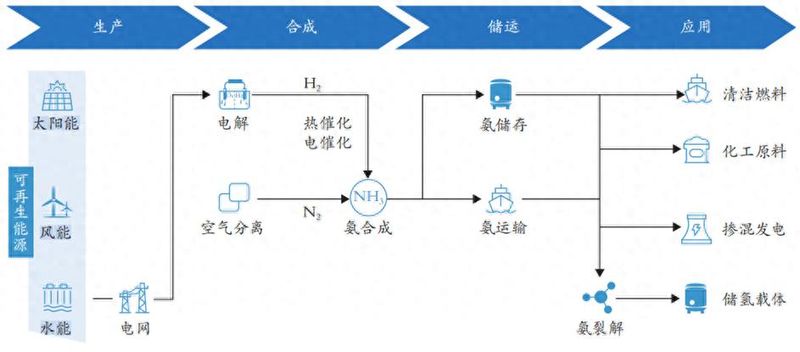
Figure 1 green ammonia industry chain chart. Source: references
Classification information for green ammonia
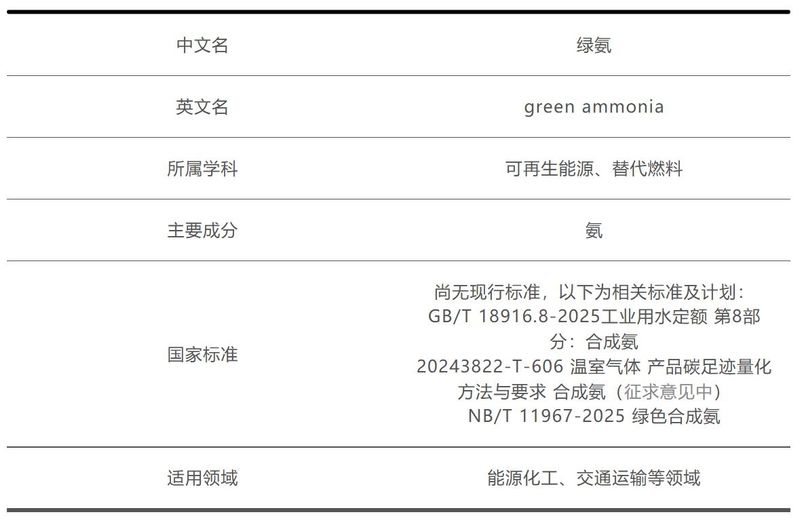
A detailed explanation for the green ammonia
The ammonia (nh3) is an inorganic compound that is widely used in agriculture, industry and energy. Traditional ammonia production relies mainly on fossil fuels (coal, natural gas) for hydrogen production and is synthesized through the haber-bosch law, with a high carbon emission intensity of products, accounting for a synthesis of about 2. 4 tons of carbon dioxide per ton of ammonia at the current technology base, accounting for 1. 8 per cent of global industrial carbon emissions。
In response to climate change, the green ammonia technology is being promoted globally — using renewable energy sources (wind, photovoltaic) to electrolyte hydrogen and synthesize nitrogen-gas ammonia with air. The near-zero carbon emissions from the production of green ammonia is seen as one of the key pathways to achieving the “carbon neutrality” goal。
The essence of green ammonia is its “green” hydrogen source. Its production chain can be broken down into the following core elements:
1. Green electricity supply: power generation from renewable sources such as wind, photovoltaic and hydropower。
Hydrogen (green h2) electrolytic cells driven by renewable energy (alkaline cells, pem proton exchange membrane cells, high temperature solid oxide cells soec, etc.) decompose water to produce high purity green hydrogen. This process is key to the distinction between green ammonia and traditional grey ammonia (fossil fuel hydrogen production), with zero carbonization of hydrogen production。
Air separation nitrogen (n2): separate nitrogen from air using mature processes (e. G. Deep cold space, transformer adsorption)。
4. Haber-bossynthesis (hb prof.): green hydrogen (h2) and nitrogen (n2) react to synthetic ammonia (nh3) at high temperatures (400-500°c), high pressure (15-25 mpa) and iron-based catalysts. This is the current absolute mainstream process of industrial synthetic ammonia, which is technically mature but energy-intensive. Low-carbon research and development focuses on optimizing catalysts (to increase low-temperature and low-pressure activity), the use of renewable energy power directly to compress heating, and the development of new electrochemical/photochemical synthesis pathways under mild conditions。
The emission intensity of green ammonia is much lower than that of traditional ammonia, and according to strict criteria (e. G. Eu rfnbo), emissions per unit of product in the production of green ammonia need to be below a specified threshold (usually close to zero) and meet the requirements of renewable power “extraordinary” (new rather than crowding out existing green power resources) and “time/geographical relevance”。
Green ammonia applications and development prospects
By virtue of its unique advantages, the green ammonia offers great potential in a number of key areas:
In the area of maritime transport: the international maritime organization (imo) has set a net zero target for 2050, with green ammonia with a carbon-free, energy-density significantly higher than that of liquid hydrogen (12. 7 mj/l for liquid ammonia volume energy density, 8. 5 mj/l for liquid hydrogen density), relatively mature storage infrastructure (global ammonia trading network already exists), non-carbon dioxide combustion, etc., and is considered the most potential alternative to zero carbon bunker fuel。
In the area of electricity: aided electricity systems are flexible with zero carbon. Carbon emissions can be effectively reduced by mixing ammonia or pure ammonia combustion in fire plants, and demonstration projects are under way in countries such as japan and germany. Green ammonia can also be used as a fuel-efficient clean-up power generation for large fuel cells (e. G. Sofc) that facilitates long-term, large-scale storage, making it an important option for addressing the intermittent and seasonal peaking of renewable energy sources。
In agriculture: as a green alternative to traditional synthetic ammonia, green ammonia is a fundamental ingredient for the production of “green nitrogen fertilizers” (e. G. Urea, ammonium nitrate) and reduces the carbon footprint of agriculture from the source。
In the industrial sector, ammonia (nh3) contains high hydrogen content, is more economically and safely stored than pure hydrogen (especially at long distances and on a large scale) and is the ideal hydrogen energy carrier, providing a green hydrogen source for hard-to-enabled steel, chemical and heavy transport through the efficient and flexible production of high purity hydrogen on demand through mature and reliable ammonia cracking technologies. At the same time, ammonia is one of the important green chemical materials, which, as a basic chemical, is a zero-carbon starting point for the production of numerous chemical products, such as green nitrate, acetamide (nylon feedstock) and melamine。
In addition, the industry is exploring the possibility of applications of green ammonia in other scenarios, for example, as an emergency back-up power source fuel, a data centre back-up power source fuel and even a space propellant。
It's hard to use green ammonia
In green ammonia applications, there are the following urgent problems。
First, at the technical and economic levels: the cost of production of hyp remains higher than that of ash, and critical equipment, such as electrolytic tanks and catalysts, is dependent on imports and requires a breakthrough in the domesticization and scale-up of materials. In terms of process stability, the volatility of wind-ray generation poses a challenge to the continuous production of green ammonia and requires the development of flexible control systems and storage technologies. In addition, in terms of safety risks, ammonia leaks can lead to poisoning and environmental pollution, and monitoring systems (e. G. Electrochemical gas detectors, pressure sensors) and emergency response mechanisms need to be improved。
Second, at the policy and market levels: there is a problem of inconsistent standards, and international standards for accounting for green ammonia footprints (e. G., the eu rfnbo vs. China green hydrogen/green ammonia determination) vary, affecting trade mutual recognition. Green ammonia industrialization requires long-term policy support (e. G. Electricity subsidies, carbon credit transactions), but policy stability is affected by economic volatility. There are international barriers to trade, and cbam (carbon border regulation mechanism) carbon tariffs may raise the export costs of green ammonia in china and need to be avoided through technological upgrading, unified certification and regional cooperation (such as the central european green hydrogen corridor)。
In the future, the application and development of green ammonia will need to be advanced in the following ways:
First, technology breakthrough direction: the development of efficient and low-cost catalysts (e. G. Iron- and cobalt-based materials), the optimization of flexible processes, and the exploration of new synthetic pathways such as plasma-electric catalyticization。
Second, industrial synergetic layout: building integrated industrial chains such as the “window green hydrogen-green ammonia-downstream applications” to promote synergistic development in agriculture, industry and energy。
Thirdly, international cooperation mechanisms: promotion of co-recognition of green ammonia standards within the framework of the g20, apec, joint development of the “one-way” hydrogen energy project and sharing of core patents on electrolytic tanks and hydrogen storage technologies。
Fourth, financial innovation support: the establishment of a multilateral green ammonia fund to reduce the cost of corporate finance through instruments such as green bonds, guarantees of rights to carbon trading。
Green ammonia, as a zero-carbon energy carrier and a key path to industrial transformation, is moving from laboratory to industrialization. With its abundant renewable energy, sound chemical base and strong policy support, china is expected to lead the global green ammonia competition. In the future, green ammonia will not only be a “fertilizer material”, but may more likely be a cornerstone of shipping fuel, hydrogen energy storage and even a reshaping of global energy trade patterns。