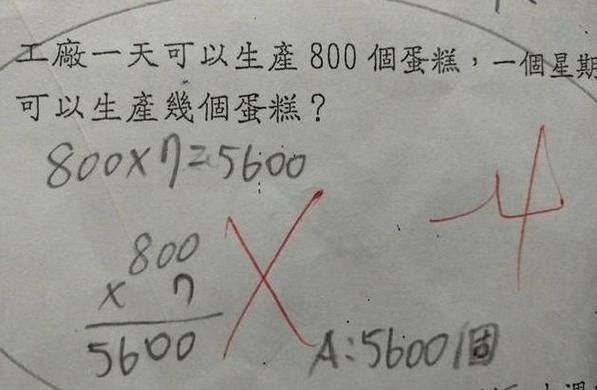
A number of parents have stepped on the same fault lines on the way to child-rearing: by placing all the weight of primary school on the textbook scores, staring at the number of scrolls per test, brushing and filling all the school hours of their children, until the children enter primary and secondary school, they find themselves unable to keep up with their self-regulating, self-regulating and focused, and then trying to correct bad habits, they will have to work several times, if not more than a dozen times. Six years of primary school is the golden window during which the child's physical and mental development and habits are laid, and the lower levels of capacity that have developed during this period have a direct impact on the learning and life of the next decade or so. Parents with a real long-term vision have learned to leap out of the limits of the principle of fractionalism, to reach the critical period of primary school and to grow up from multiple dimensions。
I. Adherence to normal sports and physical and mental substrates
In the current educational environment, it is common for physical education classes to be crowded and after-school remedial classes to be occupied by many primary school students, and parents often feel that sports are more time-consuming than two more sets of subjects, and that short-sighted thinking is slowly draining the growth potential of their children. In terms of human development patterns, 6 to 12 years of age are critical stages in the development of bones, cardiovascular and lung functions, and the rapid growth of the brain's nerves, and regular outdoor exercise is not only a strong body, but also a hidden force to optimize brain learning。
In the course of sports, the human body is charged with dopamine and endorphins, which can ease negative emotions, increase brain concentration, and maintain motor habits for long periods of time. Classes are much less likely to be obstinate and irritating than their peers. Several basic education studies in the country show that pupils who are guaranteed an hour of outdoor activity every day are generally more efficient than those who lack exercise. Beyond the learning level, regular sports can also shape the child's tenacity, and long run, and the ball-like program overcome the tired, face-to-face process of winning and losing. It can potentially mutilate the child's ability to resist frustration and avoid a breakdown in the child's mental state as a result of a failed examination。
Parents do not deliberately arrange intensive professional training, and daily fragmentation movements can land: a 20-minute jog in the morning, a jump rope after dinner, a walk on weekends, with emphasis on day after day, abandoning the inherent bias that “sitting at the desk is learning”, and adding sports to the daily list of children。
Ii. Accumulation of deep-tilled reading, with a mass input to build a knowledge framework for children
Primary school is a slumber in literacy and reading understanding, and many parents focus only on the inevitable repertoire of language textbooks, limited to reading and understanding training within the curriculum and ignoring the long-lasting value of extracurricular reading. Language learning is never a short-term, fast-growing discipline, with the accumulation of words, logic and mutual understanding relying entirely on long-term reading sediments, with insufficient input of after-schools at the primary level, and when reading in high and high-school languages and large-scale modern languages becomes difficult to understand, it is easy for children to experience a steady drop in language achievement。
The distinction between invalid reading and effective reading is an obligatory lesson for parents, with the aim of reading comics, fragmentation and shallow readings that do not complete the knowledge deposits, matching the children's grades with the children's books: priority drawings at the lower school level, short fairy tales, science stories, with a focus on fostering the interest in reading and expanding the basic vocabulary; and the gradual transition from the third to sixth grades to the documentary literature, the human history, the natural sciences, the classic children's book, widening the cognitive boundaries. The daily regular 30 to 40 minutes of exclusive reading time does not force the copying of long reading notes, which allows the child to recapitulate the content of the story with a short oral statement and exercise the ability to express it。
The benefits of reading are not limited to language monographs, the ability to understand through mass reading, the interpretation of the subject of reverse-aided mathematics, the drying of the subject in the general arts, the maintenance of stable extra-curricular reading habits from an early age, and the accumulation of reading as a hidden competitive cross-disciplinary learning exercise。
Iii. Transfer of cracking in the strengthening of response as a supply response to holding
Counselling is a daily pain for countless primary school parents, with children stalling, throwing away and disrupting, and parents often fall into a vicious cycle of shouting and criticalism after repeated calls for failure, both to undermine parent-child relations and to correct child habits from their root causes, and a system of customary card-playing can solve such child-rearing problems and be established through self-regulation programmes that are effectively measured by a large number of families。
Many parents tend to be biased against the pattern of card-playing, which is characterized as formalism, and the core logic of card-playing is, in fact, the intensification of behaviour, the decomposition of fragmented routines, the decomposition of small tasks such as getting up, packing school bags, completing work on time, packing desks before sleeping, making a visualized card list, completing a check-up, a ladder-type physical or accompanying incentive. Incentives do not require large amounts of material and preference is given to parent-child accompanying benefits, such as completing a week of full-time cards, visiting museums and outdoor camps on weekends and replacing accusatory preaching with positive incentives。
The habit is to have 21 days of initial stereotyping and 90 days of solidity, with the rate of lazyness of children during the first two weeks, parents being reluctant to go half way or out of the way, allowing room for error, and gradually adjusting the difficulty of the task to the reasons for missing items and children's communication. In the long run, children move from passive push to active planning of daily calendars, parents say goodbye to the internal consumption of day-to-day catalyzed operations, and the capacity for self-management of children increases steadily。
Iv. To free themselves from housework and to develop responsibility and mind in the workplace
Most modern families are over-packed with child-rearing problems: they wear clothes, prepare stationery, clean up all their rooms in the hands of their parents, and the children are free of household chores and have long been self-centred and lack a sense of responsibility. The primary school stage is a golden period of labour awareness, with household work seemingly unrelated to studies, and a combination of integrated child planning, hands-on exercise and alternative thinking。
The first and second grades are responsible for preparing individual desks, stacking clothes, cleaning tabletops after meals, and the middle and senior grades are responsible for dishes, shoe cabinets and the purchase of simple items of livelihood. In dealing with the chores of life, children are acutely aware of the complexity of household chores, and understand the hard work of their families and weaken their selfishness. In terms of learning logic, the process of sorting out objects is to put together the sorting mind, which can be shifted to a knowledge point combing, mischaracterizing and indirectly optimizing children's learning methods。
Parents need to put an end to the misperception that “doing household chores wastes working hours” and that each household should be kept under control for a period of 10 minutes, turning labour into a normal division of labour within the family and creating from an early age a perception that “family matters are everyone's responsibility”。
V. Broadening social practices and populating books to enrich reality
A lot of primary school students are trapped in school and remedial classes. Between the two points, the books are so well versed in knowledge that they do not understand the basics of life, do not distinguish between crop types, do not understand the basics of financial logic, and are seriously disconnected from reality. The relatively lightness of school pressure at the primary level is the window during which children come into contact with the real world, and the experience in the field is a valuable asset for textbooks that cannot be repeated。
Social practices do not have to go far, but are based on everyday life: the market for food is aware of food items, records prices and establishes a basic concept of money; community participation in community cleaning, animal feeding and shared care; and visits to local museums and industrial fairs on holidays, in conjunction with historical and geographical knowledge of textbooks. Children who have first-hand knowledge of the real world, write words that are not empty, have a more comprehensive view of the problem, do not follow the standard answers of books, and continue to develop their ability to understand。
Vi. Strict control of the use of electronics, safeguarding of focus and vision
The proliferation of electronics is a major risk to the growth of the current generation of primary school students, and the rapid pace of short-video fragmentation can undermine children's deep focus, children who are accustomed to changing images for a dozen seconds, and it is difficult to study books and finish a whole book in silence. A number of parents are often busy working, using mobile phones and tablets to save their lives, waiting for their children to become obsessed with electronics, see the cliffs, and to be forced to stop after school attention has been lost。
A clear convention on the use of electronic products, with a division of time and duration, prohibits recreational mobile phones on working days, except for online learning, and does not last longer than 40 minutes on weekends. Parents act as role models, do not use short videos when their children are studying, spend time with their children, exercise outside the user, hand-read and fill their free time, and reduce children's reliance on electronics from the source。
Vii. Deep tilling emotional guidance to build a stable mind for children nuclear
In the case of children who are not yet mentally mature at the primary level, they are prone to negative emotions in the face of examination failures, student conflicts and criticism by teachers. Some parents value their grades, ignore their children's psychological fluctuations, reparate their children when they cry and suffer from frustration, and the long-term depression can lead to ailments and low self-esteem. Prosperous parents place the child's mental health on an equal footing with their studies, learn to listen to guidance and help the child to prepare for negative emotions。
Every day, there is an exclusive time for conversation, short communication before bedtime at school, and when a child suffers from a setback, the emotions are accepted before the problem is analysed, and the view that “no vulnerability, no crying” is not inculcated. A stable psychological state is a prerequisite for efficient learning, and children with optimistic mentalities are willing to take the initiative to study in the face of learning difficulties and do not simply give up on learning because of a failure。
Concluding remarks
Six years of primary school is not only a period of preparation for the promotion, but a period of construction of the foundation of the child's life. Scores are only the manifestation of the results of a staged learning process, and the lowest levels of physical ability, self-regulation, reading, experience, heartness are the core underlying factors that sustain children in the long run. Putting down the anxiety, the golden growth cycle of primary school, the steady growth of many dimensions, such as sports, reading, habits, labour, etc., will enable children to grow up and grow in the future。