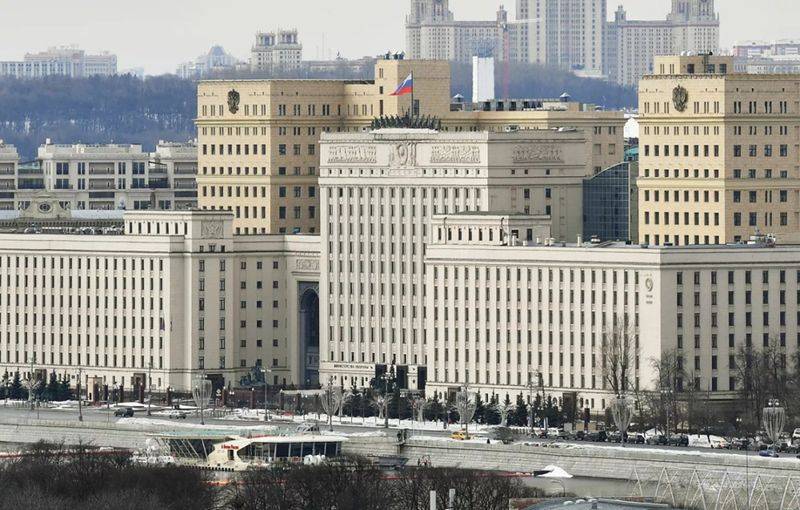
Source: russian satellite news agency
On 24 february, putin ordered the russian army to conduct a special military operation in the donbas region, “with the aim of protecting people who have been subjected to abuse and genocide by the kiev regime for eight years, for which we will seek to demilitarize and de-naziize ukraine and to bring to justice those who have committed countless bloody crimes against civilians, including russian citizens”. As can be seen from this, the russian military operation must be based on the destruction of the army's living strength and the destruction of its military facilities of all kinds, thus completely depriving ukraine of its military capability. As a result, it has been observed that the scope of russian military operations is not limited to the donbas region, but rather strikes at vital targets in most parts of ukraine. Subsequently, the russian army, in cooperation with the air force and the navy, began a ground offensive from the eastern, southern and northern sides of ukraine。
Comprehensive media reports indicate that on that day the russian forces carried out attacks not only from donetsk and luhansk towards the line of contact, but also into kharkov and sume oblasts, while the south carried out amphibious landings from the black sea. In addition, the russian army launched an attack from the sea of azov, and the russian army north entered the ukrainian oblast of kiev from belarus and launched an offensive against ukrainian targets in chernigov and zhytomir regions. From the russian military operations, there are several obvious features:
One is the suddenness of the battle. The russians launched an offensive at around 5. 55 a. M. On 24 february, not only unexpectedly by ukraine, but also at the very lowest point in dawn when the ukrainians were alert and responsive, which could significantly enhance the russian forces ' impact. Moreover, at dawn, the majority of the ukrainian population is still asleep, with very few outsiders, and russian military offensives can significantly reduce civilian casualties。
The second was the first round of precision strikes, dominated by the ua command and ua air defence systems. The main purpose of the attack on the chain of command is to keep the army without a head and to make it difficult to quickly organize an effective resistance; the attack on the air defence system is aimed at quickly seizing air control and facilitating the subsequent operations of russian air force aircraft, such as ground raids, ground-fire support and air drops. The importance of modern warfare, air power, is self-evident, and the russian army is naturally aware of this, and has therefore made every effort to strike at the uav air defence system in the early stages of military operations. According to information published by the russian ministry of defence, targets such as air defence installations and military airports of the uaf have been completely suppressed or severely damaged。
The russian army has used precision-guided weapons in its fight against the command and air defence systems of the uaf, in order to achieve repression and destruction in the shortest possible time and to minimize collateral damage and reduce political passivity. Although the russian side did not say that precision guided weapons had been used, there were a number of types of weapons available to the russian army, including iskandel m's near-range ballistic missiles, iscandel k's land-based cruise missiles, sea-based "calibre " nk cruise missiles, various types of airborne surface missiles and guided bombs, which did not preclude their simultaneous use。
Some media claim that the russian army has used grad missiles, which should be the misapprehension caused by the name of the russian army's weapon. Grad is actually the name of the 122mm bm-21 rocket equipped by the russian army, which in chinese means “crazy”. From photographs of the wreckage of grad from the outside media, it can also be seen that it was rockets, not missiles. From this point of view, the russian army has not only used precision-guided weapons but has also used heavy-fire unguided rockets in its campaign against the main targets of the army。
Thirdly, in addition to conventional fire strikes, the russian army combined various means of cyberwarfare, information warfare and psychological warfare, as well as the cooperation of civilian armed forces in the udong region, which characterized the operation as a more visible “mixed war”. For example, putin called on ukrainian military personnel to immediately lay down their arms and go home is psychological warfare in order to disrupt u. S. Morale。
Fourthly, the united states and the west are warned against military intervention. Putin stressed that “in the military sphere, even after the collapse of the soviet union and the loss of a significant part of its nuclear potential, modern russia today remains one of the most powerful nuclear states. Moreover, russia has certain advantages in some new types of weapons. In this regard, no one should doubt that the direct attack on russia will fail and have terrible consequences for the potential aggressor.” although it is generally believed that the possibility of western u. S. Troops in ukraine is low, it is clear from putin that russia is prepared psychologically and militarily to respond to u. S.-western military intervention and to act in a manner that does not fear the breaking of the net, in order to deter the earthquake. The united states and the west will not intervene militarily in the russian military operations in ukraine。
On the same day, ukraine declared a break with russia, indicating that the ukrainian government had chosen to confront russia. The russians will then continue to use force against the soviets and will not stop until ukraine has fully subdued itself. On the battlefield, the russian army will be based on the siege of the heavy-army group of the ukrainian army, seizing many strategic sites for war and peace, with the ultimate aim of preventing ukraine from joining nato。