
Safety accidents have become the first cause of death for children under the age of 14. School safety involves the safety of young people in their lives and studies in more than 20 different ways: food poisoning, physical injury, safety in the internet, traffic accidents, fire and fire hazards, drowning, drug abuse, sexual assault, aids, etc. It was noted that 80 per cent of accidental injuries could be avoided by improving the self-protection capacity of primary and secondary school students through safety education。
At the same time, according to a press conference convened by the ministry of public security, traffic accidents involving primary and secondary school students are not all on the way to and from school, but are more prominent on weekends and holidays. Statistics show that about one third of the accidents occurred over the weekends and more than one fifth occurred during the summer season in july-august. The number of out-of-school accidents is relatively concentrated, close to two times the day average. Attention needs to be paid to weekends, holidays and the custody of students after school。
There's nothing wrong with safety. The chinese teacher collected some security posters







During the spring festival, there was also an increase in children's outdoor activities, and what safety issues did teachers and parents have to focus on? Let's take a look
I'll be right back
In the event of heavy rains, protection is essential. The situation is critical and everyone needs more vigilance:
1. Close doors and windows to prevent rain from pouring into the house and, as soon as water enters, shut down the power, gas, etc。
2. Do not use underground passages or passages under high bridges。
3. In the case of mountains where water flows are hurried, muddled and mixed, it may be a precursor to flash floods and should leave the stream or the channel。
4. If there is a risk of severe flooding, the dwelling shall be evacuated and taken into safe haven。
5. The flow of water at a depth of 15 centimeters can cause people to fall。
In the event of severe thunderstorms, teachers and parents remember to protect themselves and their children。
Increased education on safety for children in areas such as mine prevention, electrocution, etc。
2. Children should be kept informed of weather information and reminded to stay in their homes or other safe places in extreme weather conditions such as thunderstorms。
3. In the event of flooding, take refuge on the roof and connect the body with safe fixtures such as trees with ropes or single items. Upon arrival in relative safety, a distress signal should be sent immediately in order to be rescued in time。
4. In the event of a thunderstorm, remove the plug, turn off the power source, and do not move in areas that are susceptible to electrical contact; and avoid thunderstorms by avoiding the danger of thundering under trees。
You have to protect yourself from animal injuries
In particular, pet families protect their children, although some animals are gentle and unsatisfied. The first aid method is as follows:
1. After the child has been bitten by a pet, it is necessary to observe the wound and to stop the bleeding if there is more blood. If the haemorrhage is low, the wounds are washed first and, to the extent possible, the rabies virus that is stored in the wound is removed。
2. Cover the wounds lightly with gauze and promptly bring them to the hospital for treatment。
The first rabies vaccine is administered within 3. 24 hours, and five doses of the vaccine will be administered to protect the body effectively。
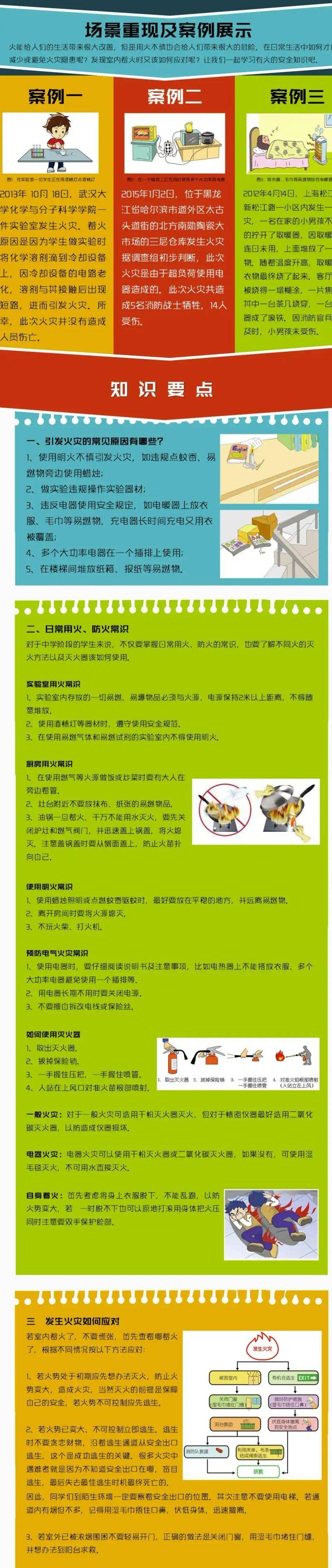
Fire prevention
Car safety
There's not a few kids who go and go to school now. During spring, parents remember to tell them about the safety of the young editor. {\bord0\shad0\alphah3d}
No “low head” and no mobile phones across the street
2. No red lights and zebra lines across the street
3. The use of bicycles is not easy and does not wear headphones to listen to songs
4. In case of a truck, stay away
5. Do not go crazy on buses
6. Do not force the vehicle to enter if the door is closed
7. Regularly operated vehicles without black cars
Take a taxi and keep an eye on the plates
9. Remember to call parents or friends when you get in the car and tell them it's safe
Fasten your seat belts by car
11. In case of danger, call 911 immediately。
Elevator security
Kids in elevators. Remember those safety rules
1. Don ' t let the child jump in the car, otherwise it is easy to cause the elevator cable to fail and to rise or drop at speeds。
2. The children shall not be allowed to tap the closed elevator car door in case the door is opened suddenly and the children's hands are caught in a gap。
3. Do not knock, push or pull, or break the elevator inside or outside. When the elevator is closed, do not attempt to prevent it from closing with body or articles, let alone stand at the gate to block the elevator door。
When trapped, do not panic, and do not attempt to open the elevator by smashing, breaking or turning the door lock, and may inform the monitor of the elevator's call for help intermittently。
5. When travelling on escalators, parents should be careful not to let their children touch the elevators that work with their hands or feet, which comb their teeth, although not shrunk, can accommodate the fingertips of children around three years of age。
6. Upon completion of the lift, the parents shall immediately take the child out of the elevator and not remain at the elevator's upper or lower entrance to avoid harm caused to the child by any subsequent escalators or objects。
7. Attention needs to be drawn to the fact that children's belongings are not hanging into escalators. For example, children carry toys, loose shoelaces, long pants, silk towels, etc。
From an early age, children are being raised to be safe and safe
It helps children learn to protect themselves。
The security awareness is good
Children benefit from their lives。
The danger is getting farther away from the baby