What if the bridge isn't connected? Are we really going to dismantle it all and rebuild it
Have you ever seen a video like this? A bridge is built from both sides to the middle, looking at it as a “familiarity”, but it is not connected。
Most people think so: can you stand it? After the blast, redecorate。
But in the actual construction of bridges, there are no such dramatic results. The fact that there was a deviation at the time of the bridge does not mean that the entire project failed. Engineers are most afraid of being “less”, and it is most important whether deviations are detected in a timely manner, go beyond the manageable range and have an impact on structural security。
The bridge was not carried by two people to the middle. It ranges from design, measurement, pillar construction, sorghum formations up to cylon, each of which deals with millimetres and centimetres. Even a seemingly straight bridge has many “set aside”, “adjusted”, “corrected”。
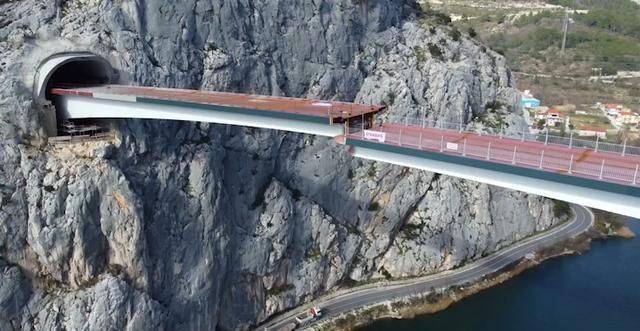
The true dragon is not a simple alignment。
During construction, bridges are affected by temperature, concrete contraction, steel structural deformation, wind power, ground-based deposition and changes in construction loads. The difference in temperature between day and night causes changes in steel structures that cannot be detected by the eye, but can be detected by the instrument. Large bridge condensers typically choose to operate at relatively stable temperatures, not because of a sense of ritualism, but in order to avoid the effect of the heat and cooling resulting from temperature changes on the project。
Thus, an important concept in the construction of bridges is that errors cannot be completely eliminated, but can be contained within a certain range。
If some are staggered horizontally, it is not a direct blow-out of the bridge, but rather a solution by means of a condensed section, a branch, a connector, a surface of the bridge and a linear adjustment. For example, the bridge can move the beams slowly to their intended position by means of temporary support, jack push, bolt hole fine-tuning, welding sequence control。
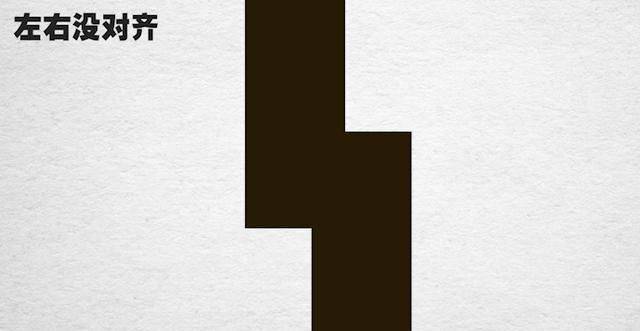
If the altitude is wrong, it's not the same as waste. Engineers first need to determine what the cause of the deviation is: is there a problem with the top marker or is the beryllium scratching through it? Is the measurement wrong? Or was there an oversliding in the construction process? Remedies vary for different reasons。
Some of the differences could be addressed by the use of cushioning stones, balconies, minor adjustments in the thickness of the surface of the bridge, others by recalculating stress and strengthening parts of the structure. It can be filled, but depending on the path of stress and long-term security。
The real problem is that the deviations are so large that they affect the linearity of the lines, the slopes and the safety of the vehicles, or have led to a clear discrepancy between the pressure on the structures and the design assumptions. For example, there are too many faults on both sides of the bridge to “turn back round” by widening, bending, raising slopes, so that there are issues such as cross-bridge sprawling, poor drainage, unwell vehicles, and some security concerns. In such cases, it would be better to dismantle and reconstruct local structures than to force them to fill。
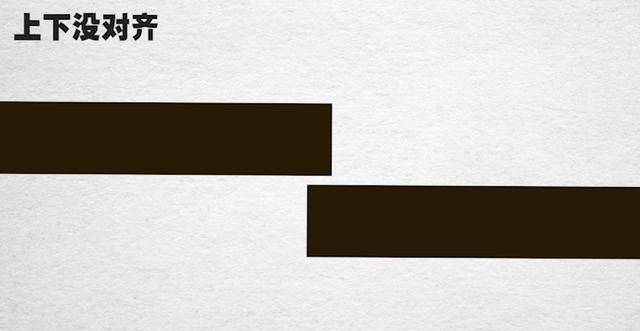
Note that partial demolition and rehabilitation are not all。
On the internet, “inconsistencies” are often described as work done by construction teams, but most formal bridge works are less crude. The bridge is now being constructed using a full station, gnss positioning, laser scanning, construction monitoring system and linear and stress tests. This is especially true of large bridges, where each beam moves forward with recalibration of coordinates, elevations and postures。
But there is a classic trap in the project, where measurement standards are not consistent。
You're using a high-range system, and they're using another high-range system, which looks fine on the drawings, but it's a lot different at the scene. Similar problems had arisen in earlier projects, not because workers had broken bridges, but because different standards were used by different construction teams. That means we're all serious, but the ruler is different。
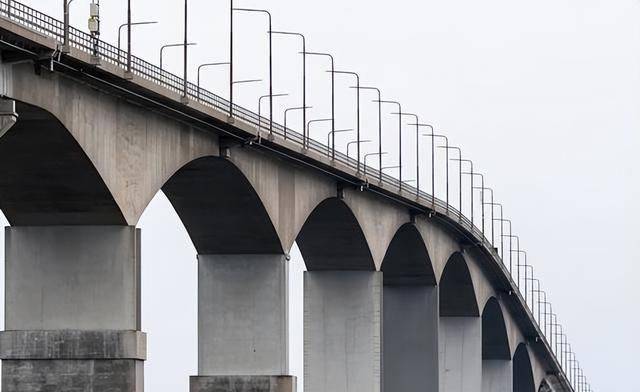
This is why there is now a strong focus in engineering management on harmonization of coordinates, harmonization of elevation benchmarks, review of bottoms and third-party measurements. The bridge did not wait until the last minute to consider whether it could be connected, but was prepared for uygur at the outset。
There is also a tendency for misunderstandings to occur: a bridge that looks “wrong” is not necessarily a wrong one。
Some of the bridges themselves have flat curves, vertical curves, superhighs and vertical slopes. When driving by, it is felt that the bridge is slowly turning around, up or down, in order to meet the requirements of road trails, traffic requirements, terrain conditions and drainage. The bridge does not necessarily have to be straight in order to be advanced and to be safe, comfortable and durable in bringing people and cars across the street is its ability。
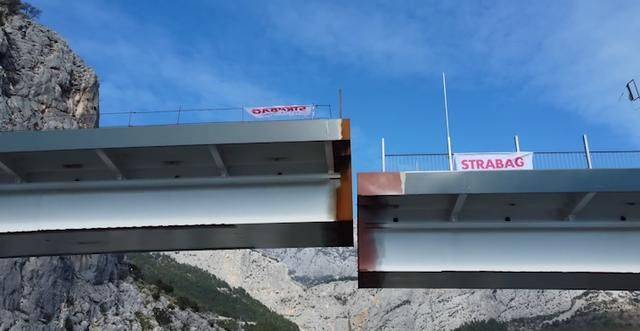
So how does the engineer judge when the bridge doesn't match
The measurement was suspended. It's not done through physical observation or on the spot. Rescale the positions, beam coordinates, heights, substation status, temperature effects and structural deformations。
Calculate. Could the deviation be corrected by the holong section? Will the internal strength of the adjustment exceed the standard? Can the slopes on the bridge, the stretching stitches, the mats, the drains, the collision barriers be carried out simultaneously
Then there's the solution. Small deviations are adjusted, medium deviations are partially modified, and serious deviations are dismantled. Bombing reconstruction is usually the last option, not the first response of an engineer。
Bridges are zippers. What you see is the last time you close up, but every tooth is right. Finally, it was discovered that it would not be possible to pull up, or that one of the previous steps would be wrong, or that the deviations had not accumulated in time。
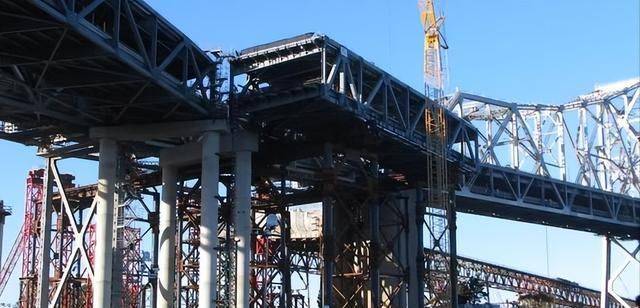
So when you see the video of the bridge being broken, you don't have to make fun of the construction team. Three questions can be asked first: what is the margin? Does it have an impact on human security? Has there been a structural review and formal approval
The biggest mistake in the project was not to admit the error, but to pretend that there was no error。
Have you ever seen such a bridge that looks strange, but may actually be normal? Next time you pass through a bending bridge, you should look at it carefully: it's not crooked, but it's serious to avoid reality。