Mr. Yan
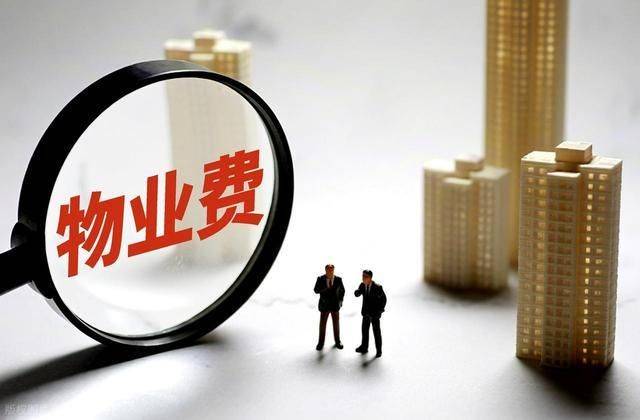
The property is finally at the end of the crossbow。
Since late april this year, several districts of jiangxi kyushu have taken the lead. Circulars continue to be issued in chongqing city, chasang district and wuning county, in which it is stated that public officials are called upon to pay property fees “without delay, discount or variation”。
Pengzawa district, among other things, has made the payment of property fees an integral part of the pre-qualification of seniors for promotion and merit. Subsequently, yunnan green spring, the screenside and others joined the group, calling on party cadres to take the lead in paying their historical arrears。
The binding of property fees and personal futures is a cruel reality in itself: property fees are no longer a minor contradiction, but rather a social dilemma requiring government intervention in rescue sites。
The data best illustrate the magnitude of the problem. Data released by the kgr indicate that the average collection rate of national property service enterprises (up to 500) has declined from 93 per cent in 2020 to 71 per cent in 2025, falling for the fourth consecutive year。
Even for relatively regulated listed enterprises, the collection rate was only 78 per cent, and small and medium enterprises were generally below 65 per cent, and some projects even fell by 50 per cent
The continued low collection rate has directly triggered a “scrambling” in the property industry. Between the beginning of 2025 and the end of march 2026, there were 212 residential property evacuation projects nationwide。
Behind these exits is the real survival of property enterprises: services cannot be sustained without receiving the money; the quality of services is down, and owners are less willing to pay. A vicious circle has emerged。
It was said that the problem was rooted in the poor quality of the owners, but that quality would not change abruptly. Why was the population reluctant to pay at first
The data from the multiland 12345 hotline show that complaints in the property management category remain high for a long time. Some property enterprises have declared high levels of satisfaction to the outside world, but there is generally poor feedback from owners' groups, creating a contrast of “high satisfaction and low collection rates”。
The current property problem is about four points。
One is that the services are highly out of line with the costs, and that the owners feel that they “have to pay for their lives”; the other is that there is no way to complain about the problems and that it is even more difficult to defend their rights。
(c) thirdly, the difficulties in establishing the commission, even if it is not established at all, are a lack of supervision and there are frequent cases of misappropriation of maintenance funds
Fourth, there is a general lack of transparency in the accounts of public revenues in the sub-districts - parking lot revenues, elevator advertising, express containers rent ... These are the proceeds that should be owned by the owners, and are long-term “dumb”
For example, one of the news stories in the first two days of the press was a vivid example: owners wanted to build a step and the property offered $15,000。
The owner found his own job and completed it at a cost of just 1,000. Who else would be willing to pay for such a price offer
The call for public officials to take the lead in paying their contributions may make the collection of data better in the short term, but will not solve the underlying problem. Whether or not the contribution is due to reciprocity of rights and obligations between the parties to the contract has little to do with status or position。
Raising the level of “political awareness” of commercial relations that should be based on contractual awareness and market regulation would not only not necessarily solve the problem of non-payment, but also obscure the complexity and depth of the problem。
The real solution to the problem has to come back to the real problem: the payment of money by the owner, the provision of property services, the standard of services and the measure of money。
One is to get the sun in the books. Public revenues, the use of maintenance funds and the collection and expenditure of property expenses in the sub-districts should be regularly publicized and monitored by all owners. Where the money went, it had to be given to the owners。
The second is to open the door to owner supervision and advocacy, to promote a third-party evaluation mechanism for the quality of property services, and to give owners a real opportunity to participate in property pricing and the evaluation of the quality of services。
The third is to be legally clear as to what kind of service defects can be reduced in property charges, what is a reasonable gap in payments, and what would be the consequences of malicious water outages, so that both sides can secure the border。
This year's report on the government's work includes the implementation of actions to improve the quality of property services, indicating that attention has been paid to this issue at the national level. However, implementation at the grass-roots level is crucial if people are to truly feel change。
Whether an industry survives depends not on how many people are “leading” but on whether it really meets the needs of the population。
If it does not adapt to the times and the perception of progress among the population, it is only logical that it should be eliminated。
Don't have to。