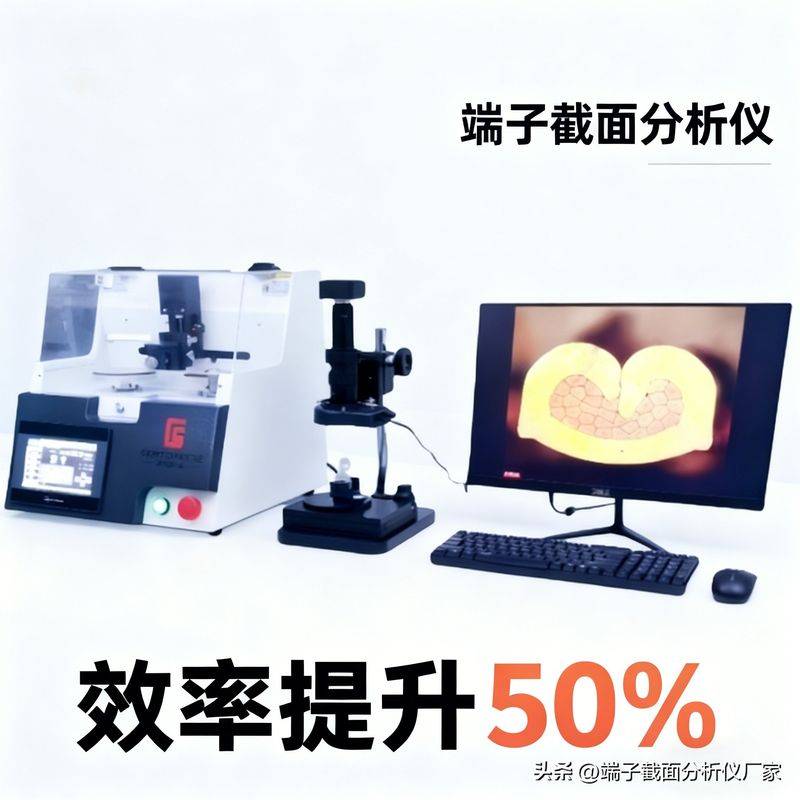
An end-to-face analyser is a precision instrument system for high-precision analysis, measurement and quality assessment of transects after the wire is attached to the end (connector). It has been dubbed the "goldness microscope" and quality final adjudication of the tether manufacturing and connector industry。
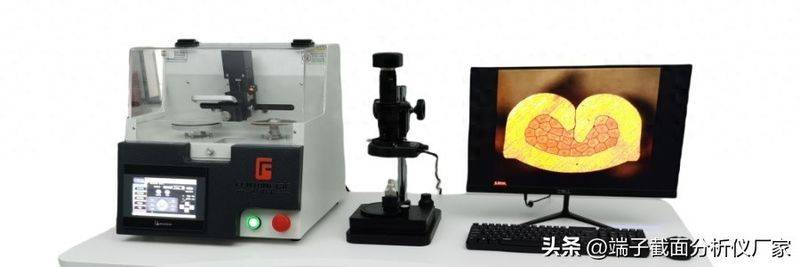
In short, it is a destructive detection device that captures a perfect cross-section sample by cutting, grinding, polishing points, followed by observations and digitizing measurements under microscopes, thus revealing the quality of internal structures that the naked eye cannot see。
Why do you need it
The quality of the compaction cannot be judged solely by appearance or simple pull, resistance tests. Many internal defects (e. G., conductor pressure injuries, excessive gaps, poor shapes) directly affect the long-term reliability of the connection (causes overheating, voltage, even failure). The cross-section analyser is the only tool that can “see” directly and quantify these internal characteristics。
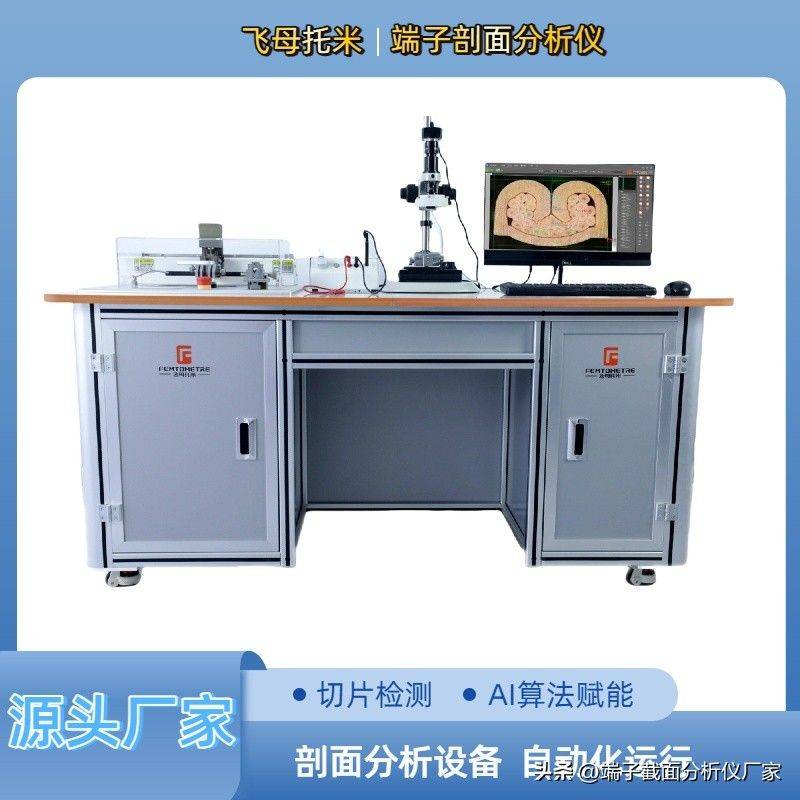
Main components of the system
Sample module:
Cutters: exactly vertically cut small samples in the pressressor axis。
Gravity grinder: the cross-section of the sample is grinded to mirror effects without any scratches or deformations using sandpapers with different numbers。
Image and analysis module:
A golden microscope: provides high-multiplier, high-spectrum visual clarity。
High-resolution digital cameras: collect images under microscopes。
Specialized image analysis software: this is the instrument's “brain”, where the core function is。
Core functions and measurement parameters
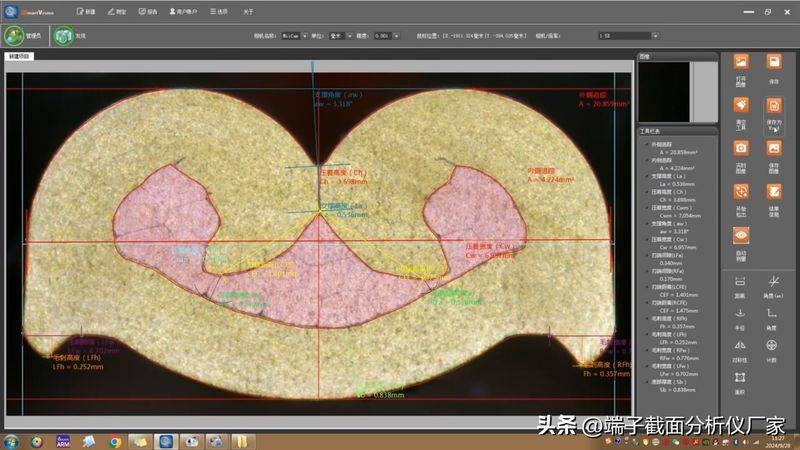
Specialized software automatically identifies different material areas in cross-section images (e. G. Tip, copper line, gap) and calculates dozens of key parameters, including, inter alia:
Measures the degree of condensation of the conductor. High compression ratio (low pore) means better conductivity and mechanical strength。
Pressure height: distance at the bottom of the outer contours of the back end. It is the most important control parameter on the production line and is accurately validated here。
Geometric contour: measure the sizes of wing shape, thick, hornet, etc., compared to the standard contour。
Guide distribution: check if the guide is symmetrical, cut off or excessively deformed。
Internal defects detection: identification of faults such as end cracks, hair punctures, guide lines penetrating insulation skin。
Size measurement: the precise size of all relevant locations。
Importance
It achieved a leap from “qualitative observation” to “quantitative analysis”. It tells you not only how good it is, but also how good it is to tell you exactly where it is, how bad it is. It transforms the reliability of the connection from an "art" to a "science" that can be precisely controlled. Just as doctors scanned the internal structure of the human body, the end-section analyser is a ct machine used by engineers to view the internal “health status” of the pressure point。