


“the elm tree + coffee”: the eco-economic win-win path — china institute of speedy trees at linko college explores new economic paths under the forest
In the south of the cham river in guangdong, a demonstration base of tree seedlings, a series of gill trees with large run-off luminous onions, and the underwood economic research team of the rapid tree research institute of linko university, china, are busy collecting a sprout full of red and glamorous coffee. In the sun, coffee fruits are glamorous, workers travel through the forest, skilledly pick ripe fruit into baskets, and the forest lands are filled with the joy of harvest。
Seven years ago, the institute opened the way for the exploration of a complex business model of “silver + small coffee”. After many years of scientific experimentation and fine field management, the team gradually constructed a technical system of coffee under the apricot forest, covering key elements such as tree matching, shade regulation and water fertilizer management, which has been successful in achieving symbiotic and multiplier effects of the fruit. “most people think chinese small grains of coffee are suitable for growing only at yunnan's high altitude, and now we have successfully produced fine small grains of coffee under the low-altitude north tropics of coroner. The coffee beans here are of high quality, moderate acidity and fragrance, and fully meet the quality of coffee.” this not only upsets the traditional perception that “small grains of coffee can be grown only at yunnan altitude”, but also enhances eco-efficiency and achieves economic benefits as well as ecological conservation。
This aluminum forest, previously dominated by single-wood production, has now improved not only the land use rate but also economic efficiency and biodiversity. Episode trees create suitable shade barriers for coffee, reducing the inhibition of direct sunlight on coffee growth, while coffee cultivation contributes to improved forest soils and increased microbiological activity, creating a virtuous cycle. The successful experience of the demonstration base provides a replicable and replicable example of the sub-forest economy in south china。
Composite pattern to break planting bottlenecks
In a pilot forest at the rinko school, in china, scientists are using specialized instruments to carefully record growth data for the latest batch of coffee trees. These data are essential for the growth properties of coffee trees in a given environment. The sun is pouring through the leaves of the eucalyptus, and it's pouring in the forest。
“alabika coffee books are `precious' varieties that grow under the ethiopian rainforest and are extremely sensitive to light, humidity and temperature.” the project team member sang-soo, a deputy researcher at the rapid tree institute, while looking at the number of jumps on the monitor screen, explained to us that “it is surprising that the micro-environment created by the apricotal trees is just reminiscent of its original habitat — cool, wet and accompanied by soft dispersible light”。
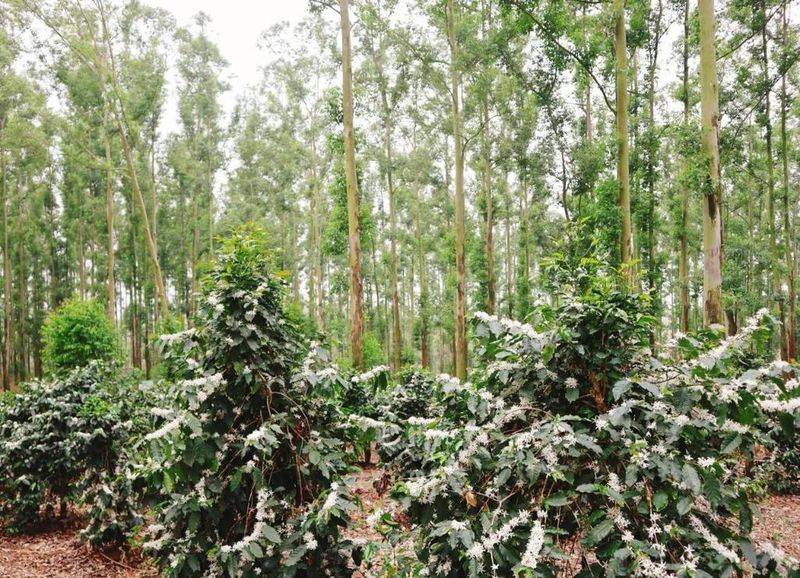
Multi-year observations indicate that the cascading caps produce approximately 40-60 per cent shade coverage, which effectively reduces extreme temperatures under the forest. Sang-soohua added: “the apricot forests reduce temperatures by 3-5°c and increase the relative humidity of the air by more than 15%.” this “natural air conditioner” effect, which is regulated by wood, has effectively mitigated the high temperature coercion that is common in low-altitude areas, avoiding solar burns on coffee leaves and fruits。
Even more surprising is the improvement in quality. Laboratory tests showed that coffee cane sugar produced under the apricot forest was 9. 2 per cent, 1. 5 per cent higher than under full-day lighting conditions. At the same time, a 17 per cent reduction in the content of chloropicric acid, which tends to give a bitter taste, means that the coffee flavor is thicker and more balanced. This result is consistent with the positive impact of shades in agroforestry patterns on the quality of coffee。
"we call it the "gold zone of photosynthesis." sang-soo is laughing at the metaphor, "just as people are most comfortable reading under the shade, and coffee trees are the best biological metabolism in this environment. After the test forest entered its third year of production, the acre production of fresh fruit stabilized at about 650 kg. Sustainable cultivation patterns not only increased yields, but also significantly improved eco-efficiency and economic efficiency, with an increase of over $6,000 per acre at current market prices.” sang-soo said。
This innovative practice not only explores new paths for coffee cultivation, but also provides a model for the complex operation of our southern economy。
From single forestry to "stereobank"
On the watch tower at the demonstration base, duabun, a researcher at the rapid tree research institute, pointed to the far-flung avalanche, saying: “ten years ago, these trees, also known as `ecological killers', are now truly `trigger banks'.”
This shift stems from the scientific re-engineering of the knowledge of eucalyptus. Numerous studies have shown that monocropping and high-density plantations have a real potential risk of causing a range of ecological problems. And by keeping planting densities at 50-80 acres and constructing multi-layered planting systems, the eucalyptus displays amazing ecological values -- in terms of soil improvement, about 1. 2 tons of desolation per acre per year can be produced and, as a result of decomposition, the organic content of the soil can be increased by 28 per cent; in terms of water resource culinary forests, the recharge of groundwater is 40 per cent higher than that of wastelands; and in terms of carbon sequestration, carbon stocks under the mixed pattern increase by 70 per cent over pure forests。

At the demonstration base, we witnessed a complete set of multidimensional uses of the ecosystem: the upper layer stands up to 20 metres of aluminum routing, the middle layer is mistook with a coffee tree 2 metres high, and the lower layer is tactfully shaded with food bacteria and medicinal crops. Such a stereo layout not only provides efficient vertical space but also reduces the occurrence of pests and diseases through ecological complementarities, significantly increasing resource efficiency。
According to zhang guekwu, a professor at the rapid tree institute, the system has increased the utilization of traditional monocultures by 200 per cent through simulation of natural forest structures, with annual aggregate production exceeding 10,000 yuan/acre, providing a replicable success story for sustainable agroforestry development。
Technology-enabled curry industry
In the coffee studios of the southern seedlings, the baker is operating slowly, with a fragrance of rich and charming coffee. “we must not just grow coffee, but build a complete industrial chain, from planting to processing to branding and maximizing benefits.” peng-yung, while looking at the baker curve, introduced. Increasing the value added of coffee by means of deep processing, he said, would not only boost local crop farmers but also contribute significantly to the high-quality development of regional-specific agriculture。
At the moment, the team is working to develop a series of deep-processed products, including: refined coffee beans — high-end singles certified by the sca (international coffee association) and rated above 80 cents, with a sense of purity and unique taste; coffee tea — carefully made from a short annual coffee flower, which distributes ablution and is rich in polyphenols, which is a natural and healthy new type of tea; fruit-cover tea — made from the fermentation process of the coffee fermentation, which is sour, which contributes to digestion; biofertilizers — the science of comparing coffee slag to the scavellage, condening to high-efficiency organic fertilizer, anti-nowning soil and recycle agriculture。
Recently, local government and relevant business leaders have made several visits to seedling sites at the national level in the south, and preliminary intentions have been reached for cooperation. In the future, the two sides plan to work together to expand the innovative integration model of the “coffee culture + tourism + healthy feeding” by building on successful examples such as the xinjiang dam in yunnan (the first village of coffee in china) and hainan maifoushan cultural censorship, to further extend the industrial chain by integrating the full chain of resources such as coffee cultivation, processing, experiential tourism and resting services, to increase the value added and overall competitiveness of the industry. This initiative will fully activate local resource advantages and provide a powerful boost to rural tourism efficiency, attract more tourist arrivals and capital injections, while at the same time re-energizing rural revitalization and helping to diversify rural economies and expand job creation. In addition, the project will explore in depth the integrated applications of digital and green technologies that will open new paths for industrial innovation towards sustainable development and, ultimately, economic, social and ecological synergies。
“green engine” for rural renewal
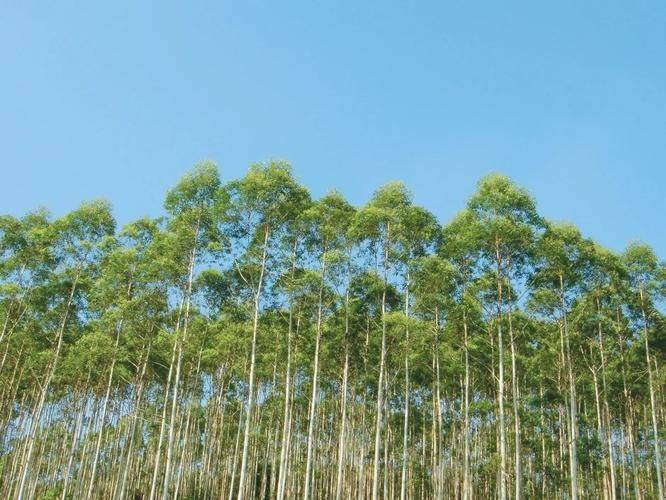
The complex forestry model of eucalyptus + coffee has not only contributed effectively to the extension and upgrading of local industrial chains, but has also contributed to a double increase in economic and ecological efficiency, and has profoundly reshaped the relationship between people and nature at the practical level. Elm trees provide an ideal shade for coffee plantations, reduce water evaporation and improve the quality of coffee beans. At the same time, the solid soil capacity of the roots of eucalyptus and coffee enhances land stability and reduces soil erosion. This mutually beneficial symbiotic pattern of cultivation both highlights respect for and application of natural patterns and promotes a shift in agricultural production from single demand to systemic synergy. In practice, it is increasingly recognized that the development of industries does not have to be undertaken at the expense of the environment, and that shared prosperity can be achieved through ecological coordination。
This shift is also reflected in lifestyles. The base's “forest café” is always full of guests every weekend. The tourists sit on an open platform surrounded by eucalyptus, grinding coffee with their hands, quelling in the seas of the green forest, and enjoy a quiet time far from the city's noise. Many people come not only to taste coffee, but also to experience the whole process, from picking fresh fruit to handmade. Farm workers lead family tourists into the forest, teach knowledge about herring tree cultivation and ecological conservation, and children can participate in interactive workshops to experience the production of natural fragrances and plant printing。
In the evening, tourists continued to live in the forest-based eco-populated farm of the royal tang township, which was built on a seedling base in the south. A number of visitors indicated that this immersive natural experience allowed them to rethink the relationship between life and ecology。
"we're going to turn every euphemism into a `shaking money tree', but not at the cost of destroying the ecology." using the “triple” model of interscientific deforestation, under-forest cultivation and ecotourism, scientists have both preserved the integrity of the forest system and created employment opportunities for local villagers。
Green for the future
In the new beginning of the “1455” intake and the beginning of the “1555”, the institute of speedy trees of the linko college of china has taken the initiative to respond to the deployment of the national rural renewal strategy, anchoring more ambitious development goals: the value added of the coffee industry has been increased effectively through the integration of science, technology and innovation with eco-agriculture, with a focus on the development of regional brands of curry, the development of unique agricultural products and the enhancement of the competitiveness of core markets. This series of initiatives is aimed at promoting diversification of agriculture and sustained growth of farmers and rural economic prosperity. According to the latest data, china's coffee consumption reached 280,000 tons in 2023, compared with 146,000 tons in domestic production, with a supply and demand gap of about 134,000 tons. Thus, the prospects for the development of coffee under forest are very wide in areas where climate conditions are suitable, such as guangdong and guangxi。
This is highly appreciated by chen xiaolian, chief economic specialist, linko house, china: “this innovative model of short-lived, forest-driven agriculture, which has managed to live up to the space resources of the forest, not only significantly shortens the return on investment cycle, but also further strengthens the ecological functions of agroforestry complex systems, truly harmonizes ecological conservation and economic development, and provides a replicable and replicable success story for the same area.” (pangyan sang-soohua baideng)



