In recent years, the qin district has adapted to local ecological advantages, taking advantage of modern agricultural development opportunities, leading and supporting farmers to develop specialty fruit industries, and moving out of the path of rural revitalization with specialty fruit industries。
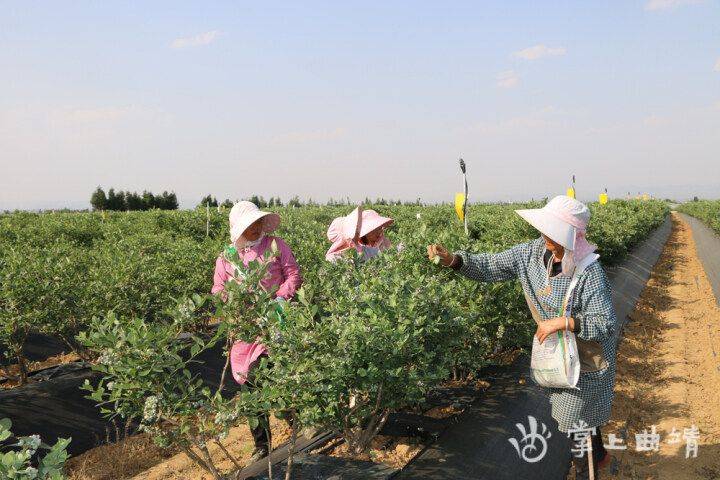
The workers are picking blueberries. Zhou wing
In the season of blueberry ripening, we walked into the pear berry plantation in vietnam, and saw only a green blueberry tree swinging with the wind and a lovely string of “smurfs” full of branches. It is understood that the blueberry acres produce 500 kg at an average cost of $80 per unit and 40,000. Since core indicators such as sugar and nymphobe are superior to domestic and international products, such as fruit size, hardness and durable storage, cylindrical blueberries are highly favoured in high-end markets such as beijing, shanghai, guangzhou and shenzhen, and are rated as the “tenth fruit of yunnan province” for three consecutive years in 2018, 2019 and 2020。
In 2019, the tritium district was classified as a blueberry specialty district (district) of yunnan province, “one county, one business”, and industrial development was positioned to create the country's best company-run field blueberry standard production base. The tritium zone has been followed by a major development of the blueberry industry in conjunction with enterprises such as gaewo, guizhou shao tai and yunnan shellan, which has created a whole-industry chain of blueberry species development, nursery breeding, planting demonstration, warehousing selection and logistics marketing. At present, a cumulative investment of $480 million has been made in the cultivation of 7,800 acres of blueberries in the towns of vietnam, toungshan and the streets, and in the construction of 5200 acres of standard core blueberry industrial estates in modern agricultural estates in the qin district, with 200 acres of a breeding base and 300 acres of a recreational pick-up park, as well as in the construction of a 12 acres and 15,000 square metres of quilwar blueberry semi-chain logistics centre。
In the grape growing base along the river's streets, a large shed is integrated. And he walked into the shacks, except that the vines were full of fruits, and a string of grapes green as emerald, full of evenly full. According to the head of the plant, this “sun roses” product, which is known for its name, is green, the more mature it is, the more succulent it is, the more juicy it is, and the smell of the fragrance of the roses is thick, and the citizens who come to the site to pick and buy it every july and august。
The unicorn specialty fruit estate, located in the village group of ping poo, which covers 2,000 acres, focuses on the development of specialty industries such as high-end fruit and organic vegetables, with a total of 134,000 fruit items planted in 13 varieties, including pears, ziru giant peaches, pears, pears, golden honey plums, american oxen apples, almonds, etc., and 38,000 plants. In november of each year, the pear matures, with abundant moisture, especially sweet foods, and popular consumers, and the fruits are reserved by the purchasers before they mature, not only to enter a number of supermarkets, electrician platforms, to sell to a wide range of cities in the north, to meet the needs of high-end consumer groups, but also to be made by yunnan white medicines。
In today's tritium, there is no shortage of fruit for four seasons a year, with cherries in spring, blueberries in summer, grapes, and pears and strawberries in autumn and winter. According to statistics, as of 2021, the area under fruit cultivation in the region was 43,273 acres, comprising 10,516 acres of pear, 8,376 acres of grapes, 7,800 acres of blueberries, 1827 acres of strawberries and 3,9120 tons of production, with a value of 2002$50,000。