Summary: withPublic informationThe competition is growingIn-depth coverageIt's holdingMediaAn important tool for appeal. But because of the objectivity of journalistic coverage and its professional limitationsExpertsParticipation in the news becomes the inevitable choice. While the involvement of experts can fill the gap in journalistic knowledge and give more authority to the news, at this stage there are sometimes shortcomings in the participation of experts in the news, which need to be recognized and avoided by journalists in the programming process。
Keywords: news; in-depth coverage; expertsRole
I. In-depth coverage of the news

Only a few decades ago, the work of journalists was limited mainly to events that they considered to be newsworthy, through the media. In particular, the television media, where journalists sometimes simply present news images to the audience, do not have to describe them much. As the news media flourish, more media platforms are emerging and people become more selective. In the growing news competition, it is difficult for the media to attract audiences (audiences or readers) who need to explain news events simply by showing what they see and listen to. This demand is particularly evident in print media such as newspapers. In order to compete with other types of media in the absence of visual support, it is necessary to do as much information as possible to attract readers. In recent years, however, the advent of the internet had changed access to information and habits, particularly among young people, and had had an impact on traditional journalism. The internet, which is more rapid in the timeliness of news coverage, can almost synchronize with news events; it can also present the sound and image of news events, which makes television media no longer advantageous; and its title-based selective browse, which meets the “fast-food” news acquisition needs of contemporary people in their fast-paced lives. Thus, deeper coverage of news events becomes an inevitable option if traditional media are to remain dynamic and competitive in the internet age。
In the past, news stories themselves had been the focus of news coverage, and the work of journalists had focused on describing events, the most important of which had been in the form of informing audience news clients of what they had done and what they had said. With deeper demands for press coverage, there has been a shift in the direction of interpretative reporting by journalists. At this stage, a qualified journalist has two roles to play: on the one hand, journalists need to describe the news as an excellent observer and, on the other hand, journalists need to act as analysts and analyse the news. Instead, a good form of news, not only includes a description of the news events themselves, but also requires a cross-section of news stories, a description of the context, an explanation of their importance and an estimate of possible subsequent events. On the other hand, press coverage also needs to be “conflict”, both positive and negative. How to make people choose and accept this news report is a top priority for journalists. The lack of coverage of news events/subjects and their explanations can only satisfy news parties, but greatly compromise audience appeal. As former nbc news president reuven frank pointed out in his book: “the news story should show a dramatic character without sacrificing the truth of events and the responsibility of journalists. It should have structures and debates, problems and outcomes, orgasms and valleys, beginnings, middles and endings. The news story needs to be turned into a news story.” only such stories are successful and attractive news。
Reasons for the participation of experts in reporting
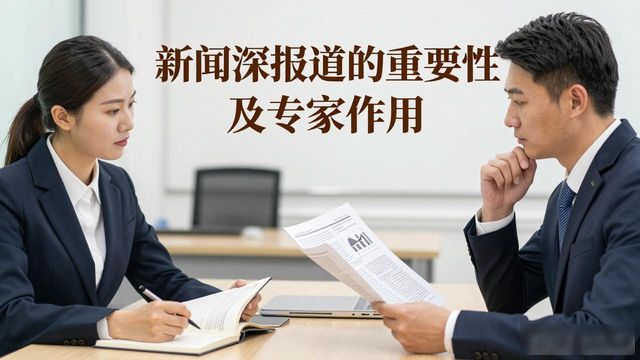
As a result of the pursuit of the depth of news coverage, journalists ' demands for expertise have increased accordingly. However, the relatively wide range of interviews covered by most journalists makes it difficult to obtain an understanding of all areas. Even for journalists in a particular field, as well as for so-called expert journalists, it is difficult to compare their professional background and depth of professional insight with those who have been working in this field for many years. As a result, we can see that expert statements are now more frequent than before in daily news reports. The main reasons for this are the following:
First, journalists want to make press reports more authoritative through expert statements. The appeal of news stories to the audience and the audience's acceptance of news content depend to a certain extent on its authoritative nature. The use of expert statements in the news, because of its wealth of relevant knowledge and good background (e. G. Experience, title, social influence, etc.), even when it is the same content and views expressed by journalists, is more authoritative than the journalist's narrative, and thus more capable of gaining the trust and acceptance of the audience。
Second, journalists need experts to confirm and support the structure and conclusions of their press releases. There is now a wide variety of sources of news, covering various fields of specialization. Sometimes journalists are able to develop their own interpretations and conclusions on press releases related to a particular area of expertise, but sometimes they are uncertain, when they look for experts to participate in the production of the news and seek support for themselves. On the other hand, an attractive press release sometimes requires the creation of “conflicts” (i. E. Opposing views) and it is difficult for journalists to accept the possibility of bringing their own superficial opposing views to the press release, at a time when the introduction of experts would solve the problem。
Thirdly, the interpretative and research-oriented shift in news reports now compels journalists to need expert help and advice to explain the news. While journalists have an advantage in the production of news stories and in the sharpening of news through various technologies, they still need experts to develop news stories and to give them sufficient depth and breadth. Moreover, the fact that at this stage information is much easier, that more news events are numerous and that journalists are constantly responding to new news events leaves no time for journalists to study the news in depth. Expert advice can thus quickly provide relevant background knowledge and can enable simple statements to take one level higher。
Iii. Format of participation of experts in press coverage
In general, there are two models of interaction between experts and journalists in news coverage:
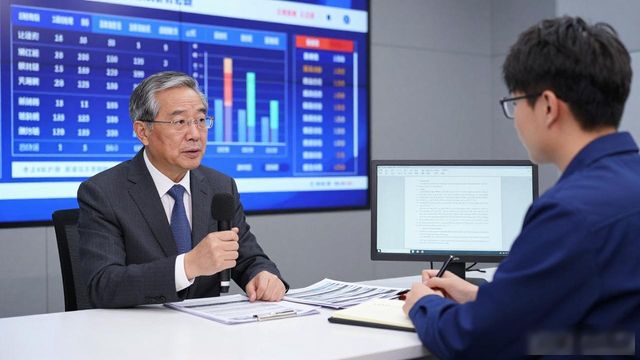
The first occurs when journalists consult experts to better understand, explain and account for news events. Objectivity is a professional requirement for journalists, which sometimes makes it difficult for journalists to express their views and opinions in news articles. This requires bringing a person who is neutral in a press conflict (an independent authority or expert) to serve as an arbiter or commentator in the news. Journalists then communicate with experts with a view to gaining support for the framework or conclusions they have developed or to expressing their views through experts. This form of communication, however, often occurs when journalists, through questions and so forth, can induce experts to move in the direction of the conclusions they have reached, and when journalists have achieved their purpose, their interaction with experts ceases。
Another form is the need for journalists to consult experts to explain, explain and help them understand news events, given the complexity of the news background and related knowledge. The content of journalists ' communication with experts has changed as the interpretation of the news has improved, as has the understanding of journalists. This will gradually increase the interest of journalists and viewers in the news. This type of communication, on the other hand, usually ends with the time or length of the news coverage. In this form of communication, journalists and experts have good communication, and journalists have their own understanding in accordance with the content and framework of the news. Clearly, this form of communication is more interactive than the first。
Iv. Inadequate participation of experts in public information at this stage
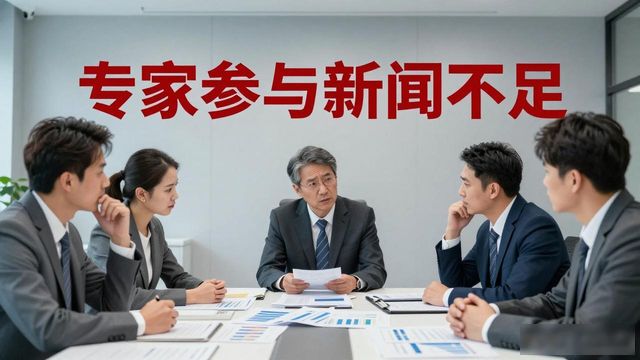
While experts often appear in current news stories, which enhances the professionalism of the news, deficiencies remain in many places。
First, the scope of expert advice on press coverage should be expanded. At this stage, it is generally for journalists to judge whether an incident is newsworthy, with very few experts involved. The starting point for journalists, on the other hand, was their attractiveness to the audience, which, while representing a preference for journalism, lacked professional guidance and sometimes misjudged the news value of events. Because of the educational, guided nature of the news, such miscalculation may send a wrong message to people, affect their ideology and cause unnecessary trouble to the parties to the news. The decision to report the incident and then introduce it by experts, while possibly directly or indirectly pointing to previous press values, may have an impact on the public credibility of the media. At some point, for example, some media reported the detection of bacteria in a frozen food and indirectly criticized the food company. In subsequent reports, however, the experts pointed to media errors, despite the fact that the press had been cleared, but food companies and the media had been victims during the events and had suffered damage to their image and credibility. The participation of experts in information should therefore not be limited to the interpretation and analysis of information, but also to the sources of its production, thereby fundamentally improving its quality and maximizing its ideological orientation and educational impact on the population。
Secondly, in the face of a wide variety of issues, experts, based on their objectivity, inevitably have vague, uncertain or undesired answers. And sometimes these answers are not what journalists or viewers expect. Thus, in the course of the interaction between journalists and experts, there may be situations where experts are induced or indirectly asked to provide accurate answers or answers in anticipation. In fact, however, such news reports, which contained uncertain and unexpected answers, were the real news that could be transmitted to people for real and accurate information. Journalists should avoid this in their communications。

Thirdly, despite their strong authority and reliability, the experts presented their personal opinions through the news. These findings or conclusions are sometimes not widely understood and accepted by peers. While these observations are based on professional judgement based on their personal or shallow insight, the experts ' personal preferences and experiences may have an impact in this regard. In the media, for example, experts have claimed that the ground was able to prevent the outbreak of h7n9 avian influenza, which was subsequently denied by other experts. This has occurred in the media, where the need for disease prevention methods has prompted experts to ask questions about their personal views, and in the face of the media, where scholars have not completely changed the views of their individual roles. In our democratic society, experts, as ordinary people, have the right to express their views. Although there is no clear line between the views of the experts and those of them as ordinary people, because of the broadcast and orientation of the news, when experts and scholars appear in the news, they are no longer free to express their views as an ordinary person. Similarly, journalists have the duty and duty to maintain the experts ' credibility, so that the assessments in the news are real, professional and not personal。
In sum, the diversity of the expression of information and the development of professional authority, and the increased competitiveness of the media, require close cooperation between journalists and experts, in addition to the charisma of the news itself. While experts respond to questions, compensate for the lack of knowledge of journalists, make the news more authoritative, journalists themselves should play a leading role and should not exaggerate the facts in order to attract audiences and deviate from the key to the authenticity of the news. Not to mention that it is half-aware and misleading the audience to understand and analyse news facts. Moreover, it is essential that the greatest space is available for experts to carry out their professional analysis to make news events more full and competitive in the news market。
(by shaanxi radio and television centre)