As a popular fruit, it is not only sweet and nutritious, but also of high economic value. Scientificly sound planting techniques and management are essential to ensure the high productivity and quality of dates. This paper will provide detailed information on the techniques and management of date-planting from selected sites, tree selection, planting and management, water and fertilization, flower management, plastic cutting and pest control。
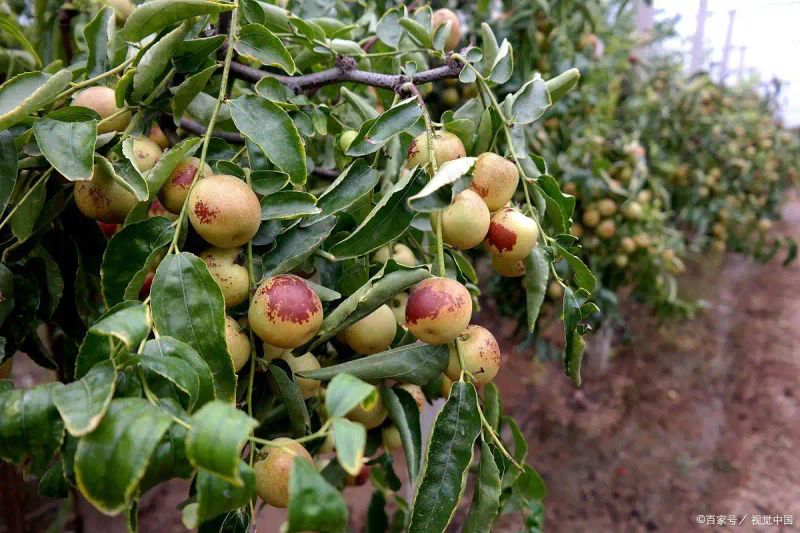
I. Land selection
Winter dates prefer warm and wet climates, so when selecting planting sites, it is important to ensure that the terrain is open, well-lighted, well-drained and safe, while transport is easy. It is proposed to select sandy or border soil for cultivation with organic content of more than 1 per cent and alkalinity of 6. 5 ~ 7. 5 with salinity of less than 0. 3 per cent, with sodium chloride of less than 0. 15 per cent. This type of soil is well ventilated and contributes to the growth and development of the roots of winter dates. At the same time, parks should be selected where air is fresh, water is pure and soil is not contaminated, avoiding the adverse effects of heavy metals and other harmful substances on the growth of winter dates。
At the time of the construction of the park, the spacing of the line and the range shall be reasonably planned to ensure that the date-palm tree has sufficient space to grow. In general, line spacing is kept at 3-4 metres and the range is more appropriate at 2-3 metres. Such a layout would not only facilitate ventilation, but also increase land utilization and productivity. In addition, the construction of irrigation and drainage systems should be considered in the construction of parks to ensure timely irrigation during the dry season and effective drainage during the rainy season to prevent root decay. The production areas are properly divided according to size and terrain, the construction of roads and water facilities, the construction of management houses and drug distribution ponds, and the setting up of suitable orchards around which protected forest belts are required。
Ii. Selection of trees
The selection of disease-resistant, high-yielding and high-quality winter-trees is key to success. When buying trees, care is taken to see whether the roots are developed and the leaves are green and rich. It would be preferable to select certified nurseries to ensure the quality of the trees. High-quality date trees not only have high rates of survival, but also can form canopy in a short period of time to increase yields。
Iii. Emplacement and management
The plant is designed to dig a fixed nest of 80-100 centimetres wide, 40-50 kg for the cave farmer and 1. 5 kg for the phosphorus, and then evenly flattened with the soil, so that the soil is not buried too deep, so that the trees grow. Plantation density is determined on the basis of ground conditions, management levels, etc., and is generally 3 mx5m, 3mx4m, 2mx4m, 2mx3m, i. E. 45-111 hectares per acre. The directional design should be north-south, with reasonable distance to ensure that trees have sufficient space to grow。
After the planting of the larvae, starting with the determination of the outer edge of the den, each fall, a deep expansion of 0. 5 to 1. 0 metres was achieved with a combination of fertilizers. When the soil is refilled, it is mixed with organic fattening, topsoil is placed on the ground floor, and the subsoil is placed on the upper layer, which is then filled with sufficient water to bind the roots. Weeding is often cultivated to keep the soil free of weeds and to a depth of 5-10 cm. Slurp cover with a thickness of 10-15 cm is promoted within the tree. During a period of between 1 and 3 years, short crops such as peanuts, beans and guacamole can be grown, as well as green fertilized crops such as slurry, trifles and mags。
Water and fertilizer management
Water is poured according to soil conditions and weather conditions, and the soil is wet but not wet. In general, water is poured four times a year, including sprouts (mid-april in conjunction with fertilization), flowering (late may or early june in conjunction with fertilization), fruit promotion (mid-june to early july with rapid and long-lived fertilisation) and freezing (pre-frozen). When the date-palms accumulate water, the canals are used to drain it in time for the date-trees to grow normally。
Annual springs and autumns are the best times for fertilization. In fertilization, a sound fertilization programme is developed based on the age of the tree, the direction of the tree and soil fertility. Nutrate is predominant, with appropriate doses of phosphorus and potassium fertilizer; in the outcome period, the application of potassium phosphorus is increased to improve the quality and production of the fruit。
Autumn-based fertilizers are combined with deep soil conversion after harvest and are predominantly organic. Young trees (less than five years old) are exposed to organic fertilizers of 25-50 kg, urea or phosphate of 0. 15-0. 4 kg, phosphorus of 1-2 kg, resulting in organic fertilizer of 100-150 kg, urea or phosphate of 0. 4-1 kg, phosphorus of 2-4 kg, potassium sulphate of 1. 5 kg, or grasshopper ash of 10 kg。
Soil fattening is generally performed three times a year, before the onset, during the sprouts and during the expansion of the fruit. Pre-cipient fattening is dominated by fast nitrogen phosphorus, with pyrotechnic strains of 0. 1-0. 2 kg and pyrophate pyrophate of 0. 3-0. 4 kg. In early june, the flowering season was dominated by nitrogen fertilizer, with urea applied to the juvenile plant 0. 1 - 0. 2 kg and urea applied to the adult tree strain 0. 25 - 0. 4 kg. In early july, the fertilisation of potassium fertilizers of nitrogen phosphorus was followed in early july, and the larvae plant was applied 0. 4-0. 5 kg and the adult tree strain 0. 6-1 kg。
The root pursuit of fattening begins in late may of each year until the first month of extraction, and is applied every half month or so, in combination with spraying. By july, nitrogen fertilizer was used, followed by phosphorus and potassium fertilizer. A flower spray of urea, boron, increases sit-in rates; and a urea spray of 0. 5% ~1% is used in the post-harvest tree。
V. Free treature management
The management of flowers is an important part of the date-planting process, which directly affects the yield and quality of fruit. At the beginning of the bouquet, the date is to be taken to the heart, leaving three to five branches each, depending on the growth momentum. This helps to increase sit-in rates and foster the growth of young children. At the same time, fresh water is sprayed, with water sprayed every 1-3 days from the beginning to the flowering period, and three to five times to maintain air humidity and increase pollination rates。
In the early stages of flowering, 1-2 doses of 10-15 mg/lerythylene can be sprayed to promote fruit development. For the outcome period, trees can be removed from the backbone, with the primary result usually being removed from the branches in order to achieve the result and sustain the tree. The slitting was to heal for about 20 days in order to keep the nutrients on the trees。
Vi. Prototyping
In comparison to other dates, the dates are of a variety of growing and burgeoning nature, with strong polar growth, a marked contradiction between nutritional growth and reproductive growth and a particularly sensitive approach to cutting. Therefore, plastic cutting is combined with summer cutting, mainly in the summer, to facilitate early formation and quality production。
Summer trims include, inter alia, date-picking, sprouts, twigs, pulls and cutters. In may-august, when the new dates were not wooded, the unresulted larvae kept three-to-five second-strength larvae at the 5-8 knots of the dry branch, resulting in the tree leaving two-four dates as nutrient branches in the space available, while the other dates were removed from the growth space. The sprout is the birth of useless dates on branches and trunks in time for the growing season in order to save nutrition and prevent tree disruption. Leachage is the timely elimination of dense dates and useless dates and the maintenance of a radiant crown. The graft is a branch with an inappropriate location and angle and is adjusted softly during the growing season. It is a seedling that grows on the ground around the trunk and is removed in time for reproduction。
The winter trims are mainly carried out during the winter, removing disease branches, weak branches and twigs and keeping the tree crown radiant. Rational shears not only preserve the beauty of trees, but also improve the yield and quality of fruit。
Vii. Pest management
Winter dates, though relatively resistant, may also be plagued by pests and diseases. The common diseases are date rust, anthrax, etc. The common pests are peach-eating heartworms, date stickers, etc. To combat these diseases and pests, the following measures can be taken:
1. Maintenance of good ventilation: avoiding overwatering resulting in excessive wetness and reducing the incidence of pests and diseases。
2. Periodic inspection: close observation of the growth of the plant, including the colour, shape and root growth of the blades, and timely measures to address the anomalies if they are detected。
3. A combination of biological and chemical control: control can be carried out using a combination of biological and chemical control to reduce damage to plants. For example, natural insects can be used to control the number of pests, or low-toxic, efficient pesticides can be sprayed。
Viii. Harvesting and storage
The harvest time for the dates is usually september-october, when the colour of the fruit turns to brown and sweet. The harvest must be carried lightly to avoid damage to the fruit. When stored, the date may be kept in a cold, ventilated place or in a freezer to extend its shelf life. Avoid over-heavy piles of fruit, so as to prevent heat from causing the fruit to rot。
Refrigerated storage is best at about 1°c and its relative humidity should be maintained at about 98%. Under such conditions, the generation of ethylene in winter dates can be inhibited and its shelf life extended. The supply of markets during new year's day and spring festival can yield better economic benefits。
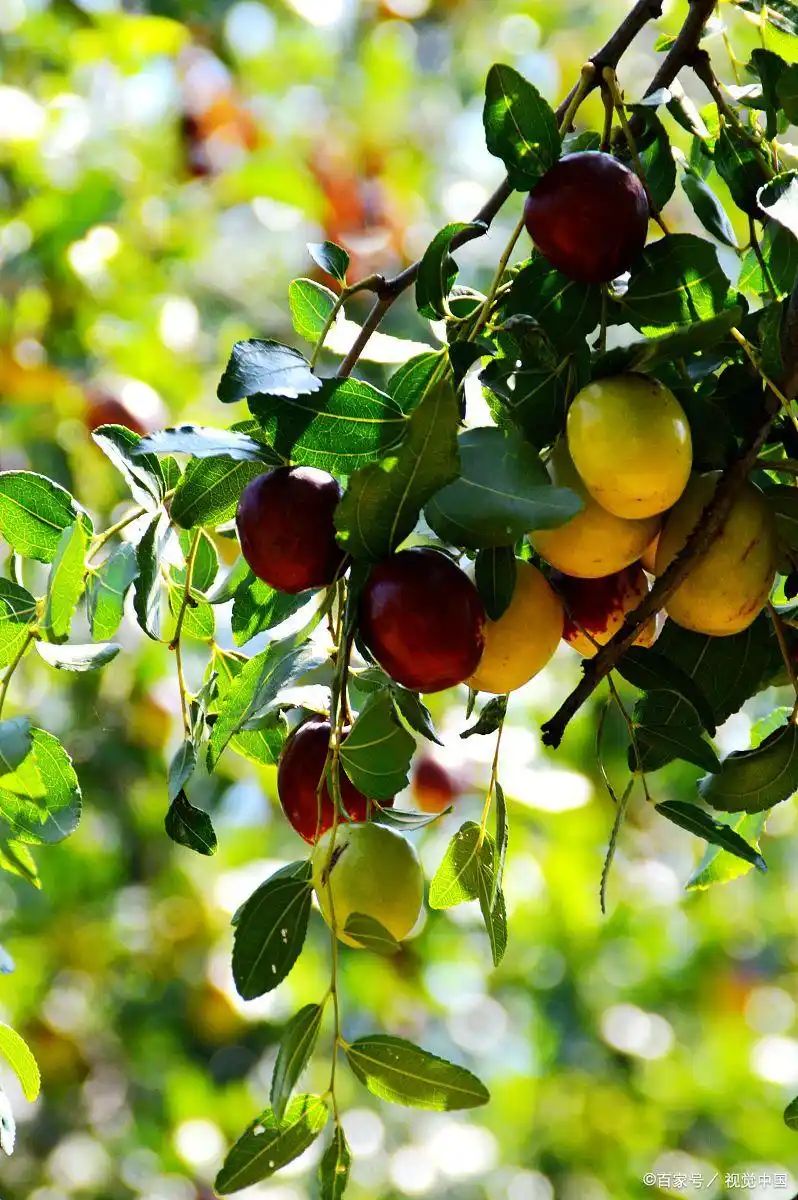
The technique and management of the planting of dates is a system project that involves a variety of aspects such as gardening of selected sites, selection of trees, planting and management of plants, fruit management, plastic cutting and pest control. It is only with the right planting techniques and management methods that the date can flourish in your yard or field and produce delicious fruit. Through scientifically sound planting and management, not only can the production and quality of date palms be improved, but it can also increase economic efficiency and add a natural and living life to your life。