In recent years, local state spending on listed companies has become more frequent and fighting has completely escalated。
In the past, the nabs were mostly designed to save risks, protect firms, and hedge securitization rates; now, m & as are purely industrial strategic configurations. The central purpose is practical: to integrate upstream and downstream industrial chains, to optimize local national capital efficiency and to boost regional industrial upgrading, while also alleviating local fiscal pressures and addressing the distressing exits of industrial capital。
Commonly speaking, m & as are industries that use low-cost financing from state enterprises, policy endorsements, combined with market-based operational efficiency, both to preserve value added of state assets and to provide solid local economies. According to current trends, during the 15th and 55th periods, m & as continued to be a high-hot backbone of capital markets, with a strong focus on hard technology, strategic and emerging industries, and the core of the industrial chain, with multi-capital instruments for deep regional industries。
I. Dismantling the six main mainstream mode of manipulation of publicly traded companies
Over the years, the acquisition of public companies by the local state has resulted in six well-established and replicable methods of fighting, covering the whole spectrum of relief, justice, funds, debt restructuring, and so forth, with varying degrees of excellence and suitability。
1. Insolvency restructuring model for controlling shareholders: the cleanest way to control
Appliance scenario: listed companies are themselves fine, but large shareholders are caught in a debt crisis, with a high percentage of stock pledges frozen and at risk of detonation。
Operating logic: state capital does not buy shares in listed companies directly, but rather acquires 100 per cent of the shares of the parent company (dominant shareholders) as a reorganization investor, indirectly taking control of the listed company。
Maximum advantage: perfect segregation of historical debt and old risks. Old books and disputes were all locked up in the former holding stockholders, and listed companies left clean and operated without any impact。
Classic case: king hua's capital into the main beinmen and the date country's capital into the bankruptcy and reorganization of styaber。
Direct m&a models: the most traditional method of urban rescue
This is the first-generation model that emerged in 2018 as a result of a wave of state acquisitions. In cases where the listed companies or large shareholders have broken short-term financial chains and are about to explode, the state funds are invested directly in cash, negotiated shares are given, debt crises are resolved quickly and the market platform is stabilized。
Characteristics: strong emergency properties, fast landings, pure cash. Case: jilin state enterprise *st huawai, two months to pay off 1,567 million debts; yangtze state trade bought a good goods shop。
3. Transfer of protocol + delegation of voting rights: the most cost-effective means of control
Applicable scenario: low shareholding of former owners, decentralization of shares and lack of physical or controlling instability in listed companies。
Operating logic: state capital buys only a small percentage of shares, does not have to carry large shares at high prices, and a power-of-voting trust agreement is signed that directly locks in the control of the listed company。
The current single model has become obsolete and the market mainstream has turned into a combination of boxing: partial offers + judicial auctions, indirect acquisitions + pledge release, etc., are combined to achieve control at minimum financial cost。
4. Judicial auction model: leak-out domestic equity
Large shareholder debt defaults, shares are frozen and auctions are auctioned, and the state is directly involved in judicial competitions, where the stakes prevail. Price transparency and process compliance are important ways of setting high-quality targets at a low cost to the state, a typical example of which is the competition for the state's shareholding。
5 industrial funds + funding model: a new public-private approach
The old model of full state funding is now more of a state-funded, private-sector team, market-based operation. The state finances private buyers through the industrial fund, the allocation of funds, and participates in the acquisition of ownership of listed companies。
Core strengths: to leverage the advantage of low-cost financing from the state while retaining flexible market-based business mechanisms for private enterprises that are not rigid or inefficient。
6. Local amc debt restructuring model: addressing the risk of debt distress
In the case of listed companies with complex debt structures and higher risks, local asset management companies (amcs) take the lead in buying unsound claims from enterprises, resolving the risks through debt restructuring, and eventually transferring the debt to stock and introducing industrial assets, which are suited to high-risk and valuable dilemmas. Case: nimbau amc alleviated south biochemical, nanjing trade debt restructuring。
Core trends: the shift of state finance from “passive salvage” to “active chain-taking”
The year 2025 was a watershed in the acquisition of state capital。
(a) the pre-national acquisition of listed companies, with the focus on risk reduction, asset securitization rates and local listing platforms
The new logic now is that there is a three-pronged process of solicitation + fiscal transformation + industrial securitization。
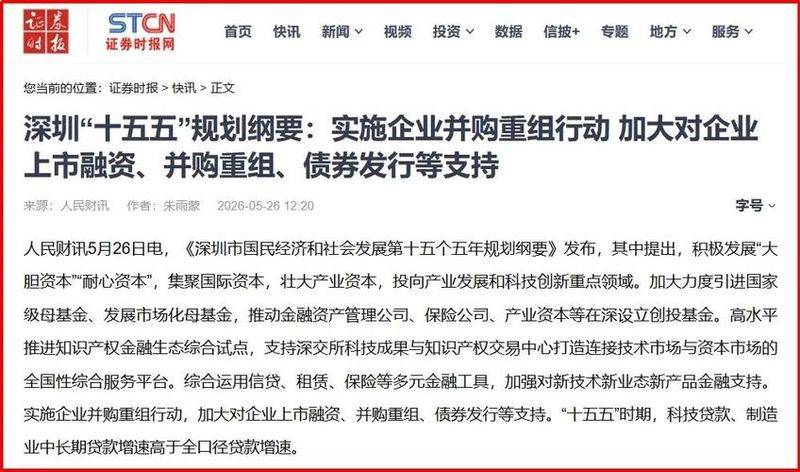
Instead of blindly linking risk enterprises, local state finance is focused on local industrial chains, with precise acquisitions subdivided into top-market companies, capital-purchase patches, strong chains, long chains, changes in bedouin control, and examples of this new logic。
Iii. Case unbundling: gim 886 million won the beemen, and the textbook industry acquired
1. The context of the transaction: the company's high quality, large shareholder mine blasts
Beinme is the leading player in the industry of quakers, with the "first share of milk powder" in a, established in 1992 and listed in 2011. The most central advantage is the rigidity of the brand: the fallout from the melamine incident in 2008 was the core brand of confidence in the rebuilding of the national milk powder, with cities accounting for over 10 per cent at peaks, with full capacity, national channels and national brand assets。
Corporate fundamentals could have grown steadily, with a two-year shortfall of over 1. 8 billion since 2014 due to strategic failures and poorly managed channels. Following the return of the founders to reform in 2018, the performance in 2022-2024 has gradually stabilized and the operational level has recovered。
The biggest problem, however, is with the large shareholders: the founders held the shares of besama jr., which held 12. 28 per cent of the shares of beinme, of which 98. 85 per cent were fully pledged and frozen, essentially equivalent to the “dead stock”, the financial chain was completely broken, the debt was unpayable, and a pre-reorganization application was eventually submitted in 2025。
To put it simply, listed companies are good companies, except for large shareholders who have been dragged down by debt, which is an excellent recapitalization。
2. Trading options: isolation reorganization, precision controls
Trade model: use the most secure holding shareholder reorganization model. The new spv platform under the flag of the state of kim hua has been combined to acquire 100 per cent of the shares in the holdings of petty bay and to indirectly hold 12. 28 per cent of the shares of beinme; and the unified actor, yuan hua yuan, has increased its shares by 1. 07 per cent through large transactions, with a combined share of 13. 35 per cent, taking control of listed companies。
Cost of transactions: reorganization of 856 million yuan, with an additional 30 million yuan to settle the secured liability of the controlling party, with a total investment of 886 million yuan。
Control change: after the completion of the deal, the two platforms were finally owned by the state finance commission of the city of kim hua, and beinme formally moved from a private founder to a local state management platform。
Industry logic: the highest end of the zachinghua dairy industry board
The acquisition was not blind at all, and the logic of industrial synergy was clear。
Kim hua is a well-known dairy base in the south, with well-developed milk sources and processing facilities, and indigenous dairy companies such as plum gardens, but there are always fatal short boards: there is no national high-end baby milk powder brand。
Infant milk powder is the highest technology threshold, highest brand premium and most profitable track in the dairy industry chain. The acquisition of beinme is a direct complement to kim hua's entire industry chain of milk-processing-high-end baby powder。
More than that, during the same period, the king hua national treasury set up a major health track for the purchase of $100 million of medicines, which, when landed, will form a dual-market platform for medical research and development + mother and child nutrition, perfect for the strategic planning of the local life-health industry。
Iv. Core trade points and potential risks (key points from the capital perspective)
1. Maximum bright spots: complete segregation of risks and zero impact of operations
The reorganization was intended only for large shareholders and did not touch the main listed company. The net profit of beinme in 2025 was $154 million, an increase of 49. 68 per cent over the same period, with three consecutive years of deductions for non-profits and a healthy base. Through the reorganization of controlling shareholders, old obligations, old risks are fully discharged, high-quality assets of listed companies are fully retained, and day-to-day operations are free from any influence and are the most recognized “clean m & as” of capital。
At the same time, a new spv master operation was introduced to further segregate investment risks, simplify transaction processes and achieve compliance。
Potential risks that cannot be ignored
Industry cycle risk: a decline in the newborn population, a contraction in the overall demand for infant powdering, and a period of stock competition, high-end internalization. The first quarter of 2026 saw a double decline in the revenue and net profits earned by benmey, with fluctuations in the short-term fundamentals。
Risks of national capital consolidation: consumer brands rely heavily on flexible marketing decisions, rapid end-response, precision channels. The process of decision-making at the national level has been more rigorous and less flexible, and subsequent integration has been difficult in a number of cases in which the brand of "water and soil dispute" has been consumed by the state。
Risks of performance acquisition: local state acquisitions must be based on industry demand and cannot be acquired blindly for kpi purposes. The logic of the transaction industry is clear, but the long-term ability to deliver industrial synergies and growth in performance will require time to verify。
Summary: bottom-up changes in domestic capital acquisitions
The king hua state's entry into the capital of benmi is a case of a local government merger of textbooks in 2025-2026。
It is a clear reflection of the core changes in the industry: the old era of state-owned m & as and the new era of value added in industry。
Through judicial reorganization, a total amount of 11 months was spent to clear the debt of large shareholders in high quality, with only 13. 35 per cent of shares locked in control at a low cost, while the chain of risk transmission of equity was completely cut off through long-term commitments of undefended and uncommitted. The distribution of 100-flower medicines has been successful in setting up a dual-market platform for the local health industry。
In the future, national holdings are no longer a simple “background endorsement”, and the real test is institutional reform, industrial empowerment and restoration of performance. Only by addressing the adequacy of national financing mechanisms and seizing the opportunities for high-level upgrading of industries can the industrial and capital value of the merger be truly realized。