In june, a number of listed companies issued public announcements modifying the price-fixing rules and changing the pricing base date from “board resolution bulletin day” to “first issue date”, which included projects at different stages of advance, such as pre-filed disclosure and registration。
The securities times correspondent combing found that there were a number of common features to the increase in the announcement: the distribution was limited to controlling shareholders, realholders and their related subjects; and the collection of funds was used exclusively to supplement liquidity or to repay debts。
According to several interviewees, the above-mentioned pricing adjustments have reduced the arbitrage space of controlling shareholders and de facto controlling persons, thereby contributing to market equity and protecting the interests of small and medium-sized investors。
Intensive adjustment pricing benchmark date
As at the time of the issue of the 10 june paper, at least 21 listed companies had, since june, changed the pricing benchmark date for the increased project from “board resolution bulletin day” to “first issue date”. Among them, on 9 june alone, five companies, yingtai, kohua holdings, blue fung biological and chemical, universal energy and technology, issued simultaneous announcements of adjustments。
Similar adjustments were made to the fund-raising component of the partial merger reorganization project. For example, on 8 june, the sky model announcement, in which it issued shares for the purchase of assets and a fund-raising package, changed the pricing date for the fund-raising package to the first day of the issue。
The difference between the two types of pricing, as interpreted by industry, is that the board's decision announcement date allows for the price of issuance to be locked in advance, and the buyer can obtain a higher discount if the resolution goes up the equity price from the issuance stage; the price on the first day of the selection period is applied to the market real-time equity price, significantly reducing the discount space for the subscriber。
With regard to the reasons for the adjustment, some listed companies referred to “the smooth running of the distribution process” and others stated that they were based on “better protection of the interests of small and medium-sized investors”。
Journalists noted that none of the listed companies on the above-mentioned intensive pricing benchmark date had yet obtained approval, i. E. There was a risk of adjustment at any point in the scheduled increase project。
Despite the approval of the exchange, the restructuring programme has been revealed, and companies such as the kohua holdings, qingda environmental protection, quixuan environmental protection, gold coal technology, and shanshan share have entered the registration stage and are awaiting approval, with the same change in the base day。
Changes in the market environment for refinancing
The above-mentioned intensive adjustment of the pricing benchmark has attracted market attention, and many of the participants interviewed have indicated to journalists that this is an act of industry harmonization and that the refinancing market environment has changed。
Under the regulation of the registration of securities issued by listed companies, three specific categories of persons may participate in the listing of listed companies by using the “board resolution bulletin day” as a lock price for the pricing base date, namely, holding shareholders, de facto controllers or associates of listed companies; investors who acquire real control through such increases; and strategic investors. Industry described the rule as being designed to attract the participation of investors who could create long-term strategic value for listed companies。
A medium-sized vendor investor told journalists that the rule might be alienated in practice, and that the adjustment was mainly for lock-in projects that were fully subscribed to by the controlling shareholders, the controlling party and its related parties。
“in view of past partial additions, project pricing using the board resolution announcement date as the base date for pricing would be lower, and large shareholders and their linkages would yield substantial gains if the stock price were to rise substantially thereafter. In the case of a science and technology concept unit, stock prices tend to rise rapidly, with the former shareholders having a particularly significant profit margin. This makes it easier for some of the listed company's large shareholders to proactively push up and raise stock prices, undermining both market equity and the interests of small and medium-sized investors.” according to the source。
According to journalist combing, more than 90 per cent of the 21 listed companies with adjusted pricing benchmark dates were issued to controlling shareholders in listed companies, actual controllers or other enterprises controlled by actual controllers。
In november 2024, in the case of a company listed in the electronics sector, the company issued a plan for an increase in the amount of money to be collected from the actual controller to supplement the liquidity. The increase was previously based on the board's resolution announcement date as the base date for pricing, with a issuance price of $14. 20 per unit and a closing price of $43. 36 per unit as at 10 june. The company has now adjusted its programme to replace the pricing base date with the first issue date。
It is noteworthy that the collections of these 21 listed companies are mainly used to supplement liquidity or to service debt. In addition to the adjustment to be made to lock-in projects where large shareholders or their related parties subscribe to full-cost purchase, the price-added projects that become new de facto controllers are similarly subject to pricing benchmark-day adjustments。
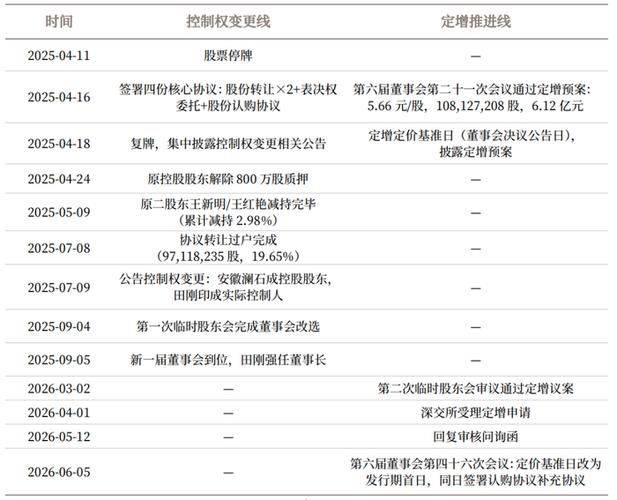
On 8 june, the gosbel bulletin modified the pricing reference date to the first day of the issue. The company is known to be the master of the torch management consulting partnership (limited partnership), which raised no more than $650 million to supplement liquidity and service debt. The company stated that this increase would result in a change in control and that the de facto controller would change from the state-owned property control board of the city of yanjong to yang jian。
Partial additions have been suspended
The multi-tender analysis shows that this adjustment is expected to drive the market towards a more normative direction and discourage the arbitrage impulse of listed companies。
Some of the listed companies that had intended to disclose the price increase had been suspended, and projects with large shareholders subscribing in full were waiting for policy direction。
In the view of this person, changes in the market environment will directly affect the arrangement for the growth of some listed companies, “for large shareholders, the cost of subscription has increased significantly and the difficulty of distribution has increased. A listed company may suspend the push for growth and not exclude the eventual cancellation of some of the projects”。
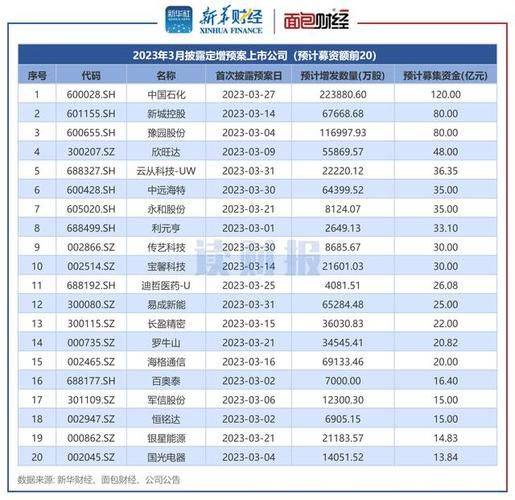
According to east wealth choice data, as of 10 june, 100 listed companies have been on the ground since this year, raising a total of $32. 25 billion. Both sets of data show an increase over the second half of 2025, when 96 listed companies increased their numbers, raising a total of $30. 47 billion。
According to several respondents, the date of adjustment of the pricing benchmark has substantially reduced arbitrage and guaranteed market equity. In the future, funding is expected to flow more to high-quality enterprises with real development potential and intrinsic value。