Quick delivery provisional regulations will be implemented and interviews will be given to the relevant heads of the national postal service
The fast ones are slow
The department of state has issued the provisional ordinance on express delivery, the first administrative regulation of which will be implemented as of 1 may. The regulations respond to what are the “torture points” in which industries? Interviews were conducted by journalists。
Speed delay, loss
Who's gonna pay for it
Who's responsible for the missing package? What about the compensation? Can you claim from express for losses caused by the delay
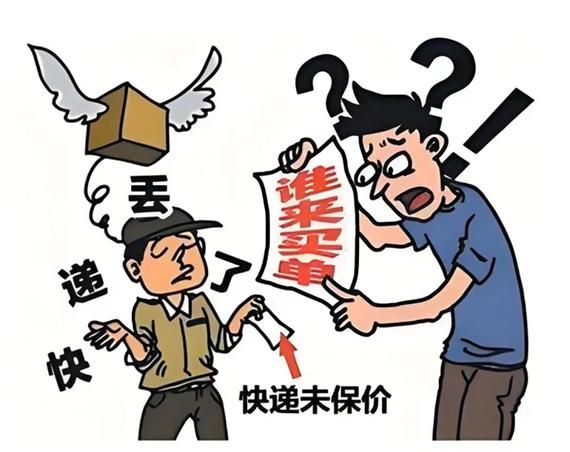
Under the regulations, users can bring a claim to the express delivery enterprise if the legitimate interests of the user are impaired by the delay, loss, damage or short contents. In the amount of compensation, the regulations stipulate that liability shall be determined in accordance with the rules governing the premium; in the case of the uninsured price, liability shall be determined in accordance with the relevant provisions of civil law。
“this regulation expressly includes the delay in the scope of compensation for the enterprise, along with the rules on premium and civil compensation. This institutional arrangement has increased the practice of the industry to that of administrative regulation, expanded the scope of protection on the basis of postal law and strengthened the rules on compensation for courier services.” according to the relevant head of the policy and regulatory department of the national postal service。
In response to a possible encroachment by a member model enterprise on a user claim, the regulations provide that, depending on the characteristics of the express network service, the user may seek compensation from the enterprise to which the trademark, symbol, express consignment note belongs, or from the enterprise that actually provides the service。
At the same time, in order to make the claim process more smooth, the regulations introduce commercial insurance for loss of short-distance items, encourage insurance companies to develop related liability insurance, encourage enterprises operating express delivery operations to take insurance and provide users with an additional layer of security for payment。
With regard to issues relating to consumer uncertainty about the price of a guarantee, the regulation establishes the basic norm for the price of a fast-track guarantee. The regulations expressly require the establishment of liability between the enterprise and the sender in accordance with the agreed price-fixing rules, and the enterprise shall inform the sender of the price-fixing rules before completing the consignment note and permit the enterprise to require the sender to secure the price of the valuable items. “this provision fills the gap in postal law that only secures the price of mail (by giving to the postal enterprise a receipt at the time of its receipt, and at the time of delivery the mail is signed by the addressee, such as a postal international package) and does not provide for the price of the fast-forwards.” the official stated。
The holidays are suddenly closed
What do we do
What happens when the internet companies stop working
The regulation requires that, if the express delivery business ceases to operate, it should be notified to the public 10 days in advance, and that the express delivery company or its network site be suspended, that the reasons and duration of the delivery be announced to the public and that the outstanding delivery of the delivery be properly processed. In the event of a violation, the offence is punishable by a fine of not more than $50,000 and by an order to suspend the operation。
On holidays, businesses want to close down. What about users? The regulations also contain provisions. On the one hand, the enterprise should announce to the community the suspension of the delivery service to help the user to establish reasonable consumption expectations; on the other hand, the regulation encourages the enterprise to provide normal courier services to the user during holidays, in accordance with the changing circumstances of the business. “this provision helps to guide enterprises in their efforts to achieve a mutually beneficial co-benefit between consumers and workers through effective measures such as the rational allocation of duty leave and the granting of material and moral incentives to employees.” the officer-in-charge said。
At the same time, the regulations reinforce the fast-loading practice by stating that “the enterprise should regulate its operations to prevent damage to the fast-load”. The officer-in-charge stated: “this provision confirms the previous regulatory requirement of the national post office to “do not leave a note undiscussed” and further protects against `wild practice'.”
The regulations also supplement the rules for the handling of undelivered packages by allowing businesses to process undelivered packages at the request of the sender. The regulations also provide for procedures for fast copies that cannot be delivered or returned. For example, in the case of correspondence, which is unclaimed for more than six months from the date of confirmation of inability to return, it is destroyed by the enterprise operating the express delivery operation under the supervision of the postal administration of the place where it is located; in the case of incoming goods, they are dealt with by customs in accordance with the law。
Disclosure, sale of information
How

The challenge for the express delivery industry is how to prevent the disclosure of consumer personal information, through the dispatch of fast copies and the diversion of a large number of user personal information flows to enterprises operating courier operations。
Professor liu junhai, faculty of law, people's university of china, stated that the regulations protect user information security at various levels. First, the regulations prohibit the recording of user identification information other than name (name), address, telephone contact on the express consignment note, reduce risk points for personal disclosure, and clarify the boundaries of business conduct in collecting user information。
Second, under the regulations, express delivery enterprises are required to secure electronic data such as user information, destroy express consignment notes on a regular basis and have the responsibility to use effective technical means to secure user information. Businesses and their practitioners are not allowed to sell, divulge or illegally supply user information known to them during the delivery of courier services. If the information of the user known in the course of selling, leaking or illegally providing a courier service is of a serious nature, the proceeds of the offence are confiscated and fined between $50,000 and $100,000, and may be suspended until the licence to operate the courier service is revoked。
In the case of undisclosed, hidden, abandoned, resold, illegally inspecting a person's express or illegally detaining a express item, the ordinary circumstance is the confiscation of the illegal proceeds and a fine of between $50,000 and $100,000; in the case of serious cases, a fine of between $100,000 and $200,000 may be imposed, and the suspension may be ordered until the licence to operate the courier business is revoked. “the most important role of laws and regulations is to regulate expectations, and this provision will act as a deterrent to such acts as the breaking of parcels and the illegal inspection of other people's fast-food items.” liu junhai said (journalist lee zhongping)