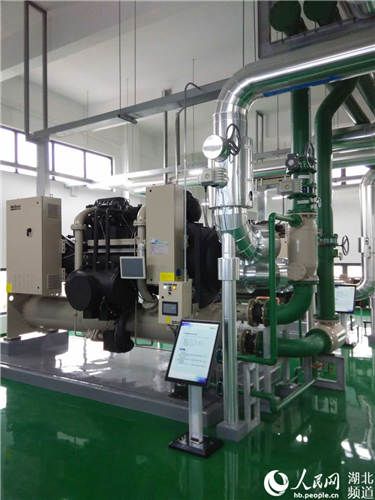
On november 26th, the people's network wuhan electricity, the first regional research and development centre for water coolers in the asia-pacific region of the global cooling giant macwell, was inaugurated in the wuhan development area, the first state-of-the-art and testing centre for the development of central air conditioners in china。
The 144-year-old mcvell is one of the world's largest manufacturers of air-conditioning refrigeration equipment, based in 32 countries, including the united states, the united kingdom, italy, the netherlands and china. In china, macville has three main factories: wuhan, shenzhen and suzhou。
The wuhan research and development centre, which was inaugurated yesterday, is primarily responsible for the development of central air-conditioning products adapted to climate characteristics and user requirements in the asia-pacific region, particularly china. The research and development centre began work in april 2015, with a total investment of $80 million, with 11 laboratories of various types, 2 research and development testing stations and over 100 specialized technicians. Once operational, it will be the most advanced r & d equipment in the country, the most specialized r & d testing stations and the most capable of testing the approved sample testing equipment。
Why did the asia-pacific cold water unit r & d center be chosen in wuhan? "the role of several bases in the country is different, and our research and development centres are equivalent to "think tanks." in his presentation, dr. Deng, an engineer at the mcver vuhan research and development centre, described the company's long-standing residence in wuhan and its commitment to wuhan's rich scientific resources, as well as its recognition of wuhan's technical skills。
It was described that in 1996, the mcville wuhan factory had officially come into operation, and in 2003 $25 million had been invested in the construction of a completely new sole-owned plant, with products such as air conditioning, heating, process cooling and refrigeration, cold air conditioning, and exports to south-east asia and australia, in addition to major domestic projects such as the beijing nan station, tianjin subway, wuchang railway station, wuhan city house and the xinhe revolutionary museum. During the first 10 months of the year, the factory completed a profit tax of $941,200, an increase of 103 per cent over the same period, and sales grew by more than 30 per cent annually. Over the past year, the wuhan development area has encouraged firms to upgrade and upgrade their intelligence systems and to move forward with the construction of smart factories. Among these, the american digital chemical plant project has been approved as a pilot demonstration project for smart manufacturing in hubei province, and eastern feng chukai has been tested as a pilot demonstration project for national smart manufacturing. The region includes 31 national, provincial, municipal and enterprise research and development centres, laboratories, post-doctoral science and technology workstations, with an expected 17 per cent increase in the region-wide production value (income) of the smart manufacturing industry this year. Zhou minder