There's a scene that many people have been through。
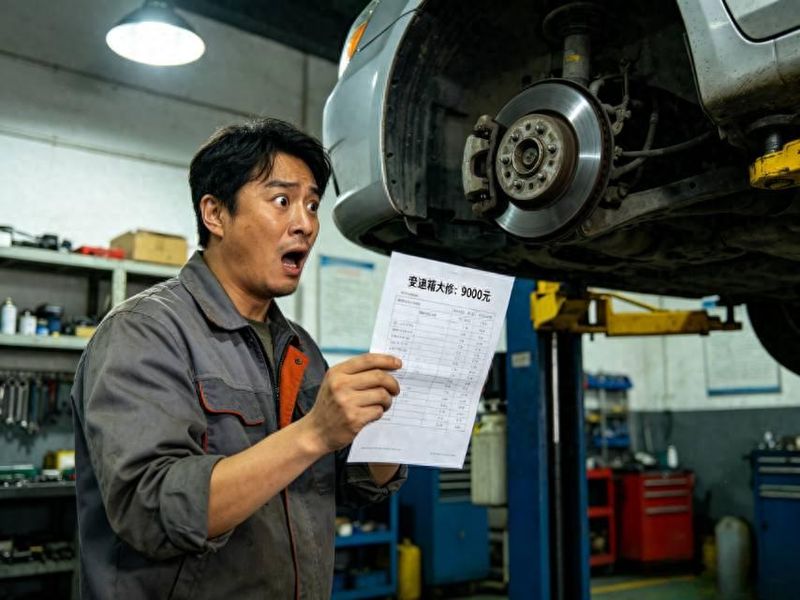
The air conditioner was not cool and the master was asked to come to the door and he checked and said that he needed to increase fluorine and change the spare parts at a price of 280. You think it's a little expensive, but i'd like to ask someone else about his face。
And then the atmosphere was frozen there。
You either pay him to fix it or you pay $50 for nothing. Master is not wrong, you are not wrong, but the process is uncomfortable。
What's the problem? At this stage of diagnosis, it's never been priced separately。

National default logic: free diagnosis, fixed
There is a long-standing default logic in domestic electricity maintenance: door-to-door testing is not a separate fee, or a symbolic fee, real money, from maintenance and spare parts。
That logic sounds friendly to the consumer. It's fixed and paid for。
This logic, however, raises a structural problem: master's diagnostic work is not priced and protected alone。
He took the time to sort out and judge the malfunctions empirically, but the value of that judgement could only be realized if follow-up repairs occurred. If the consumer took his diagnosis to find someone cheaper to fix it, or bought his own parts, he would have done it for nothing。
So many masters chose to cover the information, not to speak too much about the problem, the spare parts model was not informed, and the cause of the failure was approximate. It's not an accident. It's self-protection。
This behaviour, in turn, makes consumers feel opacity, resulting in mistrust。
A cycle is formed。
In many countries in europe and the united states, there is a relatively well-developed pre-prescription model for diagnostic fees in the automotive and home appliances industries。
Before coming to the door, the service provider will clearly advise that the cost of the diagnosis is calculated separately and is payable regardless of the final repair. Upon completion of the diagnosis, you will be provided with a written report setting out the location of the failure, the cause analysis, the proposed programme and the estimated maintenance costs. Take it or leave it. It's your choice。
The core logic of this model is to split problems and problems, price them separately and pay them separately。
For the teacher, the testing worker has an independent value vehicle, and there is no longer a need to use information to prevent the use of free sex. For consumers, the right to know is complete, either by comparing the goods to three or by choice。
The game relationship between the parties has become much clearer because of this report。
Why isn't this pattern running around the country
First reason: consumers can't take it psychologically "to pay if they don't fix it."。
Domestic consumers have natural resistance to paying the plate without results. I've been tested for half a day and i'm not doing anything. I'm gonna charge you $100。
It's not just a money problem, it's a deep-rooted consumer instinct: paying because you solved it. You just looked at it. Why collect it
It is difficult to say whether it is right or wrong, but it objectively hinders the possibility that diagnostic fees will be independently established。
The second reason is that the industry has not developed standards and that the pricing of diagnostic fees is not justified。
The cost of maintenance diagnostics in europe and the united states was accepted because there was a relatively transparent industry pricing system, and consumers knew what the cost was, and what it was bought。
In the domestic servicing industry, the pricing logic varies greatly between different types of goods, cities and platforms. In an industry that is not transparent per se, with a single diagnostic fee, the first reaction of the consumer is likely to be an additional fee item, with confidence not rising or falling。
In the short term, this has been of limited assistance to the platform's visitors and reputation, so no one is anxious。
How does this industry change when it comes to door-to-door testing, reporting, charging, fixing or not。
For consumers, the right to know is more complete. There is no need for you to jump between believing what the master says and fearing the pit, and to make your own decision with a report, and on the basis of three of them。
For teachers, the value of diagnostic work is protected. He would no longer have to pay for the costs of testing by means of spare parts, nor would he need to maintain bargaining space based on information misalignment, with well-diagnosed and accurate diagnosis, which was itself competitive。
For the industry, this may contribute to real capacity fragmentation. A teacher whose diagnosis is accurate and whose report is clearly written can sell it alone; a person who is merely blinded and overpaid without the advantage of information can be more difficult to mix。
Of course, this is an idealization. In reality, no change in industry practice can be driven by this model。
There's another deeper question
The issue of diagnostic fees, which appears to be a fee-based issue, is more fundamental:
In a service industry that relies heavily on empirical judgement, what form should expertise itself be priced and traded
No one is surprised that doctors are taking care of them, that they charge alone. The lawyer was consulted and charged on an hourly basis, and no one felt that the lawyer had nothing to say。
But it is also a maintenance teacher who relies on professional judgement, whose diagnosis has been tacitly donated。
This cognitive bias has been reducing the pricing of professional skills throughout the industry. In the long run, it is not necessarily good for consumers, because when honest, professional teachers in the industry are unable to earn a reasonable return on their abilities, those who stay are not necessarily the best。
Of course, there is no clean answer to this question。
The independence of diagnostic fees and the extent to which they can move within the country depend on too many factors, consumer habits, the degree of industry standardization, the commercial willingness of the platform and, at a certain point in time, no one willing to try first。
But one thing is certain:
The next time you meet a teacher who doesn't want to say it too clearly, it's not necessary to guard you, it's just because, under the current industry rules, there's really no one behind him。