Automation instruments can be divided into six main categories, each of which can be subdivided into several subcategories. This post is part of our special coverage of the united nations development programme (undp)。
Definition of automated instrument
The automated instrument consists of a number of automated elements with better functional automation technology tools. Automation instruments typically have several functions, such as measurement, display, recording or measurement, control, alarm, etc。
Origin of automated instrumentation
The real emergence of automated instruments occurred in the 1980s, when automated technology was effectively integrated with industrial instruments through a control device, then integrated control through assembled electronic equipment, and then, as control technologies evolved, automation technology became the main tool for industrial instrument development, and real automation instruments emerged。
New technologies, such as microelectronics, computer technology, network communication technology and information-processing technologies, have had a profound impact on the innovation of automated instruments and have become a new driving force in the development of industrial automation instruments, enabling them not only to gain faster, more agile, more reliable and easier access to the full range of information of the audience, but also to completely break the traditional light, machine and electrical framework and move in the direction of intellectualization, networking, busatization and openness. Today, we use a map to help you sort out the "relationship" of the automated family。
Automation instrument classification
Automation instruments can be divided into six main categories, each of which can be subdivided into several subcategories。
I. In situ metering
On-site meters are installed at industrial production sites and can be divided into placeometers, pressure meters, temperature meters, flow meters, gas analysers, liquid analysers。
Table 1
The positional instrument is the instrument for measuring the height of liquid levels, solids and powder piles, and the position of the liquid phase, liquid phase and solid phase interface during industrial production. There are two types of continuous and intermittent measurements of the table: continuous and limited-grade。
1 continuous placer instrument
The continuous location instrument can also continue to be subdivided into: a direct reading liquid bitometer (the measurement of the liquid bit based on the fluid connectivity principle). E. G., platometers, glass tablets, quartile tubes, double-chromatometers, capacitometers, floating fluids (e. G., magnetic elasticometers, fibre-optic fluidometers, floatometers, steroid tablets, flotometers, magnetic roller tablets), lasers, ultrasonic fluidometers, radar bitometers (e. G., pulse radar positionometers, conductor radar positionometers), external adhesive bitometers, radio frequency bitometers, differential fluidometers, remoulders. Count
2-strength grade meter
The most common of these are the capacitive/polar liquid table switches, float table switches, acoustic table switches, rotor table switches, ultrasound table switches。
2. Pressure meters
Pressure meters are instruments for measuring variations in medium pressure or pressure differentials during industrial production. Pressure meters can be divided into liquid column pressureometers (e. G., u-barrel pressureometers, single-barrel pressureometers, tilted pressureometers), pressure transmitters, differential transporters, pressure sensors, pressure meters, pressure switches, glass tube liquids。
3. Temperature meters
Temperature instrumentation is an industrial automation instrument for measuring the cold heat of objects. Temperature meters can be broken down into glass tube liquid thermometers, pressure thermometers, thermoelectric dolls, heat resistors, temperature transformers, double metal thermometers, temperature switches, optical high thermometers, radiation high thermometers, non-contact infrared thermometers。
Flow meters
Flow meters are also referred to as flow meters, which can be broken down into mass flow meters (e. G., corver mass flow meters, heat mass flow meters), volume flow meters (e. G., scrapboard flow meters, waist rotation meters, elliptical gear rotation meters), flashboard flow meters, flow switches, speed flow meters (e. G., rotor flow meters, vortex rotation meters, ultrasonic flow meters, electromagnetic flow meters, vortex flow meters), canal flow meters, target flow meters, differential pressure flow meters (e. G., acetometer, nozzle ventometer, tracheometer, bend flow meters, v cone flow meters, leather hosting flow meters, smooth flow meters).
5. Gas analyser instruments
The gas analyser instrument is a process analyser instrument for measuring the composition of the gas, which can be broken down into gas chromatography/mass spectrometer, oxygen analyser, toxic/flammable gas detector instrument, heat conductor analyser, magnetometer, electrochemical analyser, infrared analyser, ultraviolet analyser, laser gas analyser, pv gas analyser。
Liquid analysis instruments
Liquid analysers can be broken down into electrochemical analysers, ultraviolet visible analysers, infrared absorbent spectroscopy analysers, distillation analysers, liquid chromatography/mass spectrometers analysers, water quality analysers (e. G. Ph instrument, electrodes, concentration/squares, dissolved oxygen analysers, residual chlorine analysers, doc/cod analysers), viscous/density meters。
Ii. On-site control instrument
Field instrumentation means a device installed at the production site to measure process parameters, execute control instructions or convert signals and achieve communication. Field control instruments include aerodynamic controls, liquid controls and electric controls。
Iii. On-site instrument implementer
The field instrument implementers are divided into aerodynamic film control valves, aerodynamic film control valves and valve locators, electrical valve locators and intelligent electrical valve locators。
Iv. Showing records
The display logs are divided into paper recorders, paperless recorders, display meters (simulation monitors, digital displays, touch screen hmi and crt display terminals, flash alarms)。
V. Reconciliation control instrument
Includes pid controllers, plc, digital control systems (e. G. Alert continuum control system, dcs system, fcs bus control system, esd emergency parking system, sis security instrument system), ipc machine。
Vi. Special metrics
Special gauges include axle vibration meters, axle transfer meters, rotors, gravitational meters, thickness meters, signal calibration meters, flame detectors, etc。
Automation instrument classification is not static, and as instrument technology develops, the classification boundaries of some products, such as bus pressure transmitters, are integrated. Also with pid control) is both an on-site measurement instrument and a reconciliation control instrument。
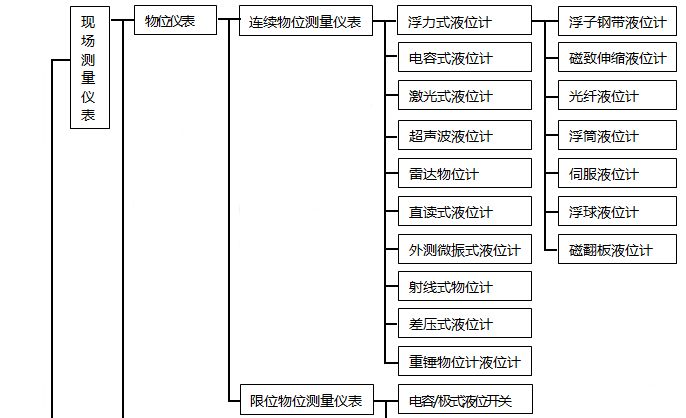
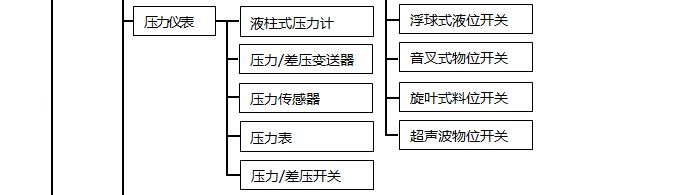
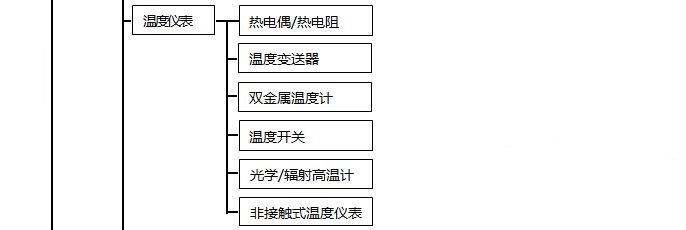
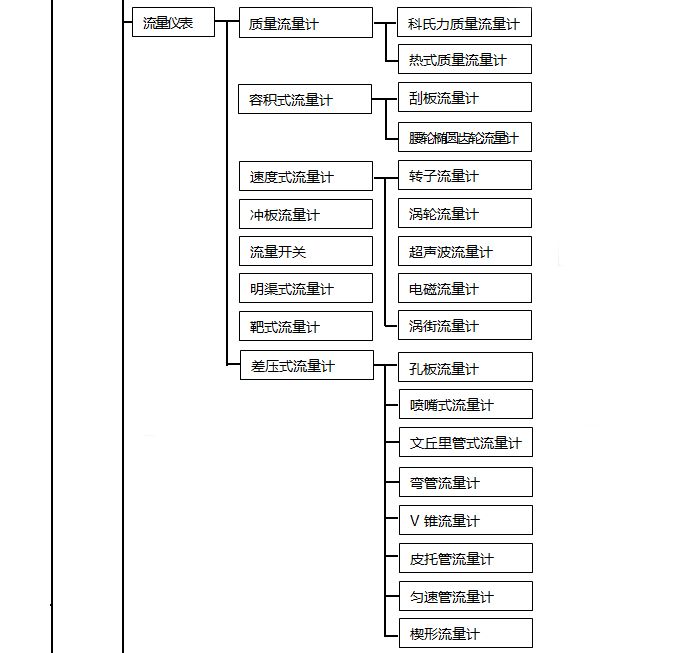
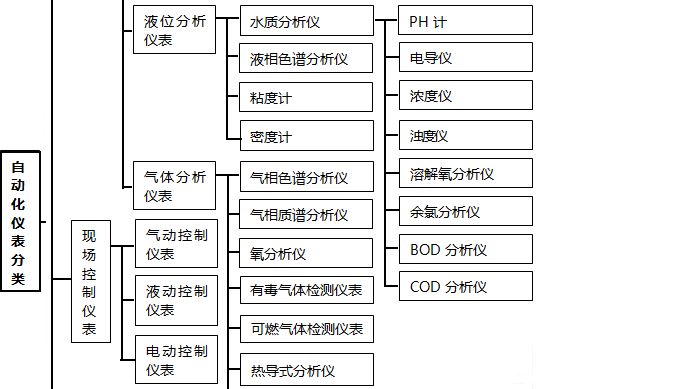
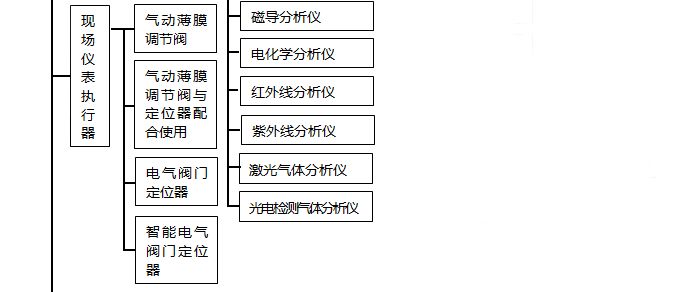
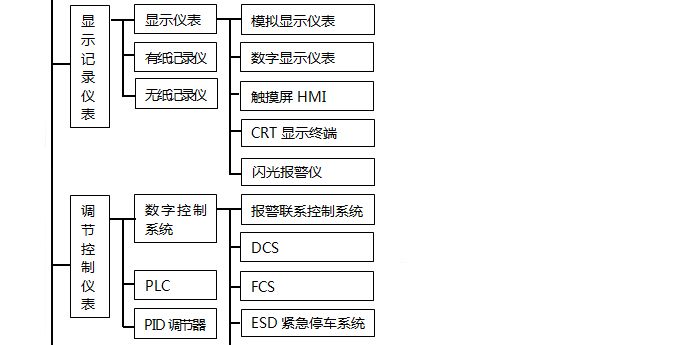
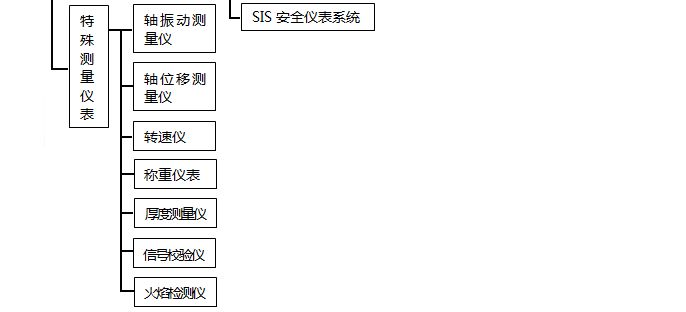
The legend above is a map of the complete automated instrument classification. The instrument produced by the chang instrument is primarily a display instrument, flow calculator, handman, paperless recorder, regulator, temperature transducer, single-crystal silicon pressure transmitter, 80g radar positionometer, signal separator, safety fence, safety relay, temperature sensor, temperature measurement standard instrument, etc., and is dominated by the whole series of secondary meters, pressure, temperature, temperature standard and position gauges. Please move to http://yunrun. Com. Cn/product/know。