Ai is not to replace hr, but it will certainly replace hr with ai。
I. The a. I. Interviewer is here and is more common than you think
In 2026, if you're still talking about it with "ai can't interview," you're probably behind。
The reality is that the ai interviewer is already on a large scale。
According to the latest data from the human resources industry, over 60 per cent of large and medium-sized enterprises worldwide have introduced the ai interview tool into the recruitment process. In china, this figure is also rising rapidly — from less than 30 per cent in 2025 to nearly 50 per cent in the first half of 2026。
What does that mean? Which means that one of every two job-seekers is already past ai。
Not in the future, now。
A lot of people still get the impression of the a. I. Interview at the machine answer. In fact, today's ai interviewer can already:
It's not science fiction. This is a daily recruitment scene in 2026。
Ii. What exactly can the ai interviewer do? Dismantling the five core competencies
Traditional curriculum vitae screening, hr matching keywords. The curriculum vitae screening for the ai era is based on semantic understanding and job matching models。
Specifically, ai can:
A major plant using the ai curriculum vitae screening system, hr, told me, "it was half a day before i sifted 100 curricula vitae, and now i need to see the top 20. Efficiency gains are real, but more importantly — it's far less likely than i missed a good candidate."
2. First-time interview: ai is smarter than you think
The first scene of ai is currently the most widely used scene。
Processes usually are:
Sounds standardized? That's the point。
The greatest advantage of ai interviews is standardization. Each candidate faced the same problems, the same criteria and the same scoring logic. There's no such variable as "hr is in a good mood to talk to you today."。
"the biggest problem with manual interviews is subjective. For the same candidate, different interview officers may give completely different evaluations. Ai eliminated this bias -- of course, it brought a new one, that's another topic."
3. Emotional and micro-emotic analysis: ai reading you
This is one of the most controversial and central competencies in the ai interviews。
By camera, ai can capture:
These data are entered into the emotional recognition model and ai can judge:
Sounds a little scary? Indeed。
But a technical interviewer told me an interesting point: "ai doesn't give you low marks because you're a social threat. Many horrifying people are very capable, but poorly expressed. Ai can identify it'i'm nervous but capable'and'cause i can't'the difference is more fair than some human interviewer who scores with his first impression."
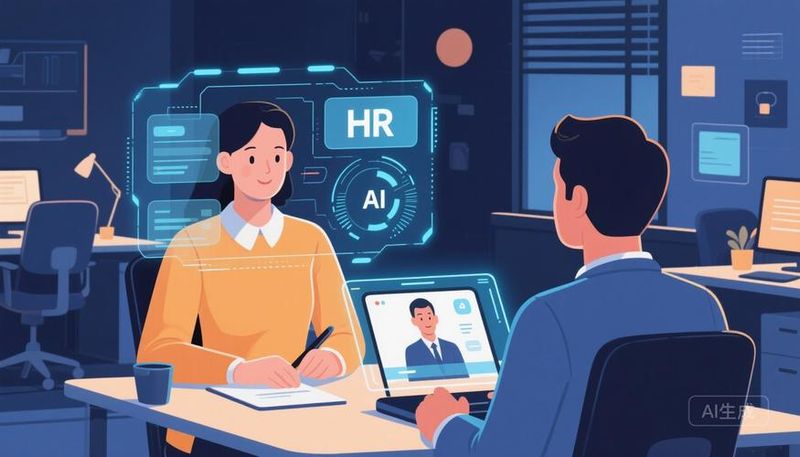
4. Skills assessment: ai assesses your hard power in real time
For technical posts, ai has matured:
Ai has an unmatched advantage in skills assessment: it can run hundreds of test examples at the same time. The code that you submitted, ai can test 500 border situations in a second, and human interviewers usually think only a few。
5. Background research support: ai "validation"
It also supports background checks:
A head-hunting friend said, "in 2026, ai's auxiliary backslide was no longer'advanced function', but base configuration. If you have moisture in your rÉsumÉ, you'll probably get an ai tag."
Iii. Advantages of the ai interview: why is the corporate crazy hug? Efficiency comes first
Data set:
Ai is almost just needed for this situation, which requires handling a large amount of curriculum vitae。
The hr head of an internet company says, "every year we get more than 50,000 resumes. Manually filtered? Impossible. Without ai, we can't even arrange it."
Standardized rating to reduce subjective bias
There is a recognized problem with manual interviews: the interviewer has too many subjective factors。
The ai interviews were at least uniform in their rating dimensions. Each candidate is assessed on the same dimensions: technical, communication, problem resolution, learning..
Of course, ai also had a deviation - it was quantifiable, auditable and adjustable. Human interviewer bias is often hidden。
Data-driven talent decisions
It's not just an interview. It's a data collection tool。
Each ai interview produces a large amount of data:
These data can be accumulated to form a talent database for enterprises. In the long term, this will help businesses:
24 hours uninterrupted, global coverage
Ai doesn't need a break, no time lag. For multinational enterprises, this means that the recruitment cycle can be significantly shortened by global synchronization。
Four, but the ai interview isn't all-powerful: these holes you have to know about prejudice: ai will also "discrimination."
One of the most discussed ai interviews in 2026: ai itself was also biased。
Why? Because ai's training data are derived from historical recruitment data, which themselves contain human prejudices。
This is not a theoretical risk. This has happened in practice:
The good news is that the 2026 ai interview platform has begun to focus on this issue. Prejudice testing and redress mechanisms have been introduced in most platforms, but there is still a long way to go before they are completely eliminated。
"performance interview" is widespread
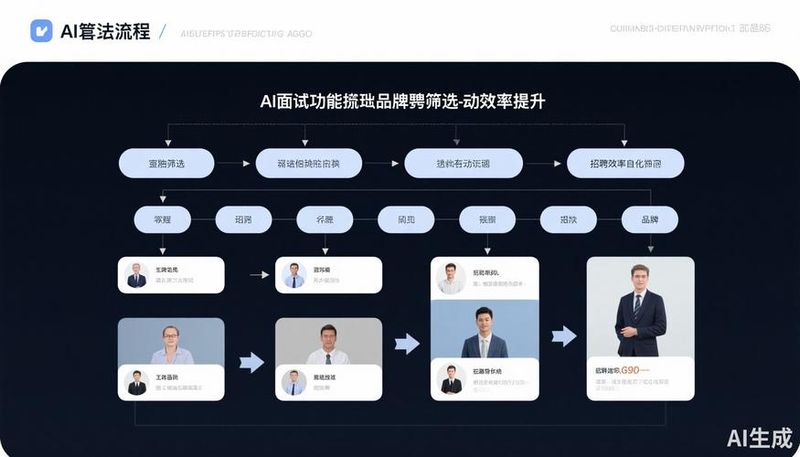
The ai interview prompted a new interview strategy - optimizing its performance against the ai algorithm。
Some job seekers began:
It's like seo -- you're not perfect for real power, you're rated by ai。
One hr said, "we found some candidates who scored high on the ai interview, but not at the actual interview. That means they're here'brush ai'' instead of really having that power.'
This brings with it the paradox that the ai interview was intended to find the person with the best real skills, but the result was probably the screening of the person who was most responsive to ai。
Lack of chemical reaction judgment
Interviews are not just an assessment of abilities, but a determination of whether this person is fit for our team。
This "chemical reaction" -- two people talking and saying, "well, this man we want" -- ai is hard to catch。
One of the founders of the start-up company said, "the most important thing i've ever seen is♪ feel ♪'cause i don't know. Ai can give me a bunch of data, but it can't tell me about this guy'the gas field'and our team doesn't match.'
Privacy boundaries: what is ai collecting
This was one of the biggest disputes facing the 2026 ai interview。
When ai analyzes your micro-expressions through cameras, your voice through microphones, your thinking through words -- how much personal information is it collecting
How are these data stored? How? Will it leak
Although most platforms claim that the data will notymize (anonymity) and only be used for recruitment purposes, job seekers are increasingly concerned about this issue。
V. Will hr be replaced by ai? The answer is: the real trend towards the separation of hr work that cannot be replaced by hr work ai: hr's capability model is being upgraded
In 2026, a competitive hr requires the following capabilities:
A senior hr said something to me: "ai will not replace hr. But it's gonna be an ai hr, and it's gonna be a dead hr."
6. Job seekers must see: what do you do in the face of the ai interview
If you're looking for a job or you're planning to jump, that's what you need most。
1. Attitudinal adjustment: understand ai
The biggest enemy is not ai, but fear and misunderstanding of ai。
What you need to do:
2. Technical preparation: equipment and environment
The requirements for the hardware environment are higher in the ai interview than in the actual interview:
3. Content preparation: structured responses
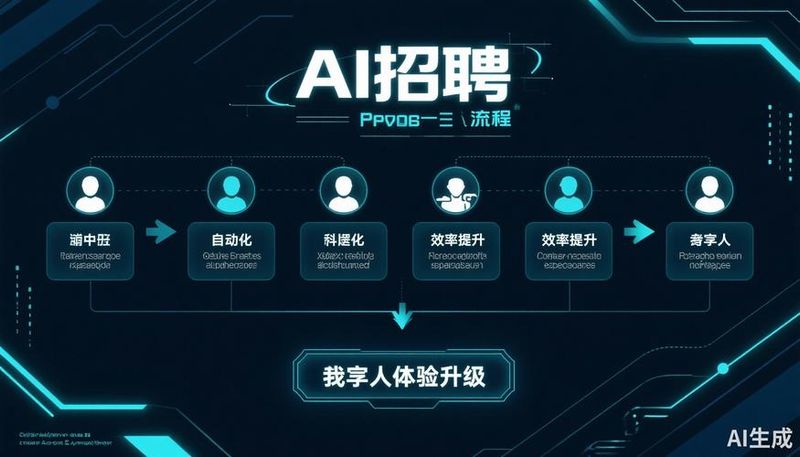
The ai interviews usually use structured issues. Method of preparation:
4. Behavioural skills: how to act well in front of ai
Look, this isn't about acting, it's about being real
5. Response to "anti-fraud" from the ai interview
An increasing number of ai interview platforms have anti-fraud mechanisms:
Recommendation: do not attempt to cheat. Once discovered, the consequences were much more serious than the failure of the interview。
6. Strategies after ai interviews
Ai interviews are usually just the first round. After the ai interview, you need:
Vii. The future of the iai possible aspects in 2027 and after
The future ai interview will be more modulated:
Supervision of ai interviews
As the ai interview spreads, supervision follows:
Ai collaboration with humanity
The final direction is not "ai replaces human beings," but "ai strengthens human beings."。
Viii. Specific recommendations for different groups of people should respond to the technical job seekers of the student transferor
Finally, say a few personal points:
First, the ai interview wasn't a flood beast. It's just a tool. Well used, it makes recruitment more efficient and fair. It's not used well. It magnifies prejudice。
Second, ai will not completely replace hr. But ai will definitely reshape the way hr works. Just like the search engine did not replace the librarian, but the way the librarian worked changed completely。
Thirdly, the core competitiveness of job seekers will never change: real competence, unique experience, and continuous self-improvement. Ai simply changed the way the assessment was conducted and did not change the evaluation criteria。
Fourth, if you didn't even have an ai interview in 2026, then your job search experience might need to be updated. Just like in 2010, if you haven't put your resume online, you really need to upgrade your job。
Fifthly, and most importantly: don't let the ai interview define your value. Ai points you out as an algorithm, not an evaluation of your whole life. Maintaining confidence and continuous progress is more important than any score。
The ai interviewer is on duty. Instead of anxiety, get ready for yourself。
After all, technology never waits for people. But those who are willing to learn will always find their place。
You think ai's fair? Have you ever had an ai interview in your job search? You're welcome to talk about your feelings and experiences in the comment area。
This paper is based on open information and industry observations, citing ai support。