First paragraph
The worst thing we farmers do on land, boys and girls, is that land use is too low and monoculture too wasteful
Many farmers grow corn, with one acre of fresh corn, with vast distances and seams, from sowing to harvest in the autumn, and spend most of the year collecting only one season of maize. Empty land, idle light and water resources are all wasted, working for a year, earning a whole acre of money, working hard to grow and earning。
You have to know the old rules of growing land: high corn, short crops, tall shorts, good seasons! Corn is a high-breed crop with wide distances, good ventilation and light. It is the most suitable plant-to-plant. Many villages have grown old farmers who have been growing their whole lives, never a single corn, using open-space crops from cornfields, one acre to harvest three varieties, with little land, little weight, little labour, and acre to earn three acres of land, which is the only trick the old farmer has learned to soak
First second paragraph
My own family grows corn year after year, and in the early years it's a single corn that looks good in the ground and produces a single, low income. Subsequently, the village was able to learn the skills of the condom and to map out four of the most stable, productive and low-intensity models。
These four sets of programmes, which do not affect maize production, do not take advantage of maize growth, do not increase the cost of growing the land, and are based entirely on the use of idle land and scattered light, with high yields of maize, additional harvests of beans, vegetables and groceries and the steady generation of hundreds and thousands of more in acre。
Today i'm teaching you the four old farmers' corn collections dry, unreserved and plattered, with all the big words, no complicated technology, no agricultural resources, all of which have been verified in the field, whether it's on a large scale, or in small plots of their own, and can be used directly
First, let's start with the core principle: why not just do not cut production, but do we have more
Many farmers have concerns: will the planting of other things in the ground lead to a reduction in maize production as a result of water, fertilizer and sunlight
I'm going to make it clear in the strongest words of the land, and i'm going to clear up your concerns:
First, the corn is high and short and the light is not in conflict
Corn is raised and grown upwards, mainly to absorb the upper layers of strong light; all we plant are short-drenching crops that use bottom-splattered light to grow, high- and low-level, upper- and lower-level uses, light is not wasted, and there is no competition for light。
Second, deep-seated systems are different
Corn is a shallow root crop, which absorbs water fattening mainly in the surface layer; the crops suitable for the crop are deep roots or shallow nitrogen-fixing crops with different levels of rooting, with different areas of water fattening being absorbed, not only without cutting nutrients, but also with some that feed the land and conserve the land。
Thirdly, the gap between the lines is wide and the land is completely idle
Regular maize cultivation ranges between 60 and 80 centimetres, with large open areas being left idle for years and weeds growing. Instead of weeds, weeds are wasted, rather than cash crops that become valuable, extra harvests and inhibit weed weed growth。
Fourth, the small field environment is better, with fewer pests
Rational plant cover increases field vegetation cover, regulates field moisture temperature, breaks the disease breeding environment for single maize, and effectively reduces the probability of an outbreak of maize distress, aphids, foliage and disease, making maize more stable and less ill。
A brief summary: the rational set is complementary, not mutually reinforcing. It's paired, with land, more production and more
Ii. First set of gold varieties: corn + soybeans + green beans, three types of steady grain oil (classic, zero risk)
This is a decades-old, zero-failed, all-embracing, all-embracing model in rural areas, and a steady increase in agricultural extension that does not affect maize production
Speculation ratio (simply good memory, everybody works)
Standard two rows of corn, one row of beans
Two lines of normal maize planting are set aside, with a wide range and a line of soybeans and a line of green bean spacing in the middle。
There is no need to deliberately plant corn, which is grown at normal density, without any reduction in production and only with the use of idle liner beans。
Growth rationale advantages
1. Nitrogen self-refining, reverse breeding, pulses
The roots of soybeans and green beans have roots that automatically fix nitrogen fattening in the air, supplementing the soil with nutrients, not only to fatten the corn, but also to feed the corn roots, which makes the maize straw stronger and the seed grain more full。
2. High-pretty, ventilated light
The corn is soared with light ears, soybeans are laid short, the ground is covered, weeds are suppressed and manual weeding costs are saved。
3. Staggered maturity times without delay
Corn matures in the summer and autumn, soybean harvests in the middle, green beans harvest in the early autumn, and three seasons of crop maturation in the wrong, harvests in the wrong, do not collide or work。
Elements of field management ethics
1. No changes in fertilization: normal maize fertilization is sufficient, and beans are resistant to infertile and non-separated fertilization, saving effort。
2. Integrated water-water management: corn is drought-resistant, beans are wet, normal maize is watered and suitable for pulses。
3. There is no need for a single pill: a back-planted field ecological balance, a significant reduction in the number of insects and a normal corn against disease。
Income effect
The corn production is steady, with an additional acre of soybeans, lots of soybeans, full of grain and oil
Iii. Second set of gold varieties: maize + potatoes + peanuts, double harvests on the ground (highest returns)
In order to maximize the benefits of an acre of land, the three-high models of corn, ground potatoes, and groundnuts are preferred: high yields, high returns, high productivity, high productivity, an old farmer's unsustainably rich method
Speculation
The corn is grown on a normal basis, the corn is sprung up emptyly and is grown in red potato seedlings; and peanuts are aired in gaps between corn strains and in vacant areas。
The ground is covered by high-drive maize, mid-level open ground ground for peanuts, ground-level cassava and three layers of land, with a 100 per cent space utilization rate。
Core strengths
1. Unchallenged and divided roles
The corn tends to lean upwards, the ground is grounded by peanuts, and the cassava vines grow on the ground, the roots of which are completely staggered in depth and the water fertilization layer is absorbed without interference。
2. Water conservation and protection against drought
The cassava vines are covered on the ground, covering the soil like a membrane, locking water and reducing soil evaporation. High summer temperatures are extremely resistant to drought and maize is not susceptible to drought and premature decay。
3. Complete eradication shit
The ground is covered with vines and vines, there are no gaps in weeds, and weed is not used throughout the year, saving a large amount of labour。
(key
1. Potatoes may not be overcultivated: they are grown at two metres apart and are too dense to be so long as to cover light slightly。
2. Peanuts sow light seed: dotted using space, without whole floors and with a drop-in。
3. Non-tracking of nitrogen fertilizer in the mid-term and later periods: sweet potatoes, peanuts are afraid of being long, urea is less applied later and normal corn is enough to catch fat。
Income effect
Corn production, extra potatoes, peanuts, high potatoes production, durable storage, winter and winter, high economic value of peanuts, and thousands of more easy and easy land
Iv. Third set of gold varieties: corn + bean horns + cucumbers, high-dry nuts, open-land vegetables (first choice for home gardens)
If you grow corn in your own home, in a small garden, you strongly recommend this corn as a stubble and a loaf of bean-crawling. You don't have to build it
Set style
After maize was planted, two bean horns and two cucumber seeds were planted in each of the four corn gaps。
Using corn-high straws, which are natural climbers of bean horns and cucumbers, vines climb up the corn straw and grow perfectly。
Great advantage
1. Save the enormous cost of the rack
The most expensive way to grow a melon is to build a setup, which is based entirely on the existing maize straw, which is better natural climbing and ventilation than artificial shelves。
Corn cover cooled and melons fell early
In the summer, the heat is high, the cucumber bean horns are prone to yellow leaf dry, the guacamole is protected by the scattered light of maize, and the bean is much younger, less ill, not bitter and not old。
3. Excessive timing
The accelerator of maize is warm and cool, and the beans are more resistant to high temperatures, more than the guacamole planted in the open, with longer pick-up periods, and can be picked up until autumn。
Management skills
1. After the cucumber cucumber entangled around the maize slurry, there shall be no entanglement after a slight artificial auxiliary pull。
2. The mid- and late-term maize leaves are properly beaten out to increase ventilation and to avoid wetting of the beans。
3. There is no need for individual fertilisation, and maize base fat is fully adequate。
Income effect
There's nothing to worry about. The summer and autumn seasons are always about picking bean horns, cucumbers, gardens are not empty, food is available all year round, money is saved, clean green is harmless
V. Fourth golden set: corn + sesame + purple, small-scale cash crops, coldgate high profits
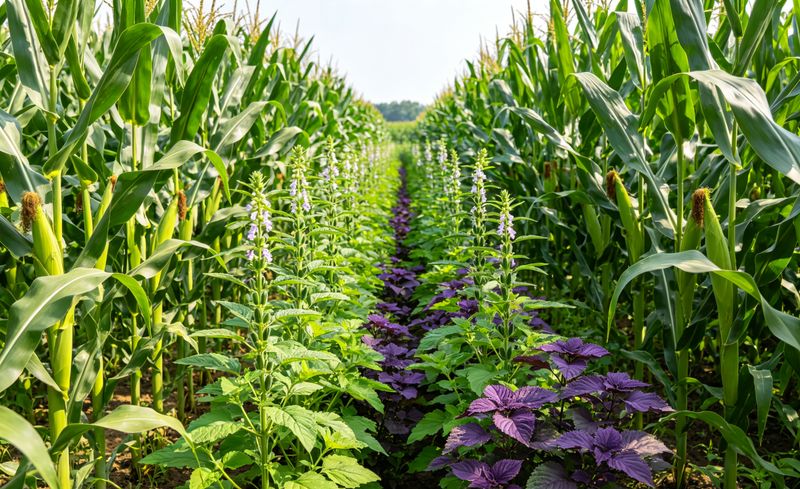
Many do not know that maize is the most suitable place to grow a variety of small cash crops, corn + sesame + violet, with almost zero inputs, with significant benefits and large fields。
Package mode
In the middle of the wide range of maize, sesame is spread evenly and purple sous-swidth is on-demand, using light spread between the lines。
Sesame, violet, infertile, infertile, unsatisfied light and scattered light environments in cornlands are much better than open light cultivation, with fewer rolls and more abundant seed grains。
Core strengths
1. Extreme drought resistance, little management
Sesame and violet crops are inherently lazy and produce more in the sky without water, fertilizer, weeding and medicine。
2. No impact on maize
Small, shallow roots and very low levels of fertilization, which are entirely dependent on the environment for maize growth, have zero effects on maize production。
3. High economic value and fair market sell
High sesame oil production rates and stable prices, edible, marketable and trimble, and low competition and high profits for small crops。
Management points
It's all well managed, it's all managed, it's all managed, it's all grown up, it's all grown up, it's all grown up, it's all grown up。
Vi. General 5-golden principle for corn stockings, avoiding pits without loss of production, steady annual harvests
No matter which of the models above, as long as the iron laws summarized by the five old farmers are followed, there will be no loss of production, no increase in income
Principle one: high-to-high-to-high
Corn is high, the crop must be short, scavenging, climbing, and it must be strictly forbidden to plant high-straw crops, such as sorghum, grains, or otherwise cover each other up or lose both。
Principle ii: deep root with shallow roots and layered fattening
Corn is shallow, mixed with deep root beans, root crops, root layering, water fertilization and competition。
Principle iii: shinyyang is strong and radiant
The top layers of maize are bright and bright, and the crop varieties are scattered, half-laden and perfect for field lighting。
Principle four: never foster corruption
The herds are just flowers and extra harvests, and should never be planted in a dense, well-painted manner. Over-density will inevitably lead to a loss of maize production。
Principle v: unified management, extensive conservation
All crop varieties are suitable for maize fertilizer management, and the use of free water, free of individual fertilization, free of drugs and free of labour time is central to the crop。
Vii. The four deadliest faults for farming plants, never win
Mistake one: an overdensity of the herd and a high level of greed
Many farmers feel that they have multiple harvests, blindly increase the density of the herbs, and lastly, crops are composted, ventilated, diseased and diseased, and maize production has been significantly reduced and lost。
Erection 2: unsettled, random
Whatever the crop habits, everything is grown in cornfields, with high levels of discomfort, high levels of fertilisation, and at the end with low levels of production。
Miss three: blind and fat
It is already full of fats and extra heavy water fats, causing crops to grow, fall, fall and fall, and to grow。
Mistake four: don't clean old vines in late
The failure to clean the melon vines after they age, which prevents the ventilation of the maize, affects the maturity of the maize slurry and results in an insufficiency of maize seed grains and a decrease in the weight of thousands。
Closing summary + pass by
In general, the land needs to make more money, not by expanding the land, not by working hard, but by using it rationally and efficiently
Four golden varieties of maize: oil mix, underground roots, bean racks, small harvests, and four models, as needed, suitable for large fields, vegetable gardens, and bouquets。
No more investment, no more effort, no less impact on the main production of maize, steady harvest of three crops in one acre, idle land, idle light, idle water fatting, rising annual harvests and steady price differentials
This old farmer has been using a secret scheme for decades, and today it is all open and practical and extremely localized. It's a good idea. It's a good idea. It's a good idea
I'm not going anywhere
(a) the corn fields are not idle, and four sets of memory fields are available
(b) bean grains are enough to feed the land, and potato flowers are more profitable
(b) the scale-up of the work done by guato and the steady increase of the sesame harvest
There's no problem with the upper half. One acre is sweet