As a core vehicle for industrial production, the timeliness and transparency of fault maintenance directly affect customer production plans, operating costs and confidence in the manufacturer. In an increasingly competitive market, after-sales services have been upgraded from a “cost centre” to a core position shaped by brand names, while “untransparent maintenance schedule” has always been a critical point of pain that constrains the experience of clients and prevents them from sinking. Under the traditional after-sale model, clients can only wait passively after completion, maintenance progress is based on verbal feedback from the manufacturer, and vague responses such as “sold” “failed on the road” are difficult to alleviate anxiety and even create a crisis of confidence due to information asymmetries. The after-sale mechanical equipment management software re-engineeres the service chain by digital means, constructs a transparent service system of full process visualization, full nodal synchronization and full-dimensional interaction, allowing clients to control maintenance progress in real time and to win and trust in a transparent manner in order to serve the shaping of the slogan。
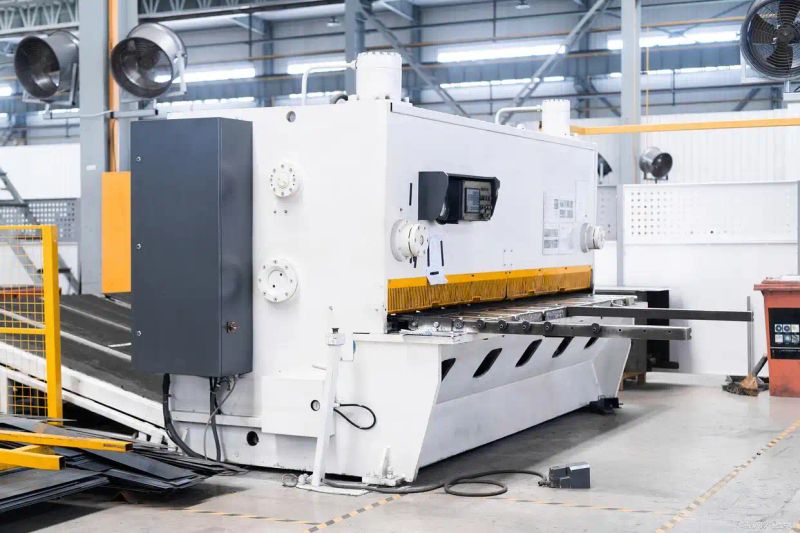
Mechanical equipment
The complexity of the mechanical maintenance scene magnifies the negative impact of the lack of transparency of progress and highlights the need for transparent services. Mechanical equipment is structurally complex and has a long maintenance cycle, and some of the core components will need to be repaired in multiple stages, including dismantling, testing, fittings allocation, calibration, which may take days or even weeks. While waiting, clients were concerned that delays in maintenance affected production schedules, and questioned the cause of the failure, the maintenance programme, the integrity of the spare parts and the breakdown of costs. Under the traditional model, clients are required to make repeated calls for post-sale telephone counselling, not only because of the high cost of communication, but also because feedback is fragmented and delayed, and because of the irregularity of service processes and even the problems of concealing maintenance difficulties and delaying progress, which further exacerbates client dissatisfaction. Industry data show that client complaints are 45 per cent as a result of the lack of transparency in maintenance progress, and that transparency services can increase client satisfaction to more than 90 per cent, buy-back rates to 30 per cent and commercial values to a greater degree。
After the sale of mechanical equipment, management software is “customer-centred” and transparent service closed loops are built through three core modules, transforming maintenance from “manager control” to “customer comprehension” to double service experience and brand reputation。
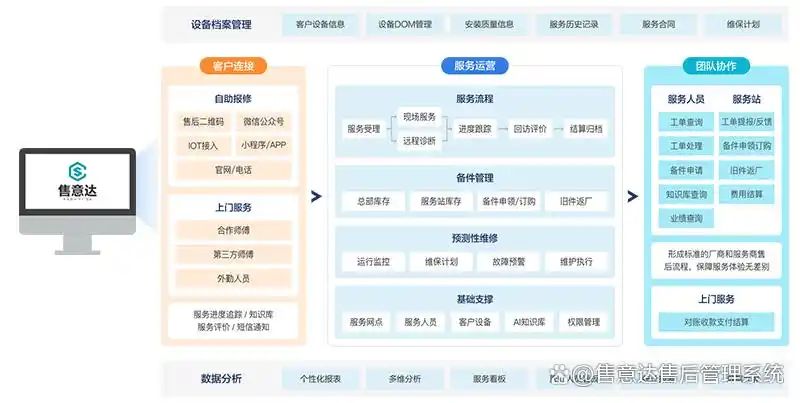
Post-sale management software for mechanical equipment
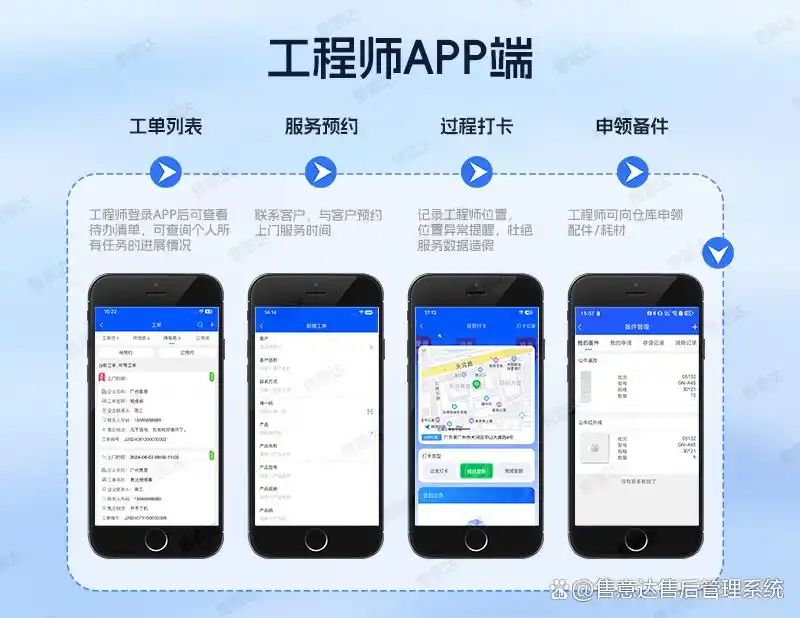
Module 1: full-node progress is visualized, allowing clients to “see” every step. The software disassemblys the entire process of maintenance of mechanical equipment into a standardized node, creating "assigning" "engineer" from the "customer reporter" "worksheets" and "on-site overhaul" "parts" "replacement" "turning" "worksheet closed loops" with a clear state marking and updating mechanism at each node. Clients can view the worksheets in real time, the corresponding processing time, the information of the engineer and the expected time-consuming next step, without additional communication, by means of a mobile phone app, a micro-credit applet or a web page. For example, the breakdown of the main axis of the heavy machine bed reported by the client clearly shows that “10:15 workers to senior engineer zhang” “10:30 workers have left and are expected to arrive at the scene at 12:00” “14:00 completion of the failure detection process, confirmation of the need to replace the main axis parts”, complete visualization of the information blind zone and significant mitigation of waiting anxiety. At the same time, the system supports automatic alerts for nodal changes, and clients do not need frequent log-in queries to obtain real-time updates of progress through text messages and micro-mails, thus achieving “proactive client-seeking progress”。
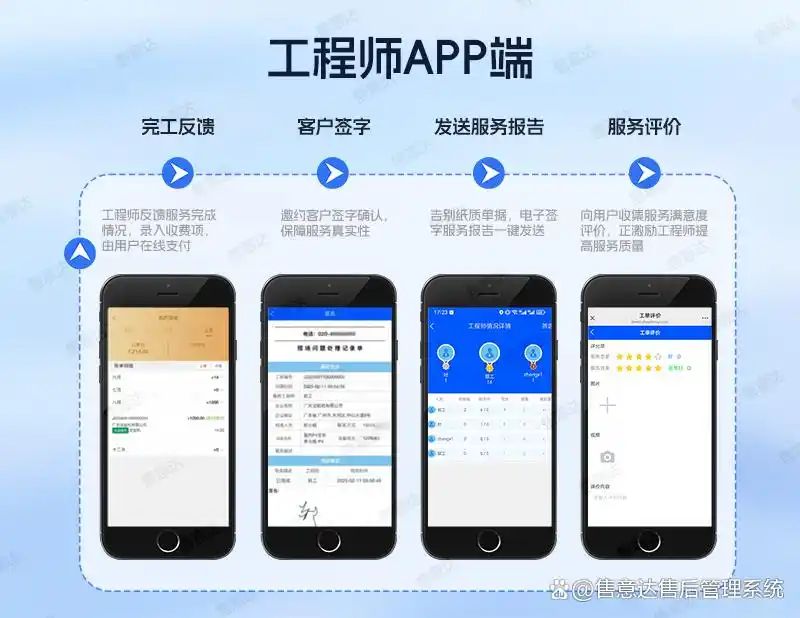
Module ii: synchronization of full-dimensional information to enable clients to “touch through” maintenance details. Transparency services go beyond synchronizing progress and more about maintaining the transparency of chain-wide information. The after-sale management software supports the real-time uploading of maintenance process data by engineers, including failure detection reports, maintenance programmes, spare parts models and numbers used, attachment information, maintenance site photographs/videos, cost details, etc., which are readily available to clients and have complete access to maintenance core information. In response to the scenes where spare parts need to be replaced, customers can systematically view the procurement channels, the date of production, the duration of the warranty, ensure that the fittings are authentic and meet the requirements for equipment suitability; and in response to complex failures, engineers can upload detection data and maintenance ideas, provide clients with a clear understanding of the causes of the failure and the path to resolution and avoid misunderstandings due to information asymmetries. In addition, the software supports client online voicemail queries, and engineers or clients are required to respond to queries within the prescribed time frame, creating a two-way interaction of `sync progress plus questions' and further strengthening trust。
Post-sale management software for mechanical equipment
Module iii: process-wide controls trace the quality of services that clients “trusted”. The bottom support of transparent services is standardized process control and traceability of service records. The after-sale management software creates an exclusive digitized archive for each maintenance worksheet, recording the full volume of data from the reporting to the closed loop, including customer information, equipment models, failure descriptions, maintenance steps, spare parts consumption, cost settlement, customer evaluation, etc., all data that cannot be tampered with and the entire process is retroactive. On the one hand, management monitors real-time progress of all work orders throughout the country through a system visualization board, automatically warns overtime nodes, intervenes in a timely manner to coordinate resources to ensure efficient maintenance process discipline and avoid artificial delays, and, on the other hand, clients can conduct a systematic review of the entire process records, check the details of costs and the use of spare parts, evaluate the quality of services, and evaluate the results directly into the performance appraisal of engineers and force the service team to increase professionalism and responsibility. This “process control + data retrospective + evaluation oversight” model allows transparent services to be put into practice and creates “customer-friendly, producer-controlled” service ecology。
Transparent service systems built by after-sale management software not only optimize the client experience but also become a key player for machine and equipment manufacturers in building a differentiated reputation for core competitiveness. In markets where product performance is becoming more homogeneous, transparent services can quickly build customer trust and create brand recognition “to be and to be transparent throughout”, thus facilitating the dissemination of reputations. For example, a heavy-duty machine manufacturer has achieved complete transparency and synchronization of maintenance through the online software, with a 70 per cent reduction in client complaints, a 40 per cent increase in the old client referral rate and high-quality reputations in regional markets. At the same time, transparent service deposition maintenance data can also provide precision support for manufacturers to optimize service processes, upgrade engineers' professional capabilities and improve product design, leading to a virtuous cycle of “service optimization-accusation-business growth”。
Post-sale management software for mechanical equipment
For mechanical equipment clients, transparency services mean a sense of “control” and “security” that minimizes the impact of maintenance on production and reduces communication and trust costs; for manufacturers, transparency services are not “self-restraint” but upgrading services that are client-demand-oriented and are a necessary path to brand-building in the digital age. As industrial manufacturing evolves in the direction of precision and intelligence, the transparency and professionalism of customer requirements for after-sales services will continue to increase and the transparency of post-sales management software will become an indispensable service support for manufacturers。
In the future, with the deeper integration of ai, technology on the internet and the after-sale system, transparency services will be upgraded to a higher level of intelligence, for example, by precision estimation of the length of maintenance, real-time deployment of accessories, visualization of maintenance progress, etc. Only by actively embracing this change, using post-sale management software as a vehicle, building a system of full-process transparent services, breaking down information barriers with transparency and gaining client trust with services will the mechanical equipment manufacturers be able to build a strong reputation for sustained growth in intense market competition。