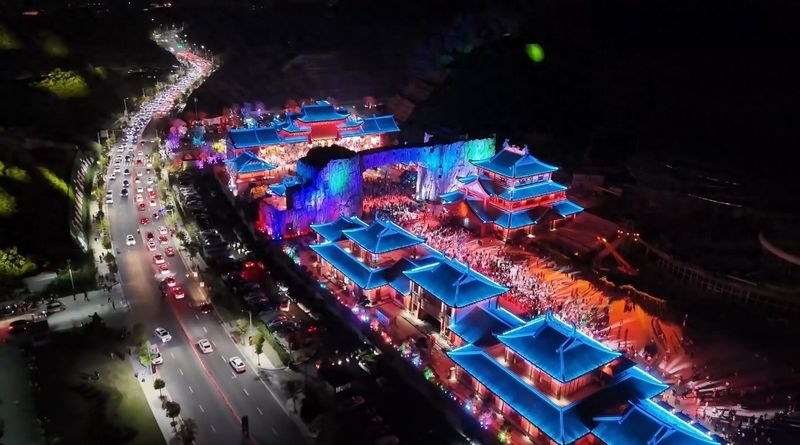
Single rocket launchers and recoilless guns are two types of equipment common on land。
The rpg family has a high prevalence in a number of video works. In the case of the suddenly emerging armoured vehicles, one of the regular movements of the protagonists was the rpg rocket launchers on the shoulder, hitting tanks, scrambling vehicles and even a passenger helicopter. There seems to be nothing that rpg can't solve, and if so, one more。
The current influence of recoilless guns is somewhat slight, sometimes fortunately exposed and mistakenly perceived as a single rocket launcher. Even in the period of world war ii — when the development of recoilless guns accelerated, the nazi germany's “ironless fist” was used extensively, but because it was capable of launching on its shoulders, it is now often seen by some as “unidentified” with a single rocket launcher。
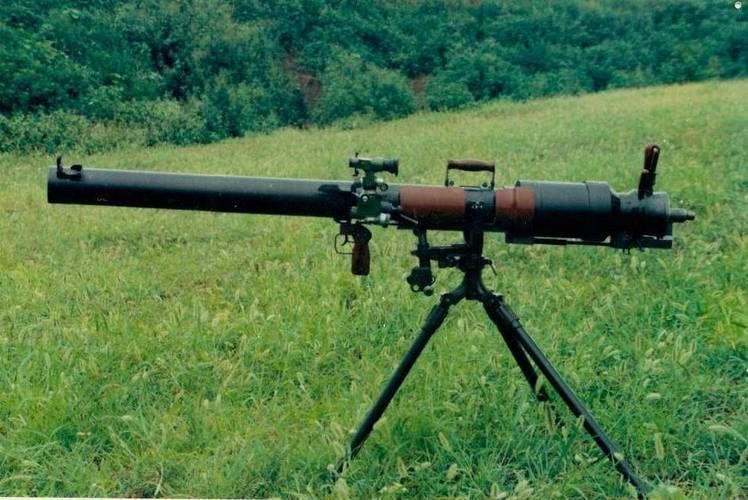
So, what's the difference between these two “box” weapons
In fact, the greatest difference between the two is in the name. Rpgs are also called rpg launchers and are equipped with rockets. During the launch, the launcher functioned as an overpack and guider and was not subject to high-barrel pressure and the munition was fired with a certain amount of power. So, under extreme conditions, rockets can be fired without this “cylinder” and in the right direction。
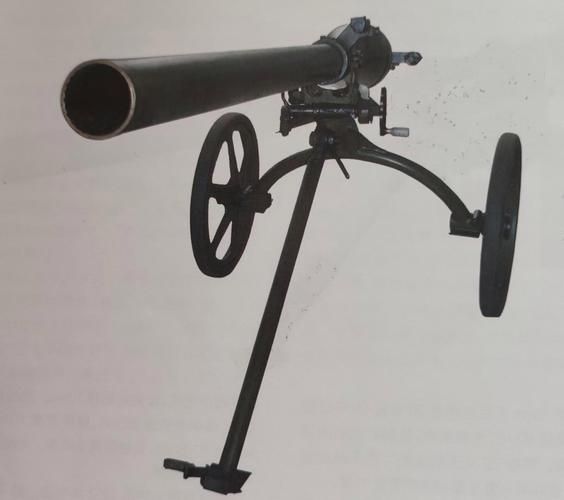
Recoilless guns, which are essentially artillery. As in the case of munitions equipped with general artillery, recoilless ordnance usually does not have a power system. Upon departure of the cannon, the shells were flown on the basis of the thrust generated by the firing charge when the barrel exploded. In short, the recoilless gun pipe not only gives direction to the munition but also provides flight power。
However, the recoilless cannon uses its unique design, as compared to “large sizes” such as howitzers, drenades and so forth, to carry fragile weights of the same mass as warheads at the bottom of the barrel. The high-barrel pressure generated by the launcher when it exploded, while the warhead was being pushed out, the weight was sprayed out of the guntail to offset the recoil, which made the recoil very small。
It is because of the “test” of high-barrel pressure that it is possible to repeat it, and because of the precision to ensure that many of the tubes are wired, that recoilless guns require a high level of material and manufacturing. This makes a recoilless cannon tube to be made of solid metal, while a single-use rocket launcher is commonly made of glass fibre. Single-propelled rocket launchers are less expensive than recoilless guns。
The difference in prices, which in some cases is “one cent per cent”, also determines the range of the two. The effective range of a single rocket launcher is shorter than that of a recoilless gun, generally within 300 metres. In actual operations, single-propelled grenades were fired many times at tens of metres. The recoilless gun has a longer effective range and previously could have been more than 1,000 metres. As the times evolved and the demands of the battlefield increased, the range of some recoilless guns increased significantly, but their weight increased and gradually shifted from shoulder to vehicle。
Some recoilless guns are now “united” with the same vehicle to increase firepower. In this connection, a fire support vehicle developed by venezuela is more typical, with six m40 106 mm recoilless rifles and other guns on the light tank chassis。
Despite the recoilless gun's advantage in range, its “renownedness” today has decreased compared to that of a single rocket launcher。
This is because, on the one hand, there has been a decrease in flexibility in the application as the “weight” of recoilless guns has increased; on the other hand, the rise of anti-tank missiles and the increase in the protection of modern tanks has led to a gradual loss of the recoilless guns。