Recommended language
The tea is a woody tree that is unique to our country and which, together with olives, oil palms and coconuts, is known as the world's four largest woody oily plants. This is a treasured tree, a “shaping-money tree” rich by farmers in our southern hills。
Tree archives
The tea is commonly referred to as the oiled species of tea and is usually green wood or wood, with the main species being ordinary oil tea, alias tea tree, tea tree and white flower tea. Oil tea is widely distributed in the country, mainly in the provinces of hunan, jiangxi, guangxi and zhejiang. Tea grows fast, grows early and lives long. Under suitable conditions of soil and climate, three or four years after planting, 15 years of life enters the festivities, 5-6 years of marriage enters the festivities, and 70-80 years of continuous results. Where conditions are high, oil and tea trees over 150 years of age continue to bear heavy fruit, with few hundred years or even millennia remaining。
Oil tea has been growing in the country for more than 2,300 years. Tea oil is the traditional vegetable oil that characterizes our country. The production and development of oil tea is a long-standing source。
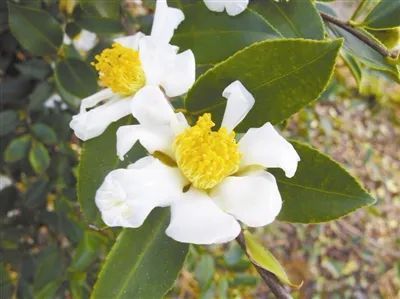
Tea and tea
It's a long story
Oil tea has a long history of growing and using it in our country. The ancient book of qin, the sea of the mountain, contains the following: “the wood of man, the southern oil, the wood of man, the tree of man, is the oil and tea tree, which has been in our country for over 2300 years。
According to the test, the name of the oil and tea is recorded differently in various generals. In addition to the current generally called oil tea, there are aliases such as wood, muja, tea, tea and oil trees, mountain tea, south mountain tea, scouts and tungsten。
Song dynasty has a more systematic record of oil and tea cultivation. In the poem of the north song poet mayozen, "the country of the south, like the jade cup, can't do anything about it" in "the mountain tea tree to old li tin". During the years of north song, the nature, origin and utility of oil and tea seeds are well documented in susong's drawings. The general book of the southern song jung-chul, which has been documented as “more wood-planting in the southern mountains”, shows that song dynasty tea has reached the stage of extensive cultivation。
The fatty oil of the oil tea, whose seeds are known as tea oil, has been used in our country since time immemorial by the royal palace. Han goo-zu liu bunte gave him the title of "the royal court" , and emperor zhu yuan-chu zhu zhu zhu zhu zhu zhu zhu zhu zhu zhu zhu zhu zhu zhu zhu zhu zhu zhu zhu zhu zhu zhu zhu zhu zhu zhu zhu zhu zhu zhu zhu zhu zhu zhu zhu zhu zhu zhu zhu zhu zhu zhu zhu zhu zhu zhu zhu zhu zhu zhong zhu zhu zhu zhu zhu zhu zhu zhu zhu zhu zhu zhu zhu zhu zhu zhu zhu zhu zhu zhu zhu zhu zhu zhu zhu it says, "the oil tastes good in the mountains." tang dynasty's famous poet li garang-shek has a poem from "the fragrance of the fragrance and the fragrance of the fragrance of an chang chun"。
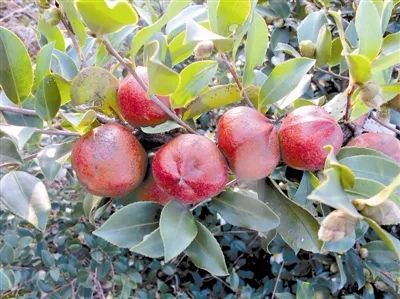
♪ a bouquet of oil and tea ♪
The culture of oil and tea is rich
The oily tea nuts are ripe for flowers, and they coexist, commonly known as the “capacitation of the child”, which is a natural wonder. Oil tea is an important vehicle for folklore and cultural exchange and can be seen in the culture of oil and tea in friendship, hospitality, marriage, funerals, etc。
The large-scale drawing by guangxi kung-cheng autonomous district, " the seven tea and oil officers " , which brought the culture of oil and tea to the stage, gave rise to sensationalism and was awarded the "five one project" award for building spiritual civilization in guangxi, the eighth guangxi-large show "cinnamon gold award", which became a vehicle for cultural exchange。
In the area of quiu yiang, there is the custom of the zhui clan to come to my house without regard to tea for oil. In hunan, early marriage to a daughter in some places was used to delivering food and oil, and the term “a cup of tea (oil tea)” was spread to indicate that it was overdone. In fujian, there is a practice in some places to put tea oil on the bride's hair. When you put tea oil on the bride, she sings a folk song: "the tea is smooth, the tea is ointment, this year comes, when chapa is born." chappa means "boy" and expresses the good wishes and blessings of people。
Tea with oil is a custom and a requirement for three meals. “eat tea” has been in your state for more than a hundred years. Every new year's eve, you can also hear in guizhou the saying, “if you eat tea, you don't eat it, you don't do it”. Thus, many aspects of people's lives are deeply marked with oil and tea。
It's very valuable for tea
Tea is a treasure。
Tea oil is of extremely high nutritional value and has the effect of preventing high blood pressure, high blood resin and softening blood vessels. Tea oils are similar to olive oils with fatty acids and nutrients, with a slightly better ratio than olive oils, and are therefore well known as “oriental olive oil” and “soft gold in oil”。
China's chinese medical dictionary states: “tea oil is not only nutritious, but also has the medicinal value of chinese medicine, which can be summed up as: enhancing vascular elasticity and resilience, slowing the sclerosis of anorexia samples, increasing gastrointestinal absorption, promoting endocrine gland hormones, combating neurosis and improving human immunity.” lee qai-jin, in this draft, states: “the tea is cold, the blood is stopped, the serosol is detoxified. Hepatic blood loss treatment, deworming. "the seed of tea, which is bitter and fragrance, treats the coughing and the disease." many ancient languages, such as the agricultural policy book, the script of the grass, the eating of the lives at home, refer to the eating functions of mountain tea oils, such as “obvious hair, intestine defecation, cooling, wetting, detoxification”. They also use tea oil to treat intestines and constipated earth。
Tea oil is high in acid, hot and stable, and is good for cosmetics. The tea oil can be used to make a beauty of the skin. The tea oil is used to bathe the princess of tang dynasty in order to preserve her youth and her therapeutic taste, and the tea oil is considered a beauty-care treasure by the queen mother of the king and princess of the palace。
Tea is multi-purpose in nature. Slags from oiled tea seeds are known as tea dry, containing a large quantity of sugar, protein and tea soap, which, after deep processing, can produce a series of products such as oil, soap, tea, etc., which can also serve as important organic fertilizers, biopesticides, machine bed polishing, shampoo, etc. Tea soap has an effective de-fouling and insecticidal capability, eco-friendly cleaners, disinfectants and pesticides. Teashells can be extracted from tea alkaline, gel, and produce high-quality planting matrix. The roots of the tea tree can be used as sculpting material for the basin view, making small-scale farming tools and producing white charcoal。
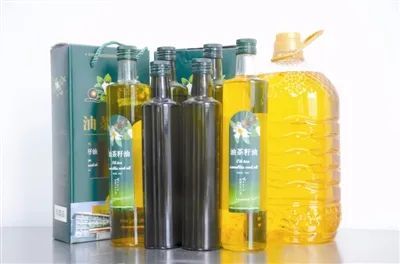
Tea oil is of high nutritional value and has health effects such as the prevention of hypertension, hypertension and soft blood vessels, and is well known as “oriental olive oil” and “soft gold in oil”. Quickie
The road to oil and tea is bright
The tea is included in our national food and oil security strategy, the first economic tree species to be pushed at the national level. The development of the oil and tea industry is not only an important catalyst for green development and accurate poverty alleviation, but also a green industry that guarantees the country's food and oil security and contributes to a long and healthy life for its people。
Tea is a long-lived tree. The oil tea, which does not compete with food, has benefited for many years from a single planting, with a steady harvest period of more than several decades, and the timing of the fruit harvest that staggers the agricultural work of ordinary people, which is the truly “green oil reservoir” of our southern “iron crops”. The phrase “an acre of oil and tea, married to a daughter-in-law and built a building” is highly summarized and popularly describes the positive contribution of the oil and tea industry to poverty alleviation and rural renewal。
The tea, which is a growing green tree species, has developed roots and is bred with leaves, and is characterized by infertileness and a wide range of viability. It is referred to as “fertilized earth pearls” and is often used to green the desert mountains and keep the soil and water. Moreover, oil tea is an extremely pollution-resistant tree species with strong resistance to sulphur dioxide, strong resistance to fluoride and chlorine, eco-efficiency and economic efficiency, and an ideal tree for “green industry, healthy living”。
At present, our country has more than 67 million acres of oil and tea cultivation, and the pace and quality of industrial development has steadily increased with the advances and applications of science and technology in recent years. Despite the fact that oil tea has been cultivated in the country for more than 2300 years, it has not been an important food oil variety in the country, owing to, inter alia, large areas of oil and tea forests that are old and low-yielding. Despite the halo of “oriental olive oil”, the overall development of the tea industry lags behind that of olive oil。
The chinese institute of forestry science and research in the asia-tropical forest research institute, which has been working together for more than half a century with three generations of oil and tea scientists from china since its inception, has finally achieved fruitful research in the fields of well-selected oil and tea varieties, rapid growth, efficient cultivation and advanced processing。
On 17 september 2019, the general secretary of xi visited the henan guangshan county, the tech-backed ma guangshan county, and the secretary-general's interest in and attention to the oil and tea industry has encouraged and provided direction for the healthy and sustainable development of the oil and tea industry。
Introduction by the author
Yao xiaohua, researcher, ph. D. Student, principal expert in the field of woody oil tree species, institute of tropical forestry, linko college, china. Long-term research on techniques for the cultivation and use of economic forests, mainly in woody tree species such as oil tea。
Jahinghwan, director, integrated division, institute of tropical forestry, linko college, china。