There are a number of farmers living on the outskirts of the city, as well as enthusiasts who grow vegetables on the roof, with headaches in the middle of the summer。
After entering the three-volt, it is continuously hot, the roof of the open roof passes through the sun, and the surface temperature easily breaks through 40 degrees celsius. The cold and green leaves, such as regular green vegetables, lettuce and oatmeal, do not last long. Either the leaves are fast lost in water, or the roots are suffocated by the heat, the seedlings are easily protected and the seeds are destroyed。
Many families give up their summer foods and go shopping. The high level of green leaves in the summer and the accumulation of long-term purchases represent a daily expense。
The gardening of the roof of the building is maintained on a permanent basis and a programme of conservation is being developed. There is no need to change the variety of vegetables frequently, no need to keep them in line, no need to keep them in line, no need to combine them with cabbage and sweet potatoes, keep the two vegetables warm, have basic plantings and daily maintenance, have hot summers and highs, have lots of picks that can last for more than six months and are self-sufficient at the table。
I. High-temperature roof preference for two types of hot food, with clear environmental advantages
A large number of starters tend to plant in the wind, not in combination with the variety chosen in the growing environment, and spend time and effort not to see the harvest. The daily management can save time by giving priority to the selection of heat-resistant and renewable varieties with limited top floors, high day and night temperature and high midday tan。
Empty cabbage and red potato leaves are two types of home-grown green leaves with a high level of suitability in the summer roof garden。
First, heat and light. The two growing seasons of vegetables are concentrated in summer, with a wide range of suitable growth temperatures and normal growth of more than 30 degrees, even with sustained high temperatures of 40 degrees and no hibernation if water supplies are available. It's not like the other green leaves are hot enough to get old, and it's hard to eat。
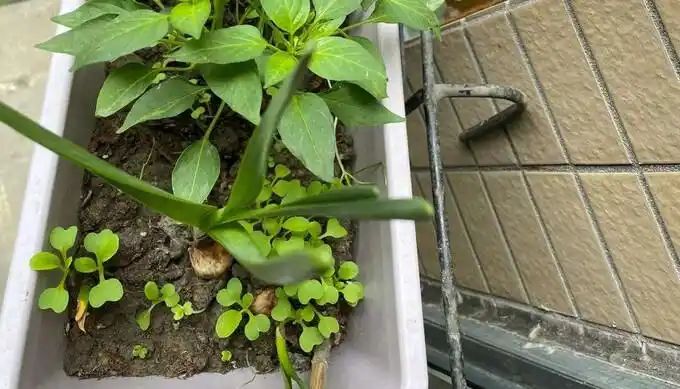
Secondly, environmental resilience is strong. If soil requirements are not singled out, the soil mix will take root. Foam boxes, plastic containers, idle buckets, long planting tanks can be properly planted if they have basic soil and drainage conditions. The rate of penetration is stable, and zero-basin starters can do it easily。
Third, there are multiple recyclings. One-time planting, capable of retweeting. Rationally, the sprouts will grow, and the longer they grow. From the first summer, the temperature has stabilized and warmed, and can be collected until the late autumn, when the frost is cooled, with a wide range of cycles, and daily harvests are fully adequate for domestic consumption。
Fourth, the daily diet is rich. Both are common popular vegetables, which are sore, sour, sour, sour, sour, sour, and fit for three meals a day. Food is now available on the roof, fresher and more comfortable。
Ii. Preparation for the front of the roof, detailed control of the containers, and the basis for growth
Vegetables on the roof are in a very bad position, and pre-packaging and soil preparation account for a large proportion. Many of the late yellow leaf decays at an early stage, due to the shallowness of the soil, the slabs of the soil, poor drainage and the concentration of high-temperature weather problems。
1. Selection criteria for planting containers
High-capacity packagings with depths of 25 to 35 cm are preferred. The thickness of the earth layer is such that the root system has sufficient space to extend downwards, store more moisture nutrients and become more resistant to hot droughts。
The shallow basin is too thin, the roof of the concrete building is hot, the root system is extremely vulnerable to heat damage, the rate of water evaporation has doubled, and water is still susceptible to atrophy two or three times a day。
All containers must be evenly drilled out of the drainage hole at the bottom. In the summer, there are occasional showers where water cannot be drained from the roof and roots are chronically impregnated with oxygen and prone to decay and yellow. Water drains are set aside to balance the flow of air with the rest of the root。
If sufficient space is available, long troughs can be used to plant the empty cabbage and the red potato leaf. The two types of vegetable growth practices are similar, the zoning layouts do not compete for light, and later harvests are more convenient。
Low-cost soil ratio
It is not necessary to purchase finished nutrients at high prices, and it is more practical to use materials locally。
(b) general matching programme: three regular vegetable gardens, one with fertilizer for mature farmers, and increased laxity by mixing into broken leaves or grain shells。
Plantation guarantees basic fertility, decaying fertilizers slowly release nutrients, defusing materials break the slabs of the soil, and high temperatures and sunbaths are not easy to dry。
The common area of error is avoided:
The use of pure garden soil is isolated, the tan is thick, the water is not permeable, the surface is wet and the deep roots are still water-deficit; light-quality soil is used only, fertility protection is weak, and windy weather plants are prone to collapse. The two are co-mingled, laxity and fertility are balanced and fit for the high temperature of the top of the annex。
The soil fillings are not pressurized, but are naturally paved, with two centimetres reserved for the surface and no subsequent water spills。
Iii. Carnival sets tube protection, two planting options selected according to needs
Vacant vegetables are wet and glamorous, and many grow thin yellow, mostly by watering, and at harvest nodes. In combination with high-temperature conditions on the top of the building, plant protection will be prepared to be wet and will be robust at a later stage。
One, seeding, and planting
Early spring temperatures are steadily rising and suitable for seed distribution. The seed is soaked with constant water for one day before seeding, and the water is dried back into the soil and the overall yield is improved。
The seeds are evenly laid, covering a thin layer of soil, which is controlled by a centimetre's thickness, so as to water its roots, place it in a fully luminous area and seed it around a week。
During the summer high-temperature phase, priority will be given to cutting. The impact is faster and the slow-planting cycle is short。
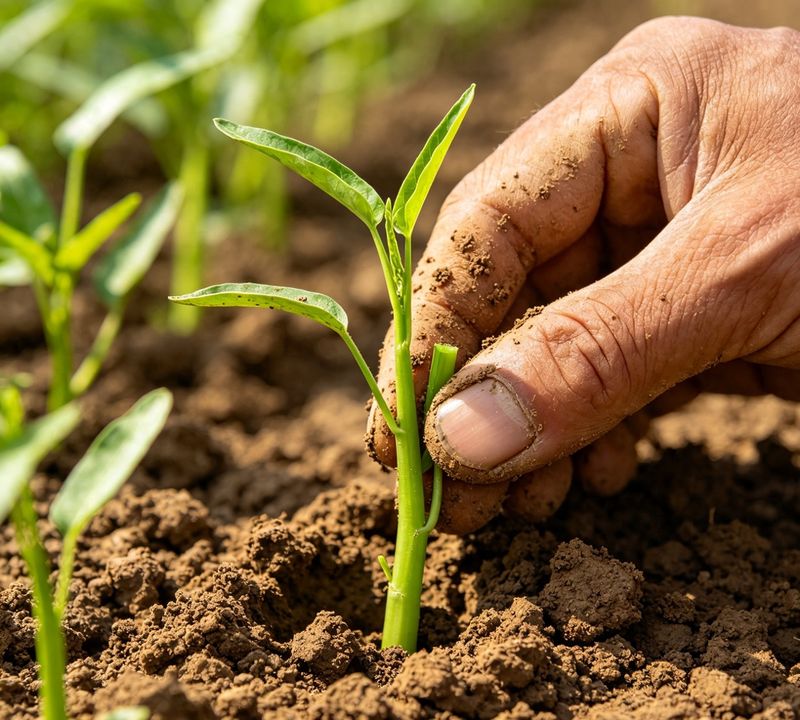
The staggered carnival branch, which was selected for purchase in the market, was removed from the aging section, was cut to about 20 centimetres, each section was preserved with three to four leaves, and the bottom blade was removed, with only a small amount of tender leaves at the top. The branches are tilted into the soil, which is 7 or 8 centimetres into the ground, and the soil is softly pressed into its roots and water is poured out。
The first period of two to three days, with proper avoidance of the strong midday light, followed by a normal open-air tan, three days to complete the seedlings and a new one-week sprouts。
2 monopoly wetting management techniques
Land gardens grow empty cabbage, water evaporates on the roof, and the logic of care can be adjusted appropriately。
The soil is maintained in a long-term micro-humid state, without deliberate water control. The soil layer remains semi-humid, empty cabbage leaves are soaked and green, and high temperatures are not easy to tan。
The water is fixed at two hours in the morning, before the sun rises in the morning and after sunset. The high temperature of the soil in the mid-day pelvis so that cool water can be poured so that the temperature differential impact can damage the fine roots and lead to the collapse of the leaves。
3. Regulating harvests for the growth of branches
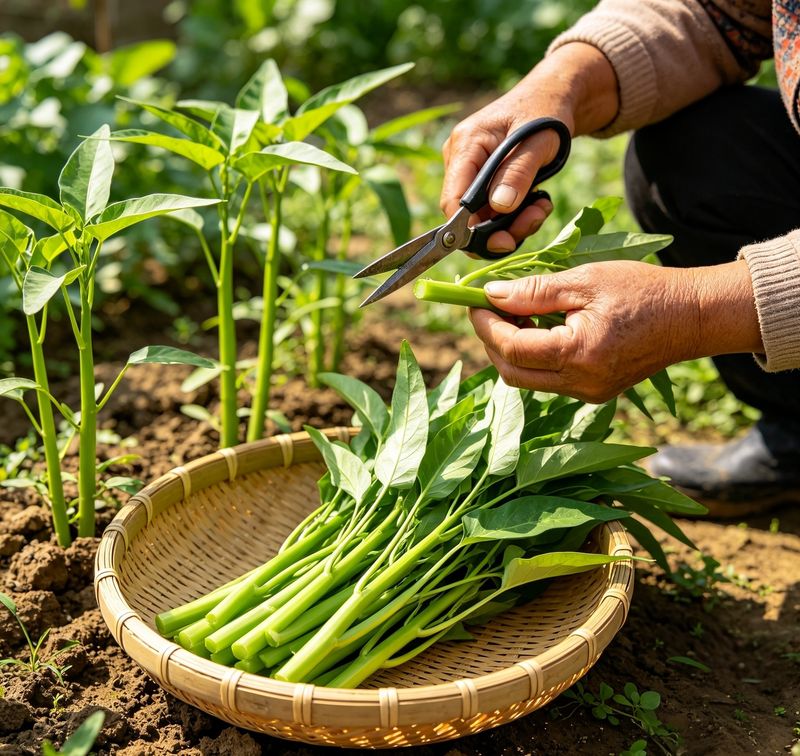
Empty cabbage is up to 20 centimetres and branch formation allows for the first pick。
It cuts the entire layer of the earth, keeps about six centimetres of the base and collects only the upper spot. The staggered lobes will be sprouts, which will grow at a fast pace and become thicker。
If the temperature is appropriate and the water fertilizers are stable, a pick can be made in about half a month, and circulatory picks continue to provide fresh vegetables。
4 point points for fat shelter
The hollow root system is poorly distributed, with no application during high temperatures, no fertilizer, and no burning of roots as a result of concentration of fertilizers。
Each harvest is followed by a small replenishment of decomposition, thin and fat water, and a small supply of nutrients to ensure a normal growth and overall strength。
Iv. Cultivation of the red potato leaf and sustainable harvesting of coarse management
Red potato leaves are resilient, drought-resistant and heat-resistant, with fewer diseases and pests, and are less dangerous. A number of farmers focus only on the root of the subterranean cassava, neglecting the food value of the plentiful ground, with the roof planted for the purpose of harvesting the leaves, which is more economically efficient and useful。
One, vines and vines. Best planting pattern on the roof
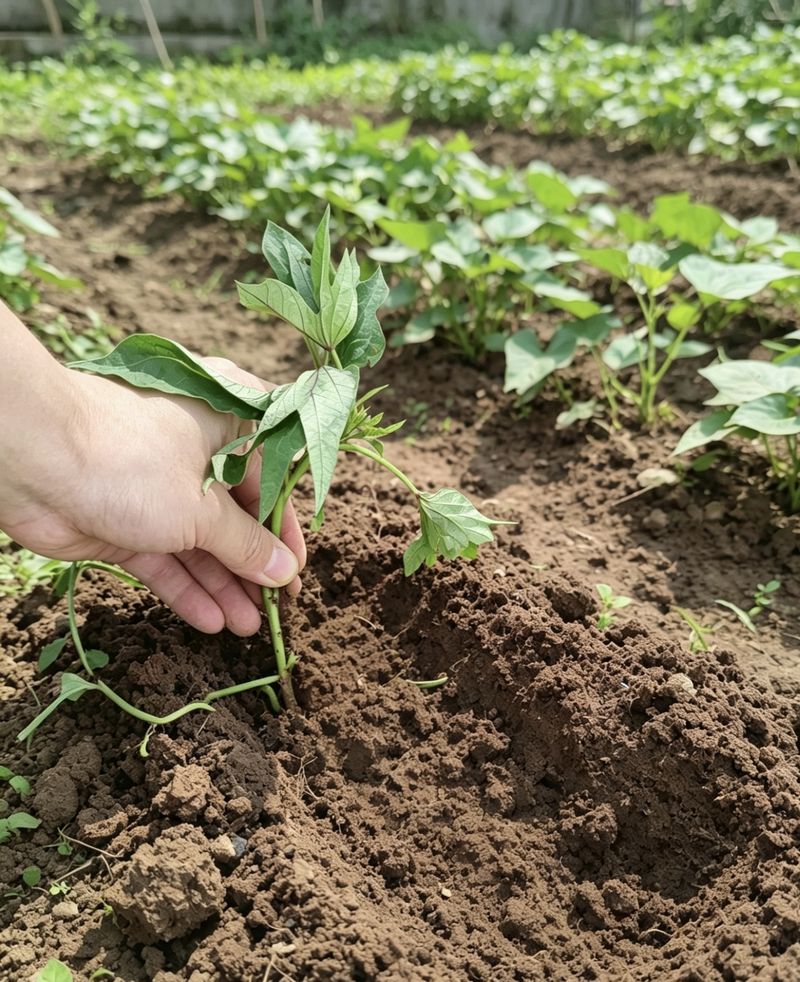
Potato leaves do not recommend seed reproduction and use vines and vines, with a high rate of survival and rapid growth。
Selecting a strong, pest-free red potato vine, cutting 20 centimetres of branches, removing the lower half of the leaves and reducing water consumption. Slash the soil and steady the roots and water the roots。
During the first three days, natural light was received throughout the day, after passing the slow-growing period. More than 30 degrees of high temperature, with efficient roots, quickly spread new leaves and spread branches outward。
2. Simple daily water fertilizer control
Potato leaves are better drought-resistant than empty cabbage and water is less frequent. Following the whiteting of the soil surfaces and the drying of the soil and the recharge of the water, one-time bathing of the deep layer of the soil avoids the permanent accumulation of water in the basin。
The more the light, the more the vines and branches, the more the leaves are fat. Long-term in a dark environment, with weak branches, thin leaves and old tastes。
At the end of the preplant period, there is sufficient fertility to reduce the frequency of fertilizer recovery in the long term. After many harvests, nutrient consumption increased, with a small supplement to slow release of organic fertilizers, helping the vines to grow again。
3. Rational topdown to achieve multiple production
Allowing the vines to grow freely is prone to an infinite extension of the main vine, with few branches and low overall extraction。
Vegetables grow up to and down 25 centimetres, strangling the top growth point, breaking the top advantage and prompting the base to develop the side branch. The side branches are formed and repeated to the top, slowly growing from a single vine to a dense collection。
The daily extraction gives priority to the removal of the upper part of the upper part of the leaf, the retention of the old substrate for light co-operation, the continuous delivery of nutrients for the whole plant and the guarantee of continuous subsequent stabbing。
Timely removal of yellow leaves from the bottom, reduction of unwarranted nutrient consumption, increase of surface ventilation in the basin, and reduction of yellow leaf probabilities in hot environments。
Five, 40 degrees of high temperature emergency care, two large vegetables in the summer
Occasionally, extreme temperatures are encountered, and even heat-resistant varieties tend to burn young leaves with strong light. Several low-cost care options have been put through the heat and reduced the probability of a reduction。
First, surface cover material cooled and humid. A layer of dry grass, dry leaves, rice shells on the surface of the basin, covering up the sun, lowering the temperature within the basin, locking the soil water, cutting water intervals and reducing high-temperature drought damage。
Second, protection against the sun at noon. From 11 p. M. To 3 p. M., the strongest ultraviolet light is used to temporarily pull up a simple sunnet to shield the light from the light, while the rest of the time is normally visible in the open, balancing sunproof and light-cooperative。
Thirdly, water drainage is timely after rain. Summer showers break out, after which containers are searched for drainage holes, so that the holes are not blocked by mud, water is smothered by the root system, ventilation and damp after the rains reduce the probability of disease occurring。
Vi. Equipment of the shoot shoots of shoot shoots and shoots of equipment period
The roof space is limited, and two vegetable partitions are available to maximize the use of light and soil resources。
Vacant vegetables are wet, red potato leaves are drought-resistant and daily water can be adapted flexibly. The fields are so high and so low that they do not hide the sun from each other and grow space from each other。
Mistakes complement each other, one entering a short period of rest and the other becoming normal, ensuring that the vegetable gardens continue to harvest fresh vegetables, extending from the early summer to late autumn, and that six months of daily vegetables are not purchased extra。
Vii. High-frequency error check on top of the building
1. The soil layer is not deep enough, its roots are limited, high temperatures are prone to water scarcity and premature decay, and its long and thin yields are low。
2. Water is poured during high-temperature periods, temperature differentials stimulate root systems, short-term atrophy and long-term damage。
3. Overtaken by one-time harvest, the roots of the sprouts were completely removed and it was difficult to create new branches。
4. High-temperature application of undecompressed and high-concentrated fertilizers with fast-burning yellow leaves。
5. The container is poorly drained, the stormy weather is pouring water and the roots are decaying。
Avoiding the above points of error and providing basic care during the seasons will allow for the long-term stabilization of the output of the roof gardens。
Interactive topics
What summer green leaves do everyone grow on the roof or on the balcony? Has the planting of emptied cabbage and red potato leaves encountered problems with small branches and easy yellow leaves? The sharing of small experiences of individual vegetable growing in the comment area is welcome, as is the exchange of good practices。
A sweet hint
The tops of the summer building are focused on sun-proofing and wetting, rational water management, lumbering for branches at harvest, and long-term stable harvesting of both usual vegetables without the use of unfertilized fertilizers。