What's a lcd
Liquid crystal, by definition, is a substance that is both liquid and partially crystallized. The molecules in ordinary liquids are unorthodox and can move freely; the crystals, on the contrary, have a regular and highly organized structure. But liquid crystals are in between: they can flow like liquids, while molecules remain in some order under certain conditions。
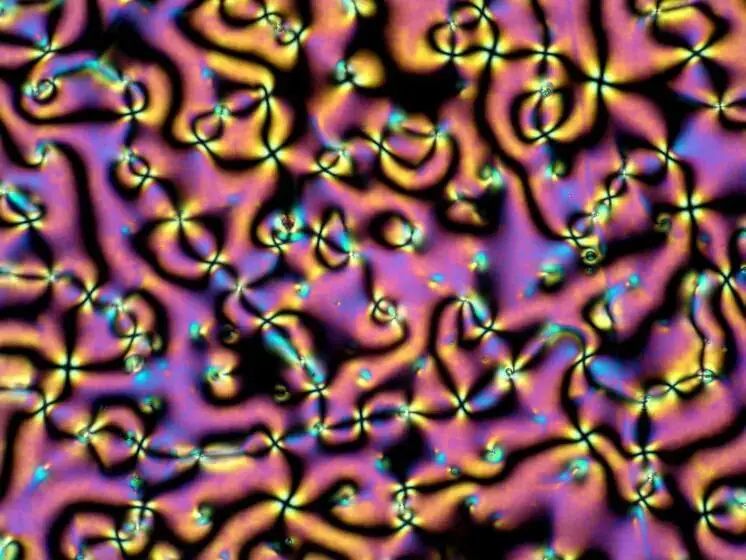
Classic texture of a column-type liquid crystal (photo source:)
This “ordered and incomplete” characteristic gives liquid crystals many peculiar optical properties. For example, they can change the direction of light and have a special effect on oscillation, which are the core foundations of lcd technology。
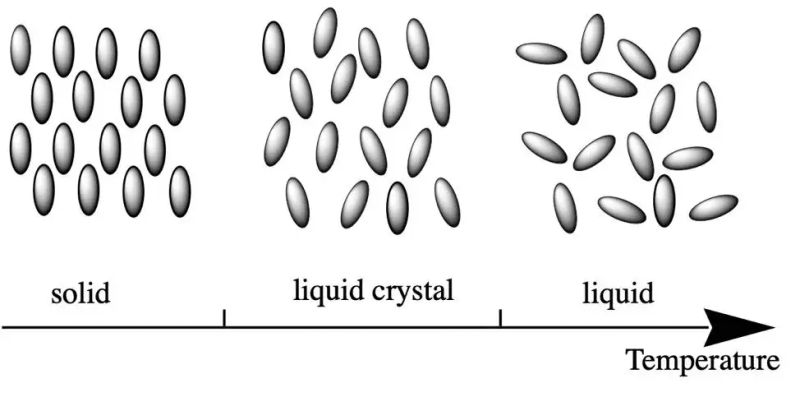
Temperature changes allow liquid crystal molecules to convert in different forms of organization (photo source:)
From a physical point of view, lcd is an intermediate between liquids and solids and is referred to as the “line crystal phase”. When temperature or pressure changes, liquid crystal molecules are converted between different forms of sequencing, which is particularly important in display techniques, as external control allows manipulation of the orientation of liquid crystal molecules, which in turn influences the way the light passes through the screen。
The lcd discovery
The discovery of liquid crystals dates back to the end of the nineteenth century. In 1888, while the austrian botanist friedrich reinitzer was studying an organic compound called cholesterol phenylate, heated with two different melting points: the first melting point material becomes a convoluted liquid, which continues to heat and becomes completely clear. This phenomenon is of great interest to him。
Subsequently, the german physicist otto lehmann carried out a detailed study of this strange substance and created the term “lact crystal”. He found that these substances presented unique textures under the optical microscope, proving that the molecular sequence was not completely disordered, but that part of the crystal identity was preserved。
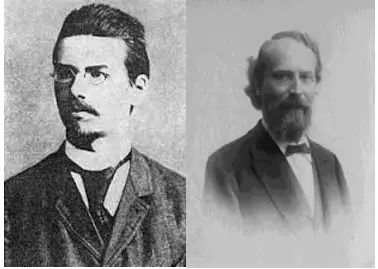
F. Reinitzer and o. Lehmann, discoverers of liquid crystals (photo source:)
The discovery of liquid crystals not only rewrites the traditional perception of the physical state, but also creates an ambush for subsequent applications. For a long time, however, lcd was merely a “scientific wonder” in a laboratory, and it was not until the middle of the twentieth century that humans truly realized its commercial potential with the discovery of lcd。
Classification of lcd
Lcd is not a single substance but a class of substances. The liquid crystal can be divided into different types depending on molecular sequencing and external conditions, with the following three common types:
01
Lcd column
Lcd is the most commonly used category and the core material for lcd monitors. In this liquid crystal, the centre of molecules is located at random, but their long axes are generally in the same direction, like a group of fish moving in the water, although in a confused position, but in the same direction as the whole. This arrangement makes liquid crystals very sensitive to electric fields and easy to control molecular orientation by applying voltage。
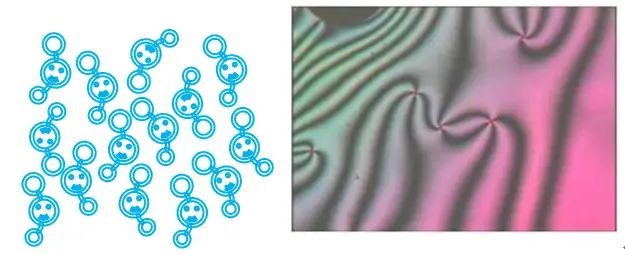
Lithography of column types (photo source:)
02
Layerbar lcd
The layers of liquid crystals are more organized, not only in the same direction, but also in a layer of structure, as a stack of paper. This liquid crystal is more adhesive and less responsive and is generally used for special displays or optical devices。
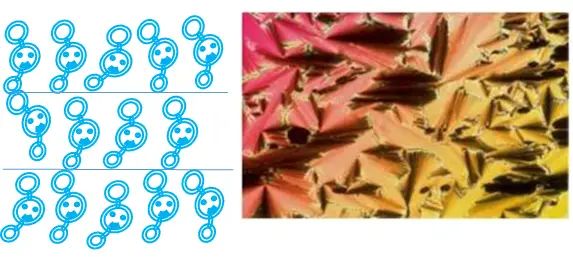
Layer column liquid crystal map (photo source:)
03
Courage crystal
The choreographed liquid crystal molecules reflect the light of a given wavelength and present a coloured structure. These liquid crystals have important applications in temperature-sensitive materials, colour displays, photometers, etc。
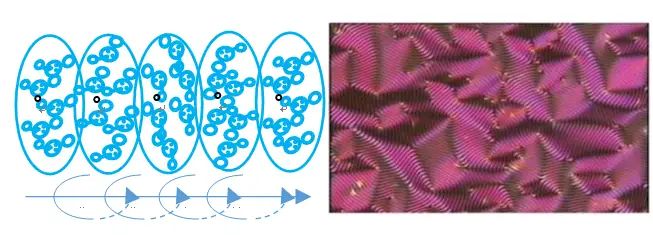
Lcd map (photo source:)
In addition to these three categories, there are other more complex liquid crystal structures, but in monitors, column-type liquid crystals are the absolute protagonists. It is flexible, manageable and responsive, making it the ideal material for a liquid crystal screen。
The principles of the lcd monitor
To understand the nature of the lcd, we have to answer the central question: why can lcd be used as a monitor? The answer lies in its “control power” of light. The basic principle of the lcd, liquid crystal display is to use lcd molecules to change direction in order to control the passage or absence of light, creating a dark contrast and colour。
01
Erosion and liquid crystal molecules
Each pixel of the lcd is actually composed of a liquid crystal trap between two oscillations. When there is no voltage, the liquid crystal molecules are organized according to the pre-set spiral structure, allowing a gradual reversal of the oscillation of the input through the liquid crystal layer, which can eventually be shown as bright through the second oscillation。
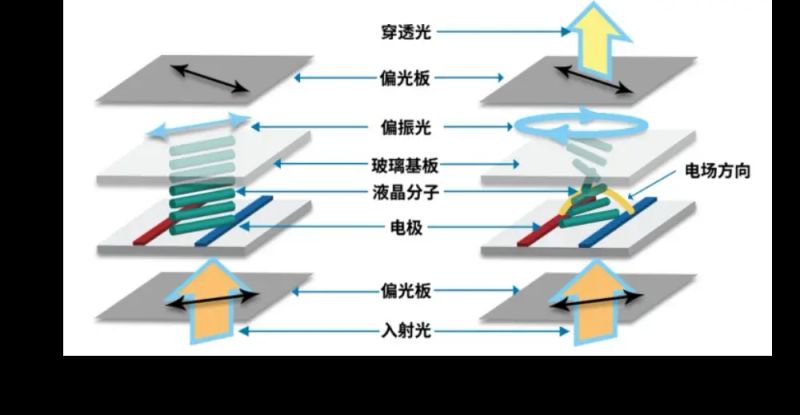
Lcd working principles (photo source:)
When voltage is applied, the field forces the liquid crystal molecules to line up in a state where the oscillation cannot be reversed and is therefore blocked by the second oscillation, with pixels showing a dark state. In this way, the lcd achieves precise control over the loss of light。
02
Secrets in colour
Lcd does not itself glow and requires back-light sources (usually leds) to provide light. In order to display colours, the lcds cover the three colour filters of red, green and blue on each pixel, creating a rich colour by controlling the brightness combination of the three-base colours. Red and green show yellow at the same time, and three colours are white。
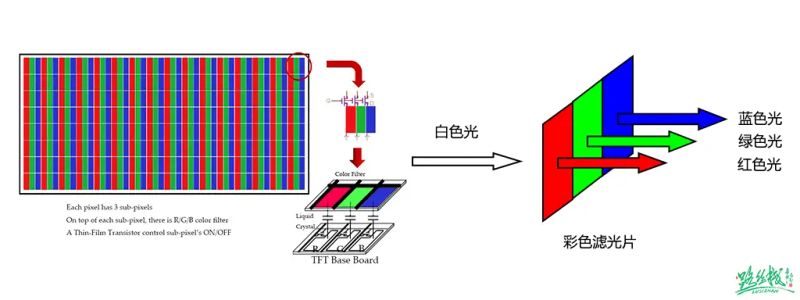
The principles of the lcd colour display (photo source:)
03
Greyscale and refresh
Displays show not only black and white, but also different greyscale and even dynamic images. This requires a change in the angle of the liquid crystal molecule by adjusting the size of the voltage and accurately controlling the light passivity. Every second, millions of pixels are responding at high speed to telecommunications, so that we can present the images we know。
Lcd enters the screen world of our daily lives from the peculiarity of the laboratory, and its unique molecular sequencing and light effects make the information display light and efficient. If you're staring at your mobile screen, just stop and think about how much scientific intelligence is hidden in this thin screen。