“some substances acquired mobility after melting or solvent dissolution, despite the loss of rigidity of solid substances, and kept the heterogeneity of the molecules of some crystals in order to form a partial intermediate of both crystals and liquids, which is referred to as liquid crystals from the sequenced fluids present in the process of solid-to-liquid transformation”. It's a scientific interpretation of lcd, and it sounds like a professional thing. We usually talk about lcd, the first thing we think about is lcd tv. So what is lcd? Lithium crystal is literally a liquid crystal. It is liquid, but it has crystal properties。
We're more familiar with crystals. The salt you eat in life, the diamond rings on your hands, the colourful stones, etc. The greatest feature of these crystals is that they have a fixed spatial sequencing structure, similar to a uniformed military unit。

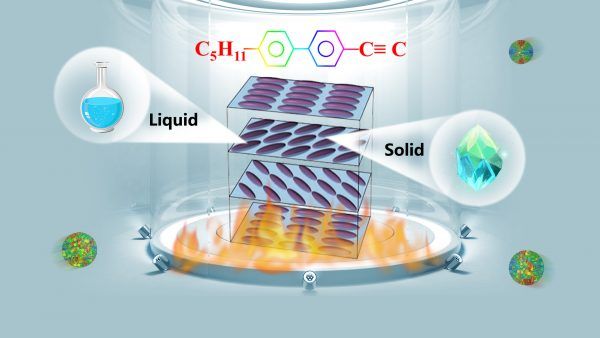
5cb lcd molecular formula
Https://newshub. Sustech. Edu. Cn/zh/wp-content/uploads/2019/08/2019004464818. Mp4
Animation of lcd formation
The origin of liquid crystals

And the liquid crystals are more like a group of sardines, or sardines. They look confused, but they can move in one direction. So, the liquid crystal must have something to do with a group of individuals adjusting their direction. In particular, each molecule in the liquid crystal is like a dispersed sand, but it can be effectively controlled externally in such a way that all liquid crystal molecules have a consistent direction, thus giving the liquid crystal-ray electrons a distinctive optical characteristic. To have the effect of this orientation, it is conceivable that a pool of leather balls is not easy, and long molecules are relatively easy to pull. So in molecular microstructures, individual liquid crystal molecules tend to be long。
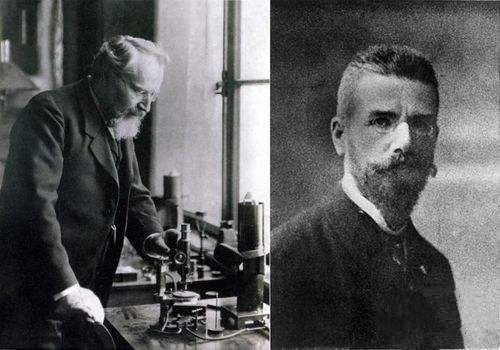
German physicist lehman and austrian botanist lenitzer
Lcd was first discovered by austrian botanist friedrich reinitzer. In 1888, he first discovered a white powder which heated to a temperature that could turn into a milky, plume liquid, and continued heating into a transparent liquid. It's in the hands of biologists, and there's no way to analyze ugly things except to burn them and see changes. Fortunately, there was a sense of cooperation, and lenitzer later sent this material to the german physicist otto lehmann. Lehman, using the rigour of physicists, carefully observed the substance under a migraine microscope and found that the liquid showed a colourful pattern. This pattern is caused by double refractions, which are generally of a crystal nature, and he therefore named this liquid, which is both mobile and crystal-like, “little crystal”. Lcd is an intermediate phase between a solid and a liquid state and is therefore also referred to as a fourth state substance other than a solid, liquid and gaseous state。
In conclusion, lcd is a special substance that combines liquid mobility and the heterogeneity of crystals。
Optical properties of liquid crystals
Lcds differ in their message and optical properties due to their heterogeneity, i. E. In different directions. In terms of optical properties, the long rod-type liquid crystal molecule is shown as a single-axis crystal with a double-reflection rate when it is consistent within a given range. Specifically, liquid crystal materials have different refraction rates along different directions。
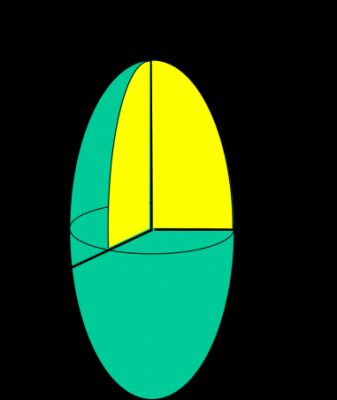
Stick-like liquid crystal molecule refraction ellipse
When the light passes through an uneven medium, a part of the light deviates from the original direction of transmission, which is called scatter. When light increases by the thickness of the uneven medium, the light that flows along the straight line becomes less and less。
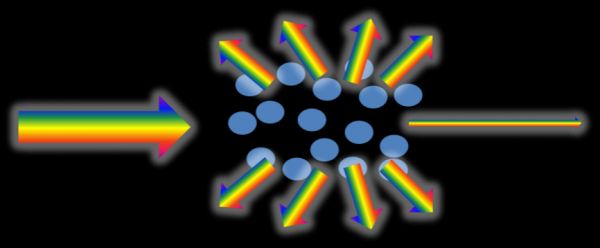
Dispersion occurs when light passes through an uneven medium
At this point in time, it is difficult to see objects on the opposite side in the direction of light, as the light is scattered in other directions. This phenomenon is also common in ordinary life: and when you use clean, warm water for powdered milk, as you increase the amount of milk, we find that the water is becoming more and more obscurous, again because the small particles of milk powder cause light dispersing。
There are many types of light dispersion, which can be broken down into two broad categories depending on the frequency of the light: flexible and non-flexible dispersion. So-called elastic dispersion means that the wavelength of the light does not change and is bounced back like a ping-pong ball. Instead of flex-dispersion, i. E., the wavelength of the light before and after dispersion has changed. Like when a piece of rubber mud comes back, its shape changes. Usually the bulk crystals we see are milk white, and when the liquid crystal molecules are aligned, the light is easily passed, which is equivalent to a glass of clean water; when the long stick-type liquid crystal molecules are not aligned, it is presented as a scattering body, which is equivalent to a liquid added to the milk powder, and the light will be dispersed。
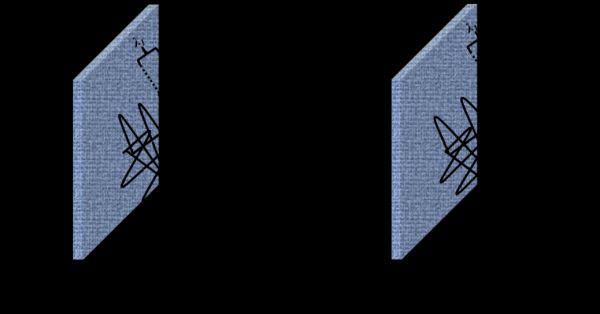
Flex-scatter and non-flex-scatter
In terms of the nature of the transmissions, lcd molecules also display different communication constants along their long and short axes. This is very important, and with all this heterogeneity, we can use the extra-power field to change the direction of the liquid crystal molecules and achieve the dynamic regulation of light。
It is well known that light is an electromagnetic wave in which the vibration direction of the field is that of the light. So-called oscillations, the transmission direction of the wave and the direction of the vibration are not consistent. It's like a moving snake whose body bends in a vertical direction. That's bias. We can use oscillations to select a linear oscillation in a particular direction. The light rate of a linear oscillation through another oscillation depends on the relative direction of the two oscillations. If the two oscillations are parallel, the line oscillation is easy to pass, with the highest rate being shown as bright; if the two oscillations are not parallel, for example, by placing them vertically, the line oscillation is completely blocked and is shown as dark through zero. So if we want to regulate the power of light, one way is to regulate the relative direction of the oscillation. This method, while theoretically feasible, is difficult to practice when it is physically regulating tens of thousands of oscillations simultaneously。
Scientists think better. For example, filling up between two positive oscillations allows for a change in the direction of the oscillation of light, even if the relative direction of the oscillation is not regulated, to achieve a significant change in the passing rate of light。
What substance is capable of doing this? Lcd
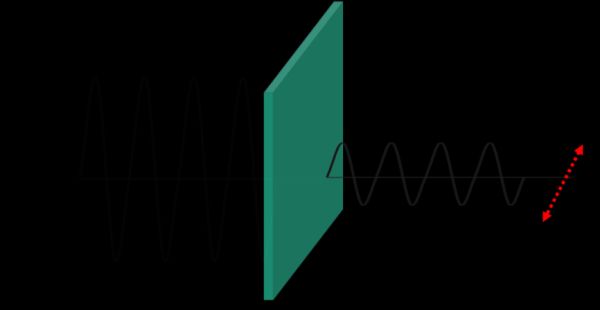
Spectrum graph
The optical heterogeneity of lcd leaves lcd molecules with a special capability. That's the spin light, and when the liquid crystal molecule is twisted, it changes the direction of the light. In the lcd display, the simplest commonly used is the curved column lcd model, known as the tn type. The word “distorted” is very relevant. You can imagine the image of the northern plaza. A nice noodle, turning into a gargoyle. There is another simple experiment that can understand the meaning of “distortion”. Take a note and rotate the “twisted” piece of paper with your hands, so that both ends of the note can move from parallel to vertical。
In short, the columnary liquid crystal is caught between two oscillations (the process is much more complex than this), and the liquid crystal molecules are organized like the distorted paper above, slowly moving from vertical to horizontal. By this sequence of liquid crystals, the vertical oscillation that is injected is gradually becoming a horizontal oscillation. As can be seen from figure 2, this horizontal oscillation allows for the placement of a horizontal oscillation through the exit, which will be bright。
Now, another type of liquid crystal can be used. By adding voltage, we can rearrange the liquid crystal molecules, all parallel light transmission. As a result, the thrust of the injection is tilted and the direction of the bias is no longer deflected, and of course it cannot be placed horizontally through the exit. When you're blocked, it's dark. So we can easily control the dark light with a simple voltage. It's easier to regulate the direction of the oscillation. This function embeds an ambush pen for applications such as liquid crystal displays。
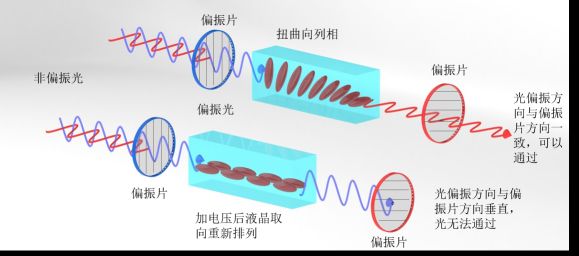
Figure 2: logical diagram of distorted liquid crystal-light effects
If the off-site field is not applied, as the convulsive spiral of the lcd molecule is much older than the visible light wave, the light direction of the in-ray photo oscillating direction will be distorted 90 degrees from the other side, as it is distorted by the entire lcd layer, when the direction of the oscillation is aligned with that of the surface lcd molecule. If a voltage is applied on the lcd box and a certain value is reached, the lcd molecule long axis will begin to follow the direction of the electric field, at which point the 90° irradiation function will disappear and the irradiation will be lost between the positive oscillations, thus rendering the device imposable。
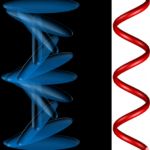
The arrangement of the molecular structures of cyclops
In addition to the above, there is also a common type of liquid crystal, which is a choreography. The structure of the choreography is shown in figure 3. Such liquid crystal molecules are flat, organized into layers, where they are parallel to each other, where they are paralleled by long axes of molecules, where the direction of long axes of molecules varies slightly, and where they are arranged into spiral structures along the legal line of layers. The distance between the two parallel layers is called the snail, with a length of several hundred nm, at the same wavelength as the visible light. By regulating external environmental parameters (e. G. Temperature) the choreography can be changed so that the light in one band can selectively prevent the passing of other wavelengths, so the photocrystal has the function of wavelength selection。
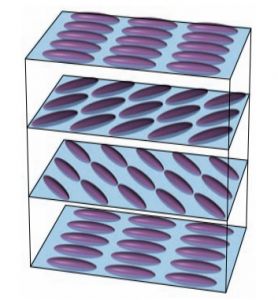
A map of the liquid crystal molecules of the choreography
There are also many natural photocrystals in nature, such as butterflies wings, petals, beetles, etc., using the photocrystal properties of choreographed liquid crystals, and we can send out a partial reflection of the light that prevents them from entering. In the area of smart windows, the reflection light bands of the galloping liquid crystals are mainly located in the infrared region so that the infrared can be stopped and thus the room temperature reduction function can be achieved. Through its temperature sensitivity, it can be used to measure temperature。
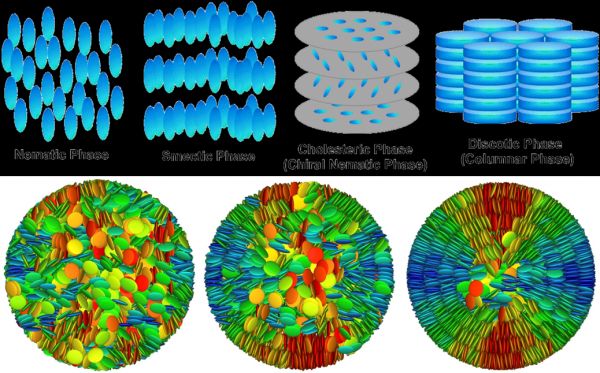
Structures of different types of liquid crystals