Good afternoon! Recently we received a consultation from a grape grower, who said that too many poaching fruit, too tight, would it be inappropriate to expand, or would it be easy to squeeze? In fact, as long as we take a reasonable expansionary approach and manage it right after the fruit is finished, within the right time, it will be possible to ensure a large, symmetrical, high-quality fruit-peetype。
When is it going to swell? How? What do you have to notice when you expand? So today we'll talk to you about the great grapes。
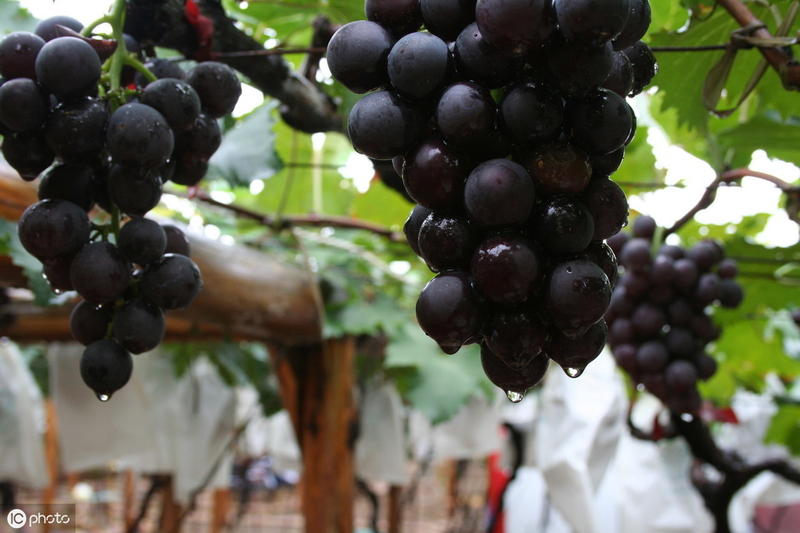
Time for inflation processing
As a rule, plume grapes are treated once in 12 to 14 days after the pups. How many days exactly? We decide according to the weather. If it's always clear after the fruit, the temperature is high and the fruit is growing fast, then we can expand on the twelfth day after the fruit; if there's a rainy day after the fruit, the growth of the fruit slows down, we will have to delay the expansion by two days。
And there's a time frame for the processing of the inflation, 20-25 days after the meeting, which is the perfect time for the expansion. The flower is the first flower in the park, but it is often beyond the reach of many of the farmers' friends。
The way to process the inflation
Before a giant raisin expands, it is necessary to supplement the plant with large water fat, by adding high nitrogen fertilizer to it once in a while, and then using the medicine later. In terms of the choice of the swelling agent, the same factors are associated with the growth of acrylic acid, chlorpyric acid, phenol and porpoise. First of all, the amount used is fixed, usually around 25 ppm, which means that 20% of a pack of 1 grams of cyanide is 16 pounds of water, which is called basic medicine。
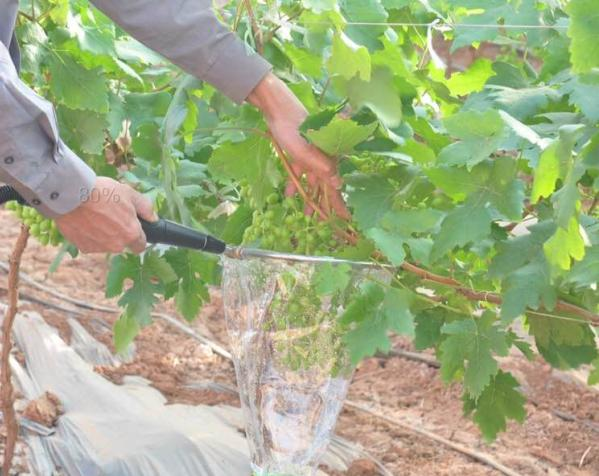
In addition, we can determine how much cytosyte we have in place, i. E., chlorine, phenol or porpoise, depending on our respective production objectives. The advantage of phenolons is that the largest amount of fruit comes from the seat, but the defect is that it causes the grape to delay maturity. Chlorinium is moderate in activity and does not delay the ripening of the fruit, but if over-utilized, the grape skin will be fertilized and the quality of the fruit will deteriorate as colour is difficult; the expansion of the plume will be the least effective, but it will promote berries colouring and early maturity。
Taken together, we believe that the use of chlorpylene is relatively conservative. The use of chlorine is best 2 ppm ~ 3 ppm, i. E. A 10 ml 0. 1% chlorine to 10 kg of water, followed by 5,000 times more pomegranate. Based on this concentration, we'll put 20% of the aroma acid in 2. 5 grams, 4 ml of pomegranate and 40 - 50 ml of chlorine in 40 kg of water。
This drug-use programme is now relatively sound in the processing of hyperbole, which ensures that the particle weighs more than 10 grams and reduces the fibrosis and does not significantly impede the upper colour. And, of course, some of the farmers' friends, who're after grapes, can use the amounts of chlorine and phenol if you have confidence in the top color。
Bottage processing management
How do we manage it after the expansion? The most important point is that, in accordance with the principle of small numbers of times, water is given to fattening and that high nitrogen and balanced fertilizers are applied interchangeably every seven days, at the rate of 6-8 pounds per application or at the rate of 2-3 pounds per application. This fertilization can continue until the hard core of the fruit. In addition, we have to adopt a fruit-reducing, heart-taking and sidekicking approach to ensure greater impact。
At the beginning of the day after the bulging process, we're going to have to do another ointment. The more timely the fruit is, the more visible it is. Let's not lose sight of what we have left behind. The core principle of the tectonic treatment is to remove the small particles, the rigid fruit, and then remove all the inside nuts, i. E., those long in the direction of the main axis, and eventually remove too many of the upper branches. Eventually, the standard of 80 or so grains per ear will be met, so that the weight of two pounds per ear will be guaranteed。
The best state is the top three to four-storey troughs, each with 5 to 6 nuts, each with 3 to 4 troughs, each with 3 to 4 nuts, each with 3 to 4 troughs, each with 3 grains, and the next with 1 layer。
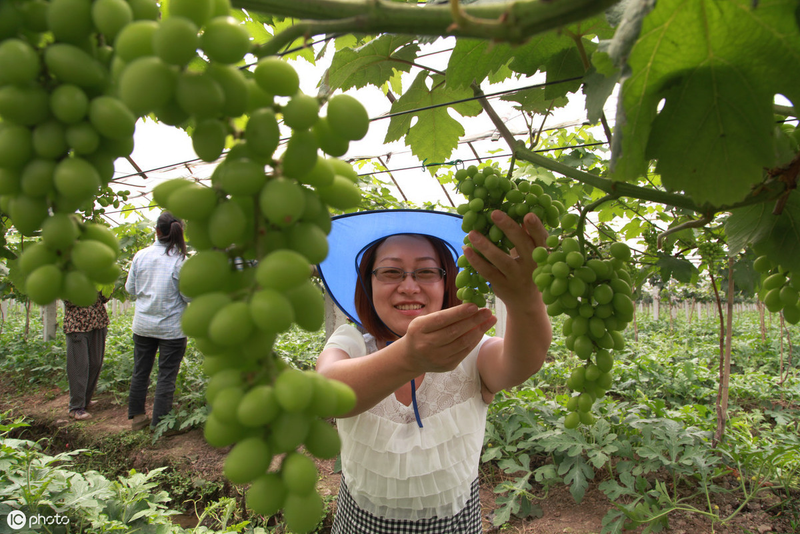
When the medicine is finished, as the temperature rises, the root system develops and the amount of water used as fertilizer increases, the leaves begin to grow, and at this point we need to take our hearts again to avoid new and fruit-taking nutrients. The location of the heart is where the heart is taken as we approach the flowering, and the back four leaves。
And in order to reduce the manual requirements for the heart, we can also spray accelerant on the top of the branch after the heart. Be careful not to spray it directly in the ear, otherwise it will inhibit the expansion of the fruit. Don't hit the fruit too much when it's on the leaves, it's okay to hit it in pieces。
Once the fruit and care work has been completed, we will resolve the branch problem in order to avoid the foliage and fruit-grabbing of nutrients. You know the fruit can't take a branch, because it's too strong. All we have to do is take off all the sub-shoes. One or two of the beaks above the head are left behind, and they are cut off. If you leave two steps, you leave two or three leaves for the heart, and if you leave one, you leave four for the heart. Otherwise, too many leaves, too few fruit trees, too few fruit trees, so much chance of frosting, so much more difficult to prevent and treat, and so much more likely to cause conflict in planting plants。
Some of our friends in the field may ask, "can we remove the stalks from our hearts this time, when we are used to doing the twigs before planting flowers?" here we stress in particular that, as long as it is a long and straight frame, in particular a v-type, a single fence and a double fence, it is important to grasp the iron-like principle, which is to “take your mind off your head and leave it alone”. The two operations, namely, heart removal and wiping, must be staggered, preferably by a week. Because the branches that follow the swelling, once we wipe out all the mats and take away our hearts, the nutrients on the branches of the fruit trees are nowhere to go, so that all the buds on the branches come out, and the last ones left to us are endless ones。
The above is about the timing, methods and management of the processing of the plume grapes, and it is hoped that after reading the article, the fruit friends will be flexible in the light of the realities of their own orchards。
Finally, it is important to remind you that many friends are mistakenly aware that they are fat enough to use the substance at a high concentration and that the fruit should be big. The idea is absolutely wrong。
The process of expansion is only a cause if the tree does not keep up, or if the plant leaves too much fruit, the grain is too big. And, if we use high nitrogen fertilizer during the expansion period, the branches can easily get into the boom, and it's almost impossible to reach the desired size of the grain, so you have to pay attention to both。