Many people who come into contact with paternity tests are the first to focus on results, but rarely think about what exactly a test report has gone through. In fact, paternity is not a matter of putting samples in the device, so we can get answers later. It involves multiple processes such as sample registration, dna extraction, genetic enhancement, data reading, location analysis and review of results。
Chongqing's national knowledge of biological diversity in everyday service also informs those who need it about sample requirements and the principles of testing, helping people to recognize paternity in a more rational way. After learning about the whole process, many of the seemingly complex issues become more understandable。

I. What exactly is the paternity test
Parental identification analyses dna genetic information in human cells。
The genetic information of the child is partly from the father and partly from the mother. By comparing multiple genetic points, it is possible to see whether the child's information on these points can be explained separately from one parent。
The test is not a search for a single “child gene”, but a comprehensive analysis of multiple genetic sites. The more numerous the places, the more complete the information obtained。
It's like checking a code with genetic patterns. Looking at a single location alone may not explain the problem; multiple locations are analysed together in order to arrive at a more informative judgement。
What does the sample do before entering the lab
Once the sample is delivered, it is not usually directly entered into the instrument, but is registered and numbered first。
Each sample would need to be individually marked to avoid mixing material from different persons. Staff will also check whether the samples are dry, package complete and the number of samples meets the requirements for subsequent testing。
Common samples include blood marks, mouth swabs and hair with furbags. There are differences in the treatment of different samples and it is therefore important to understand the collection requirements before they are sent for inspection。
For example, swabs are sealed without drying and easily generate water vapours; hair is free of fur bags and may lack sufficient cells; and blood marks are too damp to preserve the environment and may affect subsequent treatment。
Iii. How dna extraction was completed
Once the samples are registered, the laboratory releases and extracts dna from the cells。
In addition to dna, human samples contain proteins, cell fragments and other substances. The purpose of the extraction process is to obtain as much dna material as possible suitable for detection。
Dna levels in different samples are different. Blood marks and mouth swabs are generally easier to process, while samples such as toothbrushes, cigarette butts and nails may be affected by time of use, preservation of the environment and exposure to the outside world。
When the dna content in the sample is low, the laboratory may need to be processed more carefully. If complete data are still not available, samples may need to be resubmitted。

Iv. Why genetic expansion
The amount of dna extracted from common samples is usually small and cannot be directly analysed in full, and therefore the target genetic segment needs to be expanded。
The build-up can be understood as the reproduction of dna fragments that need to be observed so that the instrument can read the relevant information more clearly。
Upon completion of the build-up, the detection equipment will identify multiple genetic sites. Each sample forms a set of data, which is then compared with the parent sample。
This is why paternity cannot be judged solely by physical appearance, blood type or lifestyle. The appearance may be similar, and the blood type provides only limited information, while dna dots provide more genetic data than can be obtained。
V. Why the results are revised
The data generated by the instrument does not mean that the report is completed immediately。
Experiments need to see whether the data are complete, the location is clear and there are anomalies between samples. Some of the tests will also be reviewed to reduce deviations from samples, operations and data judgement。
When chongqing's quantico-specific organisms describes the testing process to their clients, they also emphasize that the report is not a simple printout, but a combination of results after the completion of multiple tests。
If samples are of poor quality, data may be missing; if there is confusion between different samples, they can influence analysis. Therefore, regulation of sampling, stand-alone packaging and clear marking are important。
Vi. How to understand a parent-child identification report correctly
The parent-child identification reports usually include sample information, detection locations, analytical data and results descriptions。
The average reader does not need to look at the full number on a case-by-case basis, but can focus on whether the sample number corresponds, whether the location of the test is complete, and the specific meaning expressed in the conclusions。
It should also be noted that the test results reflect the genetic relationship between the samples sent for inspection. If samples are collected by individuals themselves, the source of the samples needs to be identified by the provider itself。
The value of a report is not just to draw conclusions, but to help people understand filiation with genetic knowledge. In the face of test results, calmness, respect for privacy and adequate communication are often more important than rushing to emotional judgement。
Parental identification appears to be a technical test, but behind it is family, trust and responsibility. Knowledge of the process can provide a clearer picture of the choices made and reduce many unnecessary misunderstandings。
Chongqing china-china bio-friendly identification knowledge: a few details that can easily be ignored in self-sampling
As knowledge of dna testing becomes more common, more people are beginning to learn about paternity. Some are more concerned about the possibility of preparing samples on their own than on site. Self-sampling is indeed flexible, but whether the samples are regulated or not will have a direct impact on the success of subsequent testing。
The chongqing medium-sized national science organisms, when providing instructions on paternity, are often confronted with the absence of drying of mouths, the lack of furbags in their hair, and the combination of different human samples. These problems appear small, but may lead to the need for re-prepared samples。
I. Determination of sample type before self-sampling
Common samples consist mainly of blood marks, oral swabs and hair with furbags。
The cells in the blood tracks are concentrated and remain stable at that time. Oral swab collection is relatively simple and can be used by both children and adults. In turn, hair with furbags is required to observe whether the root is clearly organized。
The different samples do not have the so-called complexity as best. When conditions permit, the selection of easily collected, distinguishable and easily preserved samples is usually more secure。
The toothbrush, cigarette butts, nails and gum may also contain dna, but these samples are vulnerable to exposure, retention time and environmental pollution。
Two, it's not enough to wipe your mouth
The main purpose of the swab is to collect the cells that fall from the inside of the mouth。
Water washes can be used before sampling and food can be avoided for some time. Use of clean cotton on the internal side of the mouth to wipe and allow full exposure to the mucous surface。
Once the collection is completed, the cotton tags should be naturally dried on clean paper. A sealed bag without drying can easily form a wet environment and affect the preservation of samples。
The cotton tags of different persons need to be placed separately and cannot be mixed in the same container。
Iii. Hair samples are key to rooting
Many people think that hair can be tested, but what is really valuable is a cell-borne hairbag around the root。
The hair, which falls naturally on pillows, the ground or a comb, is often lacking in visible furbags. Shears cut off are dry and generally cannot serve as an ideal sample。
When collected, multiple hairs can be pulled directly to see if there is a white or semi-transparent organization in the root. When collected, it is packed in clean paper and placed in a paper envelope。
Repeated touching of the root with the hand may bring the skin cells of others to the sample, so that the operation is as limited as possible to the middle of the hair。
Iv. Blood samples don't need a lot of blood
Blood marks are not collected as much as possible。
A small amount of pointy blood is collected using clean blood cards, gauze or cotton tags. Blood should naturally infiltrate the material and then be dryed in the cool air。
Blood marks are not suitable for folding, stacking or filling in plastic bags when they are not dry. When the water is undispersed, the samples may have a taste or a mold。
The sampling tool should also be kept clean and should not allow multiple users to use the same needle or the same material。
Five: each sample must be individually packaged
Sampling is a more common problem in self-sampling。
Samples of fathers, mothers and children should be placed in separate paper envelopes, with a clear name or sample number on the outside. If a, b, c etc. Are used, the client is required to record the corresponding number。
The different samples do not use the same paper parcel, nor do multiple individuals have hair in the same bag。
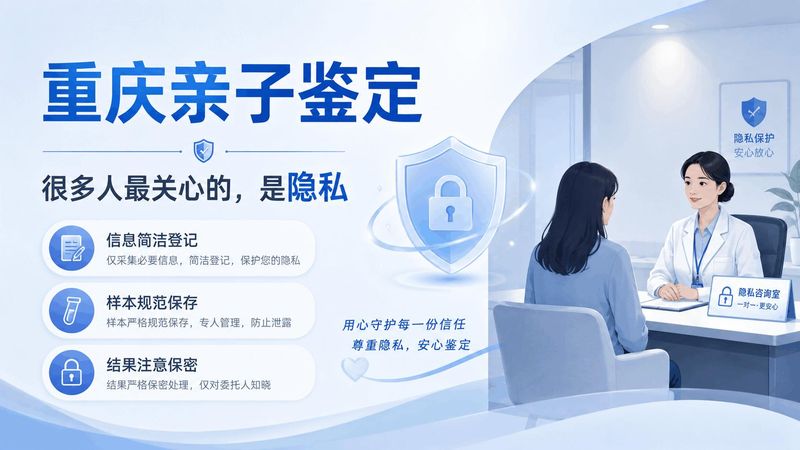
The outer packaging layer does not need to contain too much personal information as long as it is able to distinguish samples accurately. This facilitates both the detection of registration and the reduction of privacy information exposure。
Why special samples are more likely to be problematic
Special samples usually come from everyday items such as toothbrushes, cigarettes, nails and gum。
Toothbrushes may be misused by multiple people, cigarette butts may be exposed to hand contact, nail surfaces may be easily mixed into other substances, and gum may change as a result of excessive retention。
The availability of special samples needs to be judged in conjunction with the status of the samples. If this cannot be confirmed, a swab or blood stain may be prepared at the same time。
Chongqing quan quantienti biologicals will also recommend that priority be given to conventional samples in the interpretation of sample selection and that the duplication of collections due to insufficient sample quality be reduced。
Self-sampling does not mean that sources of samples can be ignored
The laboratory can analyse dna in the sample, but it cannot tell which person it comes from with a hair or a cotton tag。
Therefore, when self-sampling, the client needs to confirm the origin of the sample. A wrong toothbrush, a mixed hair, or a mislabelling could make the result lose its original reference。
A simple way of reducing confusion is to organize the environment before sampling and then process the next person after taking one。
Many of the problems with paternity identification do not occur at the instrument detection stage, but at the sample preparation stage. Detailed collection, drying, marking and packaging can make the detection process smoother and the end result more informative。