The ministry of agriculture and rural development has organized the national plan of action for smart agriculture (2024-2028) in order to make a significant contribution to the development of smart agriculture and to further the implementation of the ministry's guidelines for the strong development of smart agriculture. It is now available to all units, and kindly organize its implementation。
National action plan for smart agriculture (2024-2028)
In order to follow up on the decision-making deployment of the party centre and the state council on the development of smart agriculture, the ministry of agriculture and rural affairs ' guidance on the strong development of smart agriculture has been given further impetus to the implementation of this plan of action, with a view to accelerating the extension of smart agricultural equipment。
I. General requests
Basic thinking. Focusing on the areas of focus and key links in the development of smart agriculture, targeting the challenges facing rural production management in agriculture, organizing three major actions on smart agriculture, which are driven by policies, typical driving, technology-driven and service-driven, have produced an impressive set of work that accelerates the overall development of smart agriculture and provides a strong support for its modernization。
Work layout. (a) to accelerate the development of public service products such as the national agricultural rural data platform, the “one map” of rural agricultural land and the basic model algorithm in building the capacity of public services; in the industrial layout, efforts have been made to promote large-scale monolithic increases in the main crops, to foster intelligent farms, intelligent pastures, intelligent fishing grounds and to promote digital transformation of the entire industrial chain; at the demonstration drive, zhejiang was supported in its first test to explore and promote future applications, such as the “voodoo farm”。
Operational objectives. In accordance with the organization of work “one-year basis, three-year effectiveness, five-year step”. In 2024, three priority areas for action were launched, namely, capacity-building for public services in smart agriculture, extension of applications in the focus area of smart agriculture and demonstration of smart agriculture. By the end of 2026, the public service capacity for smart agriculture had been initially developed to explore a large number of monolithic upgrading solutions for major crops and technology models for intelligent farming (pastoralism, fishing), with an information rate of over 30 per cent for agricultural production. By the end of 2028, the capacity of public services in smart agriculture had increased significantly, information technology-enabled food-oil crops and efficiency gains in the conservation of important agricultural products had been fully demonstrated, the digital transformation of the entire industrial chain of agriculture in the pre-test areas had largely been achieved, the institutional path to the development of intelligent agriculture in the region had been largely matured, and the rate of informatization of agricultural production had reached over 32 per cent。
Priority tasks
(i) implementation of the smart agricultural public service capacity enhancement initiative
1. Development of the national agricultural rural data platform. To improve the design of the national agricultural rural data platform, to integrate inventory resources and incremental projects, to accelerate the advancement of computing, storage, safety, network upgrading and disaster preparedness systems, to build a unified data pool and data collection system, to bring together governance and analytical decision-making, and to create a hub for agricultural rural data management services. (c) develop and improve the classification of agricultural and rural data, a catalogue of data resources and a system of sharing, using the "agricultural code" to harmonize agricultural resources, subjects and product data, and further the pooling of data resources for governance and shared exchange. Upgrade the acv mobile end window to enrich and expand the digital application of agricultural services. Build a system of synergetic agro-rural data and innovation, develop standard norms to promote synergies up and down the data platform, and promote software tools such as the platform base. In 2025, the relevant data management system and standard norms were basically in place, and by the end of 2028 the national agricultural rural data platform, which is fully functional, synergetic and practical, was almost completed。
A “one map” of rural agricultural land was built together. Integrated use of existing conditions, such as the rural rural geographic information public service platform, the development of rural rural agricultural floor maps that meet the needs of rural agricultural management applications, the refinement of mapping, distribution and service functions, and the provision of basic capacity support at all levels of the rural agricultural sector. Cooperation and sectoral collaboration in the development of a database of agricultural-related data and the construction of thematic layers of arable land, permanent basic agricultural land, high standard agricultural land, contracted land, housing grounds, cropland cultivation use and farm pit pond land, and the creation of digital archives for each plot. The rural agricultural sector at all levels and the various subjects are encouraged to use the “one map” of their land as a basis for the development of a variety of applications such as cropland management, disaster prevention and mitigation, production hosting, precision farming, etc。
3. Development of an intelligent agriculture base model. Building an open platform for agricultural basic models and algorithms, creating an open-source community of agro-smart model algorithm software, and providing efficient and agile development tools and base model banks for various agricultural model development. Development and promotion of basic model algorithms such as crop growth with autonomous intellectual property rights, animal behaviour and signs identification, production management decision-making, multifactor regulation of the facility environment, as well as common software tools such as smart breeding, feed formulations, farm management or saas software services, providing a technical base for various intelligent agricultural applications. Accelerate the promotion of the application of large artificial intelligence models in rural agricultural research, production operations, management services, etc. By the end of 2026, basic agricultural models and algorithms open platforms and base model banks were largely completed, and by the end of 2028 more than 20 basic model algorithms and generic software tools or saas software services were developed。
(ii) implementation of outreach actions on applications in the focus area of smart agriculture
4. Large-scale monolithic upgrading of major crops. - organization of the national centre for intellectual agricultural innovation, leading scientific research units and leading science and technology enterprises to focus on priority varieties in priority regions of the country and to consolidate and promote a large-scale upgrading of digital farming techniques. To encourage local development of integrated water fertilizer management facilities, information management equipment, etc., and to explore the improvement of construction standards and optimize the network for monitoring the quality of cropland at the national, provincial, municipal and county levels. Accelerate the digital upgrading of the equipment for the propulsion of agricultural machinery and guide the installation of systems equipment terminals, such as beidou auxiliary drive, to improve the precision of operations. Encourage the development of monitoring and early warning networks, such as field weather, crop longing, soil conditions, pests and diseases, to be developed locally and in the region as a whole and to form integrated monitoring systems covering the entire region. Encourage qualified agricultural social service providers to expand intelligent agricultural services by providing agricultural guidance, market information, disaster prevention and mitigation services to small-scale farmers, etc. Throughout the production cycle. By the end of 2028, the digital farming technology programme for the main food and oil crops was largely mature。
Cultivating a pool of intelligent farming (pastoral, fishing). To provide guidance to local communities on the integration of appropriate information technology equipment in the light of the actual demand for breeding varieties and production conditions, and on the development of diverse and knowledgeable agricultural (pastoral, fishing) farms. Wisdom farm, which focuses on technical equipment such as environmental monitoring and regulation, precision management of water fertilizers, smart plant protection, unmanned patrol transport and smart farm machines. Wisdom range, with emphasis on the application of technical equipment such as management of individual vital monitoring, environmental precision control, auto-survey extinction, diagnosis of disease intelligence, precision formula feeding, automatic collection of decontamination, and sound waste disposal. Intelligent fisheries, with emphasis on technical equipment such as environmental and water quality monitoring, automatic oxygen enhancement, smart inspections, smart feed, individual behaviour observations, intelligence diagnosis of fish disease, graded count, etc. Implementation of the agricultural (pastoral, fishing) wisdom empowerment programme, which brings together rural and agricultural sectors at all levels, market owners, etc. Resource capacity to provide services such as smart agricultural generic software tools, information technology training, online agro-technology services, market information, etc. To subjects such as willing farmers ' cooperatives, family farms, agribusiness, etc。
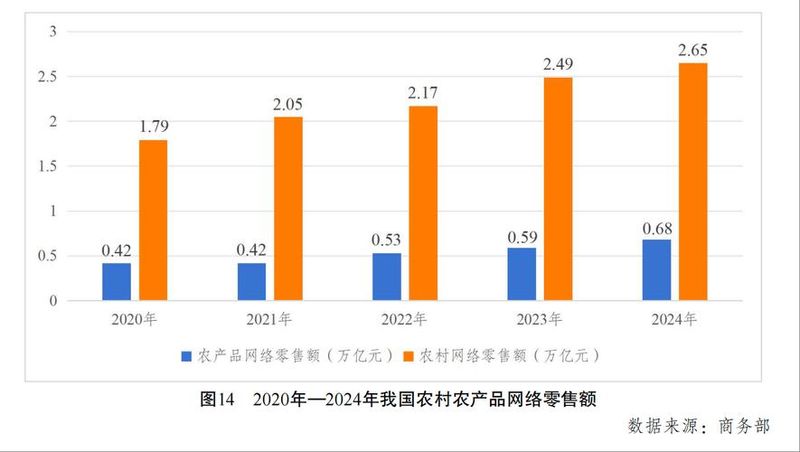
6. Promote the digital transformation of the entire agricultural chain. :: encourage the creation of a series of digital upgrading poles of industrial chains, with the full use of industry organizations, “chain owners” enterprises, and leading firms, leading to the digital transformation of agricultural producers and improving the synergy and synergy of industry-wide collaboration. In-depth implementation of the “internet+” agricultural products out of the village into the city project, promotion of the intellectual upgrading of the national market for agricultural production, enhancement of the information building of the cold chain of storage of agricultural production, creation of a market-oriented, data-driven, efficient and synergistic intelligent supply chain, and promotion of smooth and high-quality prices. (c) the establishment of a major data analysis and application centre for major agro-industry chains, and the strengthening of information monitoring of major agro-industry chains to guide the orderly development of industries. (b) promote the monitoring of agricultural quality safety intelligence, establish a national integrated regulatory platform, guide qualified producers to establish an information quality security control system, promote the application of electronic certificates of compliance with standards, and encourage retrofitted branding piloting in areas in need。
(iii) implementation of the smart agriculture demonstration initiative
7. Advance smart agriculture first. Support to zhejiang in the construction of a zone of wisdom agriculture, integrating the application of policy measures such as technological innovation, talent introduction, fiscal support and financial services, and exploring the establishment of a special fund for smart agriculture to facilitate the formation of a departmental mechanism to promote the construction of intelligent agriculture. Priority is given to the application of smart agricultural public service products in zhejiang, promoting the organic interface between the zhejiang and the zhejiang codes and spearheading departmental data connectivity and operational collaboration. It has continued to promote the upgrading of zhejiang's “rural brain”, the construction of farming, animal husbandry and fishing “agriculture brain”, the development and promotion of the zhejiang series of applications and the construction of a number of intelligent farming (pastoral, fishing) farms with different technological models. By the end of 2028, the zhejiang agricultural industry had basically built its brain, nurturing more than 1,000 digital agricultural plants and 100 future farms, forming a set of standard norms, and developing and promoting a well-established set of intelligent agricultural soft and hardware products。
8. Explore the future direction of smart agriculture. To support scientific research and research institutions in the continuous promotion of the iterative innovation of intelligent agriculture technology models, and to strengthen the technological development and system integration of the frontier of intelligent agriculture, leading to the future direction of intelligent agriculture. Supports the chinese academy of sciences in its ongoing search for a model to summarize the “vulner farms”. Continuous optimization of models such as soil nutrient inversion, crop simulation predictions, meteorological precision analysis, gridization of cropland, digital management, promotion of digital simulations, simulations of agricultural production processes and optimal planting programmes. The continuous promotion of smart farm machine innovation through precision, precision seeding, variable application, variable fertilization, variable irrigation, loss of harvest, loss of transport, loss of storage and rational use of straws in a context of scale applications. (b) fostering a group of leading science and technology enterprises in the area of smart agriculture, bringing together innovative resources and accelerating the development, transformation and industrialization of smart agricultural technology。
Iii. Organizational safeguards
(i) strengthening organizational leadership. Establishment of mechanisms for the advancement of intelligent agriculture, establishment of workshops, clear division of responsibilities, establishment of an annual list of tasks and the orderly implementation of tasks. The provincial agricultural and rural sectors must develop specific initiatives to define their main responsibilities, strengthen policy coherence and job security, and ensure that the objectives of the mission are met on time. Enhanced action plan monitoring and movement control, tracking and analysis of priority project implementation and timely identification of problems in implementation. The advisory committee of experts on smart agriculture was established to study trends in intelligent agricultural development, major issues and make policy recommendations。
(ii) enhanced policy support. Existing projects and policies, such as high-standard farm construction, smart agriculture construction, infrastructure agriculture construction, integrated agro-industry development, and farm machine acquisition and application subsidies, have resulted in policy synergies in support of smart agricultural development. Supporting intellectual agricultural capacity-building and accelerating innovation in research and development of key technologies through a combination of central budget investments, major information platform upgrades and major science and technology projects. Increased awareness training on the application of public services in smart agriculture. Encourage the exploration of new policies, such as special subsidies for smart agriculture, and the development of diversified policy support systems, such as technology, services and finance。
(iii) enhanced communication on stocktaking. Timely stocktaking of the progress and effectiveness of work, replication of typical experiences and models, and development of a collection of cases of excellence in smart agriculture. Establishment of an inventory and information dissemination system for smart agricultural masters, selection and release of new equipment for new smart agricultural technologies, and promotion of effective linkages between technology supply and demand. :: organization of an in-situ promotion conference on the construction of an intelligent agriculture to promote cross-fertilization of experiences, with a view to improving it as a whole. Use the network of officials of the ministry of agriculture and rural affairs, the new media, and the chinese international agricultural fair to demonstrate the results of the plan of action for smart agriculture. Strengthen international cooperation in the fields of technology, talent, standards, experience and so forth。