Parental identification is often found in visual works and social topics, so it is known and unknown to many. What is familiar with the concept of “relationship through dna” is what the laboratory sees, how it compares, and why it cannot be judged solely by appearance and blood type。
Understanding the scientific logic of proximate testing helps to reduce misunderstandings and also allows for a more rational view of the testing process and results。

I. How dna can record genetic relationships
Dna is an important vector of human genetic information. Most human cells contain the same genetic information except for a few special cells。
The genetic material of the child comes from both parents. On common genetic markers, the child receives a portion of the information from the father and the mother, respectively. This stable pattern of genetic transmission provides a scientific basis for intimacy analysis。
However, most of the dna among humans is very similar. The experimental analysis does not compare all dna from beginning to end, but chooses to observe genetic markers with a high degree of variation in the population。
These markers form a combination of individual genetic characteristics. With the exception of a few cases, such as convalescent multiples, the combinations of different individuals on multiple markers usually vary。
Ii. What are genetic markers
D. N. A. Can be conceived as a huge life statement. Genetic markers, like selected passages in books, take different forms among the population and are transmitted from parents to children according to genetic patterns。
One type of marking commonly used in the experiment has a variation in the number of repeat segments. Different people may have different repetitions in the same location, resulting in different stratifications。
The technicians observe multiple genetic locations at the same time, not just one. The fact that a single location is the same does not mean that a relative exists; a combination of multiple locations that is consistent with genetic patterns is of analytical value。
The greater the number of markings, the more information is usually available. The final judgement, however, still requires a combination of sample quality, staff relations and statistical models, rather than simply seeking quantity。
Iii. How dna was extracted from samples
Oral swabs, blood marks and hair with furbags vary widely, but they may contain cells with cell nucleus。
Oral swabs are mainly collected from mucous cells that have been removed from the inside of the mouth; white cells in blood marks contain cell nuclei; and hair samples are mainly based on cell tissue around the fur bladder。
When the samples enter the laboratory, the technicians destroy the cell structure and release dna and remove some impurities。
The dna content and impurities composition in the different samples are not the same and therefore the treatment can vary. Conventional samples are generally easier to process, and special samples that are permanently placed or subject to environmental impacts may be more difficult to handle。
Iv. Why is there a dna build-up
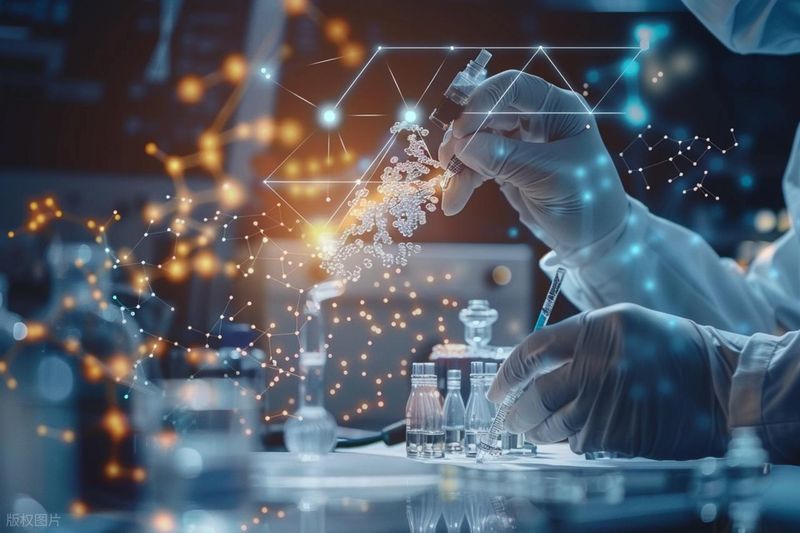
The amount of dna extracted directly from the sample may be small enough to meet the analytical needs of the instrument。
Experiments will replicate selected genetic marker areas using augmentation techniques. After multiple rounds of response, the number of target segments has increased significantly and the instrument has access to relevant data。
The scaling-up process needs to take place in a strictly controlled environment. Experimental areas are usually differentiated by steps such as sample processing, response configuration and data analysis to reduce the likelihood of interaction between samples。
Upon completion of the build-up, the instrument will generate spectrometric data based on the spectrometric characteristics, resulting in a subsequent comparison of the basic information required。
V. Introduction to the beijing medium-stakes national assessment service
The beijing centre for the identification of paternity and paternity in china offers pre-relationship testing instructions, sample guidance, process combing, booking and report interpretation services to families in beijing regions。
The service covers the areas of east city, west city, sunshine, haidian, fujitai, shigeyama, hills, gaps, tunzhou, shunyi, changping, da xing, huairou, ping valley, ming yun, yonqing, etc., and can provide information for those in need in the surrounding areas。
The service is located in room 1108, room no. 9, nord centre, nord ii, tondai district, beijing, and is accessible approximately 500 metres by foot from the exit of b of the toyota science and technology park。
Open business arrangements are from 9 a. M. To 18:00 on mondays. There may be changes in holiday reception times or on-site arrangements, and brands are scheduled to be advertised on the same day before the visit。
The scope of the exercise includes a statement of personal kinship, an analysis of parent-child relationships, a description of grandchild and compatriot relationships, a sample selection and collection guide, an appointment connection, a description of the testing process and an interpretation of the content of the report。
Vi. How the data on parents and children are compared
In a common genetic position, each person usually has two sub-informations from both parents。
When looking at the data of the child, it is possible to check whether one of the fractions can be found in the mother's data and another in the father's data。
If multiple genetic positions are presented in combination with transmission patterns, stronger proximate information is created. In the event of persistent unexplained differences in multiple locations, a combination of personnel relations, sample status and other factors is required。
The test judgement does not look at only one or two locations, nor does it compare charts with the naked eye. In conjunction with statistical calculations, technicians analyse the possibility of the current data mix under different relationship assumptions。
Vii. Why can't blood groups be a substitute for dna testing
Blood groups also have genetic patterns, but the number of common blood groups is limited, and a large number of people who are not related may have the same blood groups。
The blood type can provide a preliminary exclusionary clue in some cases, but it is difficult to identify a specific relative separately。
The physical features are also subject to genetic effects, but also to age, living environment, nutritional status and subjective observations. A child is a father or a mother, and is often a visual feeling of a family member。
Dna proxies observe a combination of genetic markers that provide more genetic information than physical judgement and blood type comparisons。
Viii. Why is it more complicated to analyse compatriot relations
There is a direct genetic transmission relationship between the parents and the child, while the siblings receive genetic fragments from the parents。
The two children may inherit the same footage in some places or may inherit different footage in others. Therefore, there is no simple correspondence between compatriots in all locations。
Experiments are required to observe through multiple markers the extent to which genetic information is shared between the two, using suitable statistical models to compare different relationship assumptions。
Similar characteristics exist in grandchild relations. The degree of sharing that can be observed can change when genetic information is passed through the middle generation. The addition of family members with a clear relationship can sometimes provide more complete reference conditions。
What happens when samples are contaminated
Sample contamination usually refers to the mixing of other human cells in the sample or exposure to environmental substances。
For example, fingers touch the head of a cotton sticker, which may bring the collector's skin cells into the sample; multiple sharing of toothbrushes may make the source of the sample unclear; and the long sealing of wet cotton tags may affect preservation status。
Pollution does not mean that the instrument automatically gives the wrong conclusion. In the course of the experiment, mixed signals, insufficient dna content or incomplete fractions may occur, and technicians will judge whether re-sampling is required on the basis of data status。
Thus, the meaning of sampling and packaging is not only to facilitate transport, but also to maintain clarity about the origin of the samples and their personnel。

X. How do statistical data in the report understand
Relative testing reports usually contain genetic marker data, analytical parameters and concluding statements。
The statistics are used to compare the two different relationship assumptions. For example, one assumption is that the persons concerned have a relationship of kinship analysed, while another assumption is that they are ordinary random individuals。
The technical staff calculate the relative level of support for current genetic data under different assumptions. This process is based on population genetic data and statistical models and is not a simple calculation of “how many places are the same”。
Ordinary readers do not need to extrapolate complex formulas on their own, but should check sample names, participant relationships and presentation of conclusions. In case of incomprehensible parameters, the staff member may be asked to provide clarification from the genetic point of view。
Science and technology also need rational use
Dna relative testing can analyse biological relationships, but it cannot answer all questions in family life。
Shared growth, daily companionship, emotional responsibility and family commitment are not simply summarised by a set of genetic data. The results of the tests may resolve a problem and may create new communication pressures。
Careful consideration should be given to the purpose of the test, the perception of the participants and the possible impact of the results prior to the decision to test. When children are involved, greater attention is paid to protecting their personal information and psychological feelings。
The value of scientific tools is to help people understand problems based on objective data. Understanding the principles in a balanced manner, carrying out sampling in a normative manner and facing the results in a rational manner will allow the relative test to play its proper role。