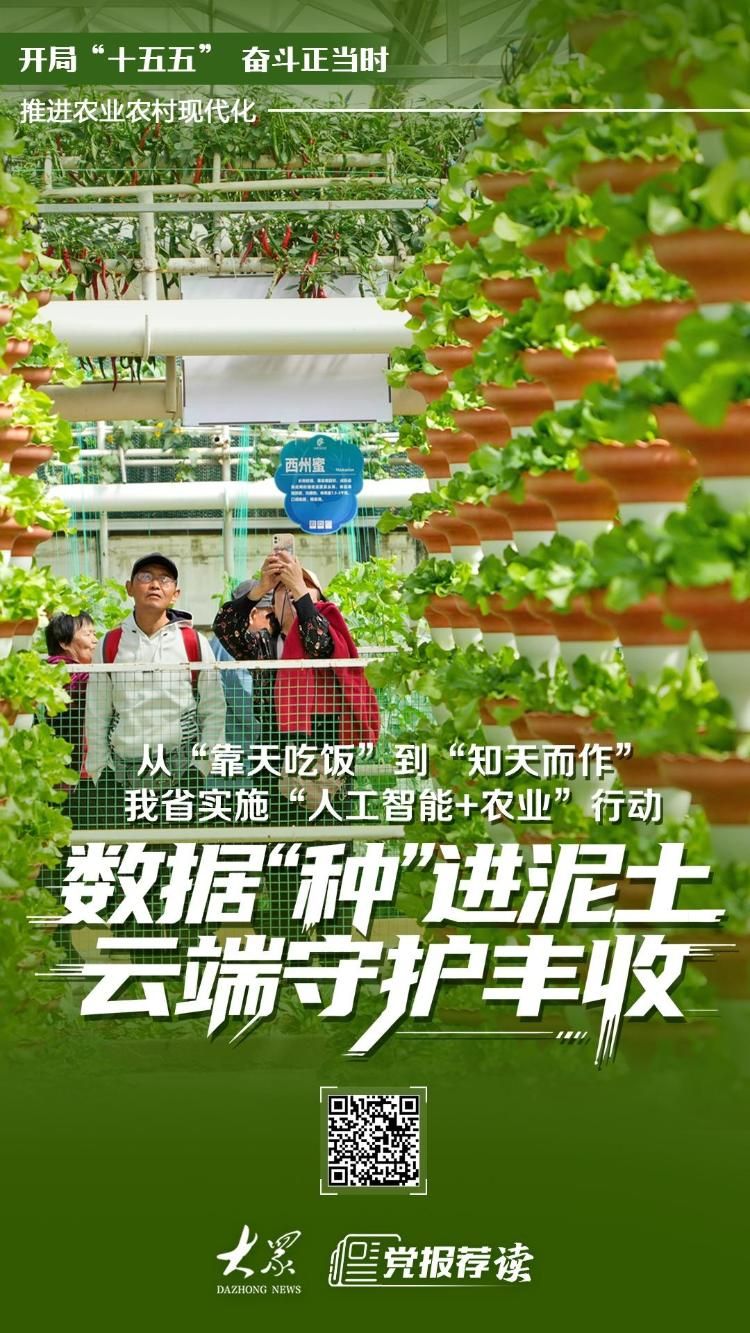
Over the wheat field, drones are flying at low altitude, with nitrogen-deficit seedlings, aphids on the screen and red on the screen; in the shed, artificial intelligence (ai) algorithms are maintained and the system alerts when water and weight are lacking; and in the sorting workshop, the ais visual system “ends” hundreds of apples per second, graded by colour, fruit, path and flaw, with a miscalculation rate of less than one per cent..
From “food from the sky” to “know what to do”, artificial intelligence is now becoming a “good helper” in helping to stabilize agricultural production and boost farmers' prosperity, providing an entirely new paradigm for agricultural rural modernization。
Central i of 2026 explicitly proposed the upgrading of ai technology from a single-point application to a strategic engine cutting across the entire agro-industrial chain, “to develop new quality agricultural productivity and promote the integration of artificial intelligence and agricultural development, as appropriate”. A number of industry agencies forecast that china's smart agricultural market will exceed $134 billion in size in 2026, with a combined annual growth rate of over 15 per cent。
The 12th and 11th plenary sessions of the provincial council have just been held, with the aim of modernizing agriculture as a major sector, promoting the upgrading of the quantitative and intellectual transformation of agriculture and clearly proposing the implementation of the "advisory + agriculture" initiative. What is artificial intelligence+agriculture? In short, new production systems that drive the transition from traditional agriculture to intelligent and efficient are centred on artificial intelligence technologies. Comrades felt that, at a deeper level, “assumption+agriculture” was not simply a technology supercomposition, but a systematic reshaping of agricultural methods, forms of organization and value chains。
"ai seeded land, and a strange field released more possibilities."
The vitality of technology lies in solving practical problems. At the national level, agriculture faces pressures such as ageing of the labour force, increased risk of climate change and low value added and brand power in niche industries. The intervention of artificial intelligence drives agriculture away from “experience” to “data” to inject certainty into the hard-line “china jobs” and plastic farming industries. In the view of many, the application of artificial intelligence is timely。
“shangdong is the province of agriculture and a source of agro-industrialization, with a large industry and a full-fledged industry, a highly qualified producer and a strong capacity to accept new things. At the same time, the shandong industrial base is strong and artificial intelligence technology is rapidly evolving. The transformation and diffusion of new technologies in agriculture has significant cost and efficiency advantages.” in the view of liu, professor of the provincial council school of administration (shandong school of administration) and director of the shandong rural rehabilitation institute, shandong has a solid foundation for the development of “artificial intelligence + agriculture” and, with the advantages of a full industrial system, a sizeable market size, and a rich application landscape, it is more likely that the stranges of the field will be released。
In the summer of lubein plains, the corn is growing up and is alive. A black pipe network plays a major role in the demonstration fields of the kim-hoe food farming cooperative in qi river county. “this is a water fertilizer integration facility that we have laid. Each 30 centimetres has an outlet that can be well dripped to the bottom of the corn root. It is irrigated three times faster than a flood, saves 30 per cent of water and manages 200 acres a day per person. "cooperative councillor yuan ben just said. Based on the large data platform, cooperatives can also implement full-scale supervision at the “twilight end”, move their fingers to develop a watershed water fertilizer management programme based on detection data, customize individual chemical-based fertilizer formulations for village maize fields, and conduct simultaneous earth-based formulations, crop chlorophyll testing, etc。
This year, shandong summer, which was characterized by a negative harvest, achieved a “triple increase in area, single production and gross production” for four consecutive years, not least because of the spread of integrated water fertilizer technology in daejeon. Data show that in 2025 the province-wide area of food and oil crops using integrated water fertilizer technologies reached 6. 3 million acres. “the integration of water fertilizers, combined with the reduction of land, the `square-sized' planting, etc., has accelerated the integration of good seeds, good practices, good opportunities, and deep fields, and has effectively increased the size of agricultural land and standardized cultivation.” yuan is deeply aware that the integration of water fertilizers has created a stronger base for harvest。
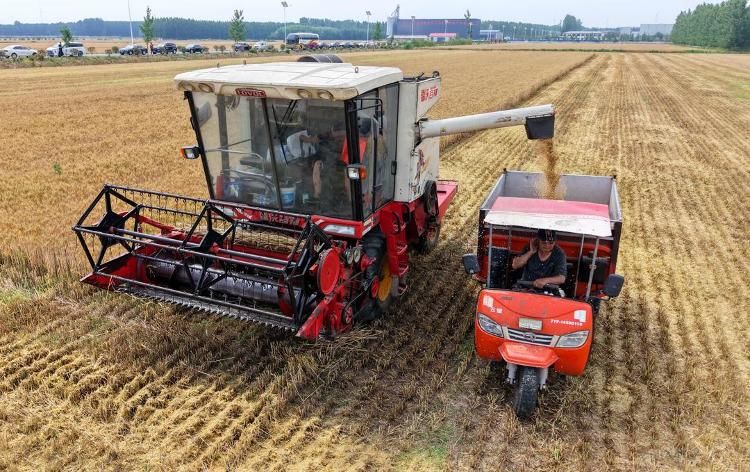
Seeds are the “chips” of agriculture and are key to food security, and intelligent breeding has become a hot spot for scientists to focus on breeding。
In april this year, the crop science institute of the chinese academy of agricultural sciences, jointly with shandong ultra-intelligence biotech, inc., launched the iwheat wheat smart design nuclei platform. For the qingdao agricultural university's wheat genetic breeding team, iwheat's application is helping them to tackle the “long-cycle, inefficient and costly” business challenges of wheat breeding。
This platform integrates more than 30,000 wheat seed resources, 442 functional genes, more than 6,000 functional points and more than 400,000 table-based data, and establishes “digital identity cards” for each of the various species to enable accurate retrieval and efficient use of resources. “in combination with a fast-growing system, the traditional eight-year breeding cycle can be reduced by two to three years.” team leader zhang yumei said that accelerating the process of breeding new varieties and reducing the cost of breeding means improving innovation and competitiveness throughout the industry, thereby enabling high-quality development up and down the wheat chain。
Let the technology basin really land on the industrial landscape
Large models of agriculture can integrate multidimensional data such as weather, soil, crop growth and significantly improve the accuracy and predictability of agricultural production. I have made clear the need to strengthen the application of large agricultural models and artificial intelligence。
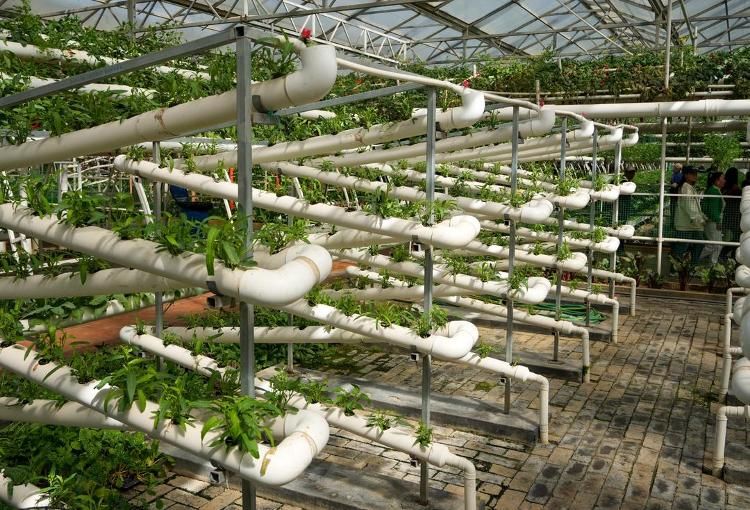
A special group of “employees” came to the vegetable shed in the “home of chinese vegetables”. A group of flexible-footed machine dogs, travelling along the fields with flexibility, carrying high-level clean cameras and sensors like the “gold eyes of fire”, accurately identifying signs of disease and pests. Inspections were completed, data were sent back to the backstage in real time and artificial intelligence models quickly gave planting decisions. Today, the new sheds for the birthday light have been successively upgraded to the seventh generation of the smarts network, the cloud sheds, where the rate of application exceeds 85 per cent, and labour productivity has doubled。
Just over a month ago, the provincial college of agriculture released a large remote sensing model for the agriculture of "suna-am". The model, based on 20 years of accumulation of mass data from 20 million artificial samples, covers the entire landscape and the entire life cycle of shandong, and builds a chain-wide smart monitoring system for the “intellectual extraction of arable land - fertility prediction - crop precision recognition - long-range dynamic monitoring - pest and grass warning - crop intelligence estimation” with a high accuracy of 95 per cent and efficiency improvement of over 100 per cent。
Large models can also be effective in increasing product value addition and standardization at mid-stream processing. In the kithai mountain region, the “big model for grape cultivation and brewery” developed by the wave cloud state information technology co. Ltd., in collaboration with the computation centre of the chinese university of agriculture and the cote d'agriculture development co., inc., automatically generates climate-adaptive management programmes at the planting end of the plant, achieving a fine distribution of water, intelligent warning and control of disease and pests, and a synchronized increase in the production and quality of grapes; on the other hand, the dynamic optimization of key parameters with the use of ai simulation of fermentation, plastering and plastering at the end of the brewing, and the completion of the material classification, ferment control and the digitalization of the taste of alcohol. In this way, each batch of wine has a more stable and manageable taste。
Of course, there is still a long way to go before artificial intelligence and the vastness of the country can achieve deeper two-way empowerment -
An ai system, sensor terminals, edge calculations, decision models are all counted and initial inputs are larger. Can average farmers afford it
How can agricultural production, with its long life cycle, complex environment and wide regional variation, collect and use quality agricultural data to drive ai models over time
Only young people who sink into villages and are skilled in agriculture are in short supply, and how can the skills of agricultural artificial intelligence be nurtured
“technology basins” are truly “industrial landscapes”, and liu believes that the key is to encourage leading firms, institutions of higher education and new agricultural operators to work together to create a large industry model that “knows the farming, cleans the books, manages the whole process” around the dominant industries of food, fruit and vegetables, livestock, and aquaculture。
In addition, liu has recommended that greater attention be given to the construction of new rural productive relationships that are compatible with the new quality of rural productivity, and that the integration of rural asset resources be undertaken in such a way as to guarantee the full development of digital and intellectual technological advances. “promote the transformation of rural digitization from `local area networks' to `internet', to break down long-standing `information islands' and to build rural revitalization data floors.”
(crowd journalist)