


The demand for garlic is greater because it is the spice that is often used in everyday life, so the country has increased considerably in recent years. There is a difference in garlic farming techniques in every region, and today we learn about garlic cultivation in hangzhou。
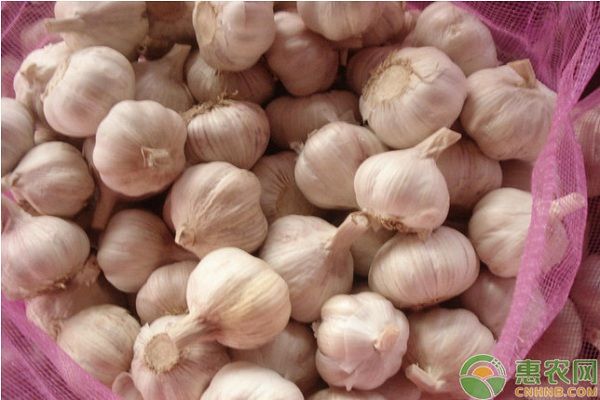
"title" = "hongzhou high-quality garlic plantation" /
Garlic is a lyric onion plant, and it's an important spice vegetable. At present, the area under garlic cultivation is gradually expanding, with widespread cultivation in other areas, in addition to the main production areas, shandong, jiangsu and henan provinces, among which the yangtze basin is also an important production area for garlic. As a result of different climatic conditions, there are characteristics of garlic farming techniques in different regions and the manner in which cultivation is managed differs from other regions. The following is a description of the state of hangzhou's high-quality garlic production technology。
1 land selection
Garlic fertilized water, the root system is weak and the soil is suitable for fertile, well drained sandy soil. Garlic is not an appropriate front for crops such as onions, onions or onions, but for crops such as pre-maturized beans, cucumbers, tomatoes, potatoes and maize, or for planting with food. Autumn garlic in the yangtze area tends to plough and tan in a timely manner after the pre-harvesting, before tilling, for every 667 m2 of fertilized farmers, 4,000-500 kg, 100-150kg cake fat, 50kg standard nitrogen fat, 30kg phosphorus fat, 30kg potassium fat, then finely ploughing, flattening, 1. 5-2. 00 m wide, and for drainage purposes。
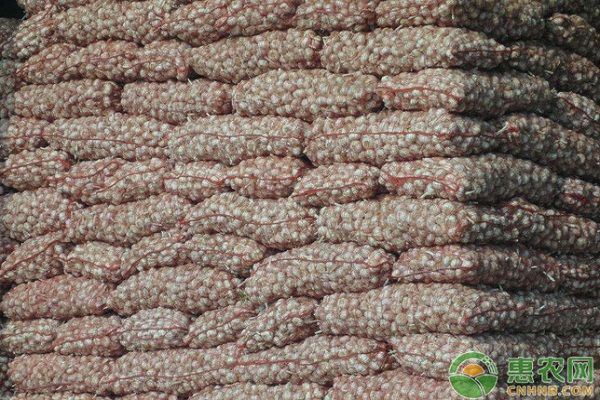
Two for the good species
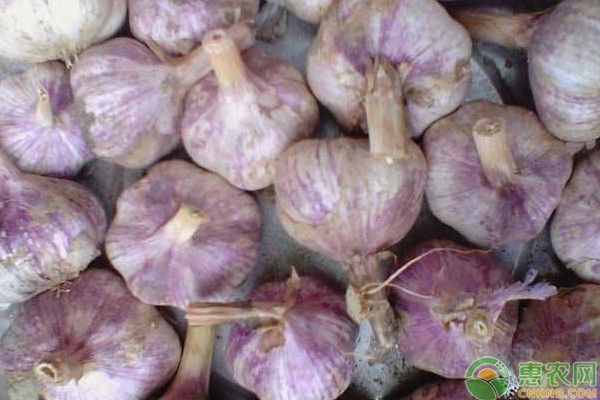
The main varieties of garlic in the region are gardin, xuzhou, hangzhou and sichuan chengdu. Among them, gardin, xuzhou garlic, hangzhou garlic is white, which is large and tastes less spicy; sichuan chengdu is already purified, with large and small garlic, small petals and strong spicy。
3 seed in time
3. 1 selection and handling of garlic
The garlic petals used for seeding shall have the typical characteristics of the species, the scale of the garlic, the absence of damage and the absence of malformations. Carpentry is graded before seeding, so that large and small garlic is not mixed so as not to affect production and quality. In order to break the hibernation and promote gestations, garlic can be removed before seeding or immersed in water for between one and two days before seeding, or 10 to 12h with more than 50% more than 500 times more fungus can be impregnated and dried up. In addition, a month of low temperatures of 0-4°c is used to treat garlic, which can take place much earlier。
3. 2 time of seeding
Garlic is a cold-cooled crop, suitable for winter planting in the south, with a budding temperature of around 22°c, a leaf growing temperature of between 15°c and 20°c, and a later growth temperature of around 25°c. In the hangzhou region, it is usually broadcast in the autumn after the hibernation of garlic. The planting period, mainly for garlic, was later than in the north, mostly in late september and in june of the following year。
3. 3 sowing density and sowing
The selected garlic petals will be inserted directly into the soil in order to be seeded on a class basis. For the main purpose of harvesting garlic, the range (15-20) x 10-13 cm is 66. 7-133. 3 kg per 667 m2. The larger the length of the line, the larger the single ball, but it is prone to malformation. The soil is covered with 2-3 cm, which is covered with soil so that it is soaked and soaked that, in the event of a drought, the soil is humid。
4 field administration
When seedlings are produced, they are grown in a timely manner, with pine soil and two to three times fattening during the growth of garlic, promoting the growth of the upper part of the land. Weeding work in china is particularly important when it comes out of garlic; when it is 10 to 15 cm taller, it can be deeper; when it is 30 cm taller, it is lighter. In general, water is used in medium-sized farming in combination with fertilization. In addition, in order to produce garlic, every 667 m2 of biological organic fertilizer is applied before winter, ranging from 30 to 40 kg, which is applied in a timely manner to ensure the safe passage of seedlings through winter。
After the following spring, the trenches are to be renovated to allow for timely drainage. In the spring, there was a boom in the growth of garlic plantations, as well as a boom in garlic and a rapid increase in the absorption of potassium nitrogen phosphorus. Fertilizers were applied at a rate of 20-25 kg per 667 m2 of ammonium sulphate in early march in order to stimulate the extraction and accelerated growth of garlic. At the end of march, heavy fertilization was performed once, with urea application of 20kg for 667 square metres and compound fertilization of 20kg, with care to water the soil in order to keep it wet. Between april and may of the following year, the masts had begun to swell and the rain had been heavy, and attention should be paid to drainage, otherwise it could cause garlic to spread. Use of chemical herbicides such as herbicides, fluorine, combined with coloured film cover has better weeding effects。
Three or four days before the pick-up of garlic. After the garlic harvest, it enters a period when the garlic swells, when the plant is slow to grow and generally does not follow fat, such as when the soil is dry, it can be watered and the soil humid to reduce the temperature and promote expansion. Water was stopped five to seven days before the garlic harvest in order to promote the maturity of the runners and enhance their sustainability。
5 pest control
In the yangtze river basin, garlic pests are mainly leaf strewn, soft rot, garlic maggots, etc. The principle of prevention is primarily preventive and integrated。
Agricultural measures such as improved field management, rational planting, increased use of potassium nitrogen phosphorus as a full-scale fertilizer, application of bioantibacterial fertilizers, cultivation of strong seedlings, timely drainage after rain and prevention of water accumulation in the field can effectively control garlic pests. In the case of folate, 75 per cent of the bacterial hygienic powder 600 times the fluid, 50 per cent of the pepsis 1,500 times the fluid, 64 per cent of the intoxicant powder 500 times the fluid, 25 per cent of the dysentery manganese 400 times the fluid or 50 per cent of the dyslexia 1,000 times the spray spray, 7 to 10 days apart, 3 to 4 consecutive times; in the case of septic disease, 72 per cent of the cythroacin 3,000 to 4000 times the liquid, 50 per cent of the simamamite 3,000 to 4,000 times the liquid, and 50 per cent of the neopolymer 3,000 to 4,000 times the liquid, 5 to 7 days apart, 2 to 3 consecutive times in the case of the disease, and in the case of onions and aphia in the case of pests, 25 per cent of the 3000 times the lactum, 24 per thousand to 1,000 to 1,000 to 505 to 1,500 times the lactum, 4 to 5 days of the in the case of garlic, 50 per cent to 1,000 to 1,500 to 80 per cent of the in the case of the for larvae, 90 per cent of the crystal trichlorfon can be ploughed up with 1,200 times the fluid。
6 collection in due time
6. 1 harvest of garlic
When the garlic is divided, it is spread quickly and needs to be harvested in a timely manner, otherwise it will affect the production of garlic. In the first half of may, when the garlic is exposed and the flowers are slightly hammered, they can be harvested. The pick-up takes place in the afternoon of the sun, usually under the third leaf of the garlic. For early listing, harvests can take place around 7 cm at the mouth of the garlic leaf, which is higher than the last leaf, and around 15 cm at the mouth of the garlic leaf, which is higher than the last leaf, when the upper part is bent down。
6. 2 garlic harvest
After 20 to 30 days, we can start picking garlic. At this point, most of the garlic leaves were dried up, and the upper leaves were dilated from faded to the tip of the leaf, and the plant was soft enough to collect garlic. The harvest is followed by a few days of drying up in the fields and then binding them in a cold place to store or hang them. During the drying process, it is necessary to guard against sun and garlic while observing weather changes and preventing rain。
You may be interested in the content of the recommendations below and welcome to read them。



