Garlic is one of the most popular vegetables in our lives. Garlic prices have been stable over the years, and a lot of garlic farmers have made money. But in the case of garlic, we also need to learn the right fertilization techniques to ensure the high quality and production of garlic in order to maximize its benefits. Here's what i'm talking about。
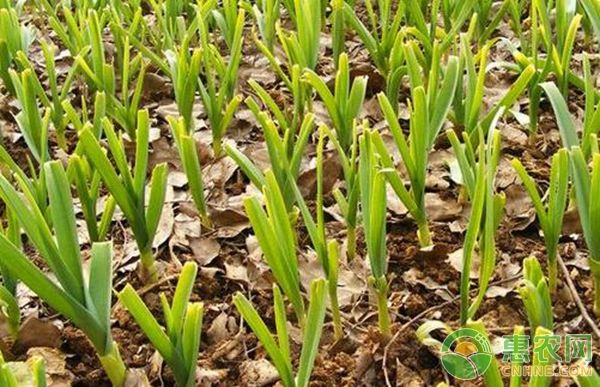
Garlic-cooled environments can grow at 5-26°c. Especially during the four-to-five leaves of garlic, when it is the most resilient and the most appropriate winter spring. Garlic is wet and afraid of drying up, and it begins to divide its buds and sprouts in longer than 13 hours of sun and higher temperatures, and is only suitable for the growth of its leaves in a cold and short-sudden environment。
We'll plant it in time
Garlic cultivation is desirable, not later than mid-october, from early september until early october, and late august. Early seeding can lead to freezing and late seeding can lead to lower yields and quality。
The seeding method of the cave is 2-3 petals per lavender, 17 x 20 cm, with a depth of 0. 02-0. 3 m, followed by a layer of grass-wood ash. The average acre seeding is 120-140 kg。
Controlling water irrigation during seedlings ensures full seedlings if the covering membrane is watered only once; during seedlings they should be regularly checked to make the membranes available in a timely manner. If the application of base fertilizers is insufficient, a one-month period after the seedling is produced should be followed up with the seedling fertilizer, which is generally not used during the period of the seedling。
Freezing water must be applied before the soil is frozen, and if the membrane is not covered, soil temperatures need to be maintained before winter, such as covered grass, to make it safe。
Spring management
In the spring, the garlic cast last fall should be removed in time after the soil has been unfrozen and the pine fields must be ploughed to increase the temperature on the ground. When the weather is clearer, water must be poured back in time. The early application of base fertilizers should be combined with the recovery of water for fertilizer, usually urea of around 20 kg per acre。
As the garlic enters the lumbering period, the demand for water fattening increases, and when the garlic starts pumping, it should be sprayed up to 600 times as much as 2116 (leaved) liquids, and combined with watering, to recover the more nitrogen-bearing “moisture fertilizers” at a time, with compound fertilizer of about 20-25 kg per acre。
Fertilizer management
1. Base fertilizer application
Organic fertilizers should prevail and be applied in conjunction with microbiological agents. The common use of organic fertilizers for animal excreta, composting, pie fat, etc., combined with microbicide applications can promote each other and effectively improve the resilience of garlic to pests and diseases. Both fertilizers should be applied in sufficient quantities to affect later winter and growth。
2. Fertilizing
It can be divided into the pursuit of fat by winter, the recovery of fat by youth, the long-term pursuit of fat by garlic and the long-term recovery by garlic. Nitrogen fertilizer is generally used and the potassium nitrogen phosphorus and the remaining trace elements are also applied in conjunction。
The pursuit of phosphorus fertilizer and potassium fertilizer enhance the balanced absorption of nitrogen fertilizer, promote the growth and development of garlic and increase the production of garlic and garlic. General nitrogen, phosphorus and potassium fertilizer are applied at a ratio of 2:1 or can be applied to compound fertilizers. It can prevent the premature decay of late-stage garlic leaves, promote the transport of leaf nutrients to spas and increase the production of garlic and garlic。
3. Following fat before winter
Impact: to give them normal growth and breed。
Methods: common application of manure, compost, dirt manure or cow manure can ensure the safe passage of garlic through the winter and the growth of the coming year。
4. Recovery of fat
Time: the following spring when the average weather temperature reaches 7 degrees。
Method: around 1,300 kg of organic fertilizer per acre or around 15 kg of nitrogen. If seedling and winterization have been applied, fat can no longer be pursued。
5. Long-term pursuit of fat
Time: garlic began to divide, before the titanium. Because the garlic is growing and the roots are growing fast, and the demand for nutrients is high. In general, compound fertilizer, potassium fertilizer etc. Are applied。
6. Long-term pursuit of fat by garlic
Fertilizers: during this period, the application of phosphorus and potassium fertilizer was mainly based on rapid nitrogen fertilizer。
It's a common way to catch fat
It is generally applied by stripping, watering or burial. When fertilizer is applied, you can open a ditch and slit it into strips; when fertilizer is applied, it is generally used for fertilizing or lavendering, then watering the soil, or with water. Microbacterial agents should be applied, which should be watered up close to the shallow burial of the roots。
So that's what we've been working on. If you wish to gain more knowledge of agricultural technology, please pay attention to the hye farmer school