As a result of the long-term commissioning of hydroelectric installations and on-site controls for work reasons, i found that a number of electricians, in order to simplify the connection and save the cost of spare parts, chose to drive the water pump directly with solid-state relays in order to build the pressure tank automatic water supply system, instead of the traditional communication contacts. The apparent simplicity of the connection and the economy of the installation are significant security hazards and the main cause of high frequency malfunctions on the ground。
The day before yesterday, when i tested the water supply at the site, i personally stepped on a pit: the 3kw single-phase 220v pump at the site, accompanied by a regular pressure tank stabilization system, and a programme of direct push of solid relays. The equipment was debugged for the first time to be all normal, and the self-activated, stable function was sensitive and there were no anomalies. Within a few hours of continuous operation, solid relays have severe heat, after half an hour of sudden short-circuiting, completely jammed to death, the control system is completely out of effect, the water pump continues to operate without interruption, pressure cans continue to increase, pressure values continue to soar, and some directly burst pressure cans are at risk, causing equipment to end up and safety accidents。
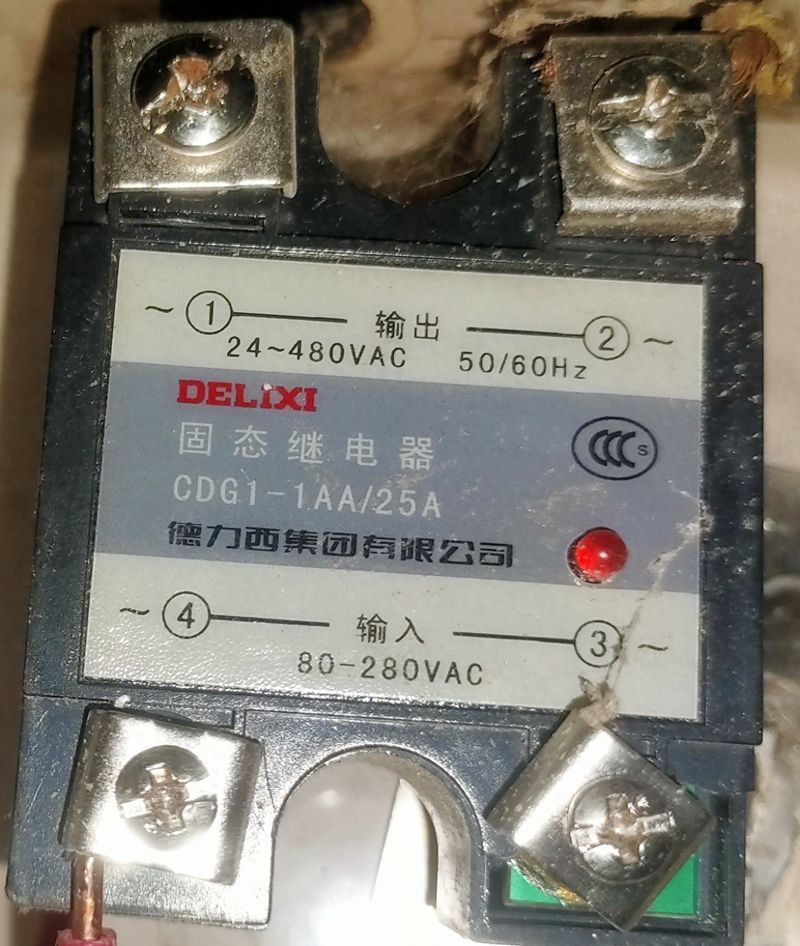
Field solid state relays
This solid relay was used at the time, and today, in connection with this case of site failure, i have made clear the error in the use of the vast majority of the solid relays that were easily stepped on by electricians, whether small-scale domestic water supply or temporary water supply at the site, and have finished the dry work and completely avoided similar failures and security risks。
Many start-up electricians and even some of their teachers suffer from a general illness: they look only at rated currents of equipment, ignore differences in load properties and use experience to select types of connections。
Regular 3kw/220v submersible pumps, self-sucking pumps, rated working currents marked on the aeroplanes, basically between 13a-15a. In many of the candidate models, solid-state relays with specifications of 25a and 40a are selected directly, and it is felt that the amount of residual power is doubled to meet the operational needs of the equipment and that the direct use is absolutely secure。
This is a clear operational error zone: water pumps are sensory loads, and the working principles of pure electrical resistance loads such as heating tubes are completely different from current characteristics, and can never be universal。
Heating equipment, such as heating tubes, heaters, etc., is a standard pure electrical resistance load. When the equipment is running, the current output is smooth, without an instant shock, without an arc, and the condition is stable and not volatile. This load mix of solid-state relays is directly driven and highly adaptable, not only by simple connections and low failure rates, but also by precision temperature control, which is a generally sound industry option. However, sensor loads such as pumps, wind and electric machines have different characteristics. The moment when the electric power is activated creates a shock surge of 5-7 times the rated current, in which large currents flush directly and strike controlled silicon elements inside solid relays. Even if there is no problem with initial electrical access, short-term testing, internal chips and components will continue to age, deplete and have a significant reduction in their useful life, with the possibility of piercing, short-circuiting or carding at any time。
The most dangerous consequence of damage to solid-state relays is total outage and failure to cut power. In particular, pressure tank automatic water supply systems, the core logic of the whole set of equipment is to use pressure switches to detect internal pressure in the tank and to automatically control the pump to release steady pressure. Once solid-state relays break through the card, whether or not the pressure switch is broken and the control signal is closed, the pumps continue to operate emptyly and without interruption. The water pressure in the tank is soared without ceilings, well above the rated load range of the equipment, the pressure tank safety valves do not allow for rapid discharge, and are highly vulnerable to tank drums, leaks of interfaces, bursting of the tank, direct extinction in serious cases, and even explosive human security incidents. So can you achieve a direct pump by increasing the specifications of the solid state relays and choosing a super current type
Solid-state relays are not recommended for long-term use when combined with many years of on-site physical experience, even with magnification of specifications and fittings。
I did an on-site emergency test, using super-flow solid-state relays with resistance absorbing modules, which did offset some of the start-up surges and did not fail to operate temporarily for short periods of time. The pressure tank water supply system, however, is high-frequency outages, with dozens of outages in daily use, constant current shocks, repeated outages, long-term wear and tear for large-scale solid-state relays, with subsequent failure rates much higher than those of the traditional contact point programme and no stability beyond engineering standards。
The correct position should be that the solid-state relays are responsible for only small signal control, connecting/disconnecting the contact point wires; the main current, breakout of the main circuit of the pumps, all of which are carried by the contact point。
Communication contacts are themselves designed for frequent shutdowns of sensory loads such as electrics and pumps, with self-embracing, arc-resistant, heat-resistant properties, specially designed to respond to the electric power surge, durability, stability and safety, which cannot be replaced by solid-state relays。
I've prepared a set of functional universal rules that can be used directly by new hands and hands:
1. Pure electrical resistance load (heating tubes, heaters, drying equipment): directly driven by solid-state relays with simple, stable operation and high value。
2. Sensible power loads (pumps, electrics, wind machines): solid-state relays are strictly prohibited and must be fitted with communication contacts for transition。
3. Hf start-up equipment (pressure tank water supply, automatic cycle water pumps): prioritize the contact control programme to eliminate the risk of equipment being out of control and overpressure。
4. Large-size solid-state relays can only be used for temporary commissioning, emergency use and long-term access to power main circuits is prohibited。
The vast majority of electrical malfunctions at the site were not problems with the quality of the equipment itself, but rather a security hazard that was left behind by a step-by-step exercise that was carried out with economy, spare parts and experience. Regulating the connection and selecting the type of work is central to the long-term stable operation of the equipment。
Have you ever encountered solid relays in the field of physical exercise, uncontrollable pumps and burning? The comment section is welcome to share its experiences, avoid pits and share experiences
# electrician # water pump maintenance # solid state relays # hydropower operation # industrial maintenance # electrical pit shelter # pressure tank water supply