
I. Nursery rituals
Nurse's appearance, marks
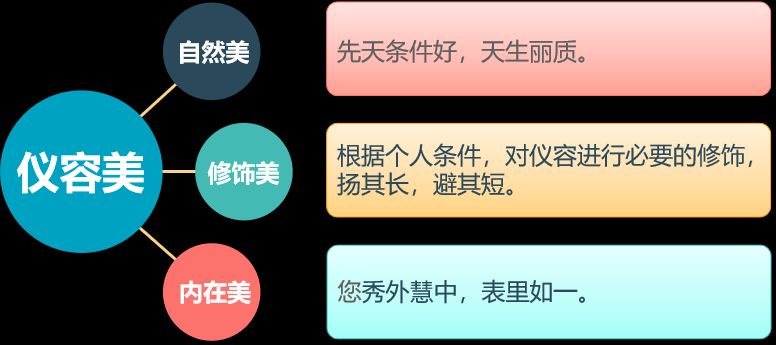
1. Basic principles of beauty:
1. The principle of proportionality
2. The principle of unity of conduct and quality
3. The principle of coherence
4. The principle of individuality
2. Smile services for nurses:
1. A good image of a nurse is positive for herself and for the patient; the right vision and smile are more important elements of the medical staff's work。
2. The smile of the nursing profession is important, and health workers face patients struggling with the disease every day, and nurses should know more about the role that smiles can play in patients than in other professions。
3. Smile service is a sincere service to take faith in the patient, so smile is not only polite, but also an important form of work. A smile can draw closer to the patient。
The nurse's dress
Nurses' clothing:
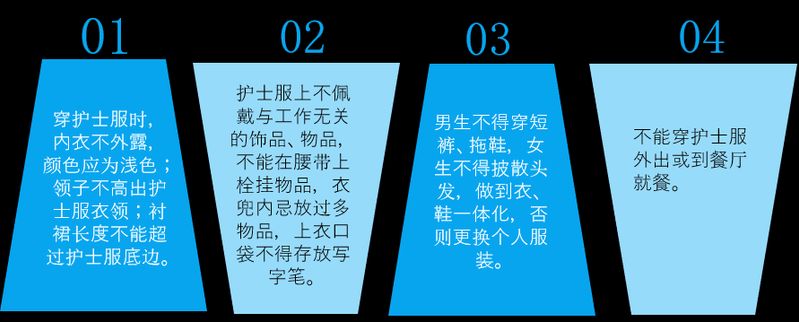
Nurses' clothing should be fit, clean, flat and full。
2. The functional unit nurse is dressed in a clean and in a manner that does not unduly expose his clothes and, in principle, does not wear sleeveless, super-short skirts and slippers; men cannot wear round-strike t-shirts, shorts (seven minutes) and slippers to work。

Winter long, summer short
Nurse working style:
1. The colour of the hair is suitable for black or brown, and the short hair cannot be dyed too short to cross the shoulder. Liu hai is not able to overwhelm his eyebrow, he has long hair with his head on, he wears black hair cards and he wears no excrement。
2. The general ward is required to wear a nurse's hat, which is flat, clean and non-fruitful, and is fixed with a white hairpin, and, in the case of special care operations, is required to wear a circular hat. (as soon as it's changed, remove the hat of a nurse)。
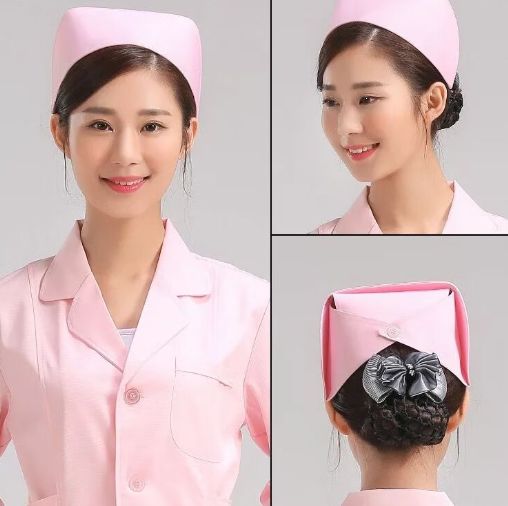
Note: the broken hair in the picture is still to be collected...
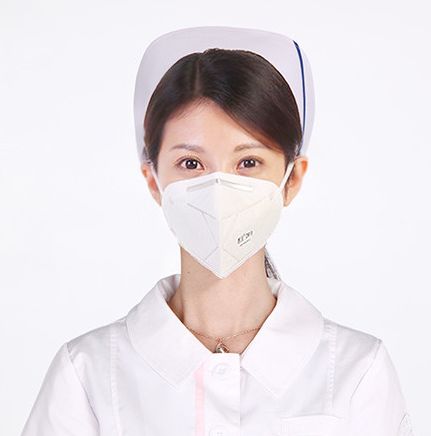
The nurse's mask requires:
Maintaining a clean beauty
2. Do not reveal nostrils
3. Not to hang on to the chest when not used
3. Requirements for nurses'shoes:
1. Simplicity of style, appropriate for helix or shallow slope and soft base
The colour of the shoes should be white or milky
Be careful with the slippers and keep them comfortable and clean
Get the nurse's makeup
1. Active health:
Light makeup is a direct expression of self-esteem and love for life. It creates and taps into its charms and reflects positive and healthy life attitudes。
2. Vibrant:
The light make-up of a caregiver can both make her radiant and dynamic, and allow the patient to feel well from the bottom of her heart, awaken his pursuit of beauty and build confidence in overcoming disease and returning to society。
3. The taboo of nurse makeup:

Ii. Nursery manners
Basic gestures for nurses
Raise your right or left hand to a certain height, five fingers together, hand up, with the elbow as the axis, and reach your arm towards the target。
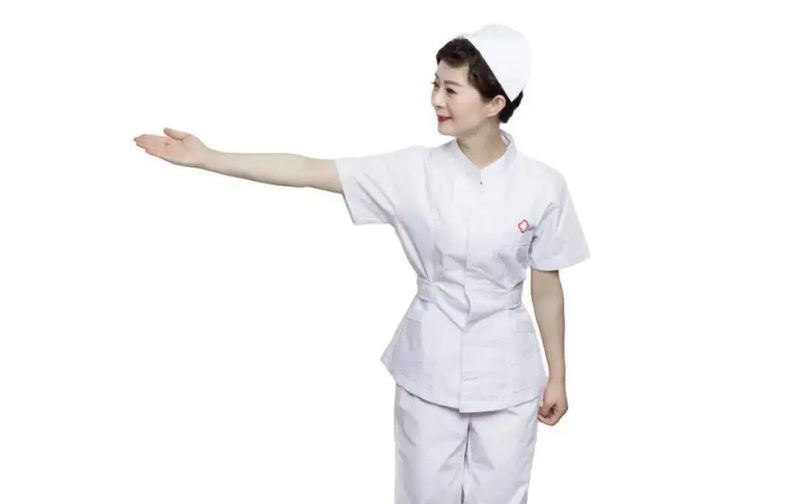
1. In situ direction: applicable to nursing stations or referral
2. Accompanying guides: applicable to accompanying patients or directing groups
3. Proximity: applicable to requesting a patient to sign or sit
Nurse's standing, sitting, crouching
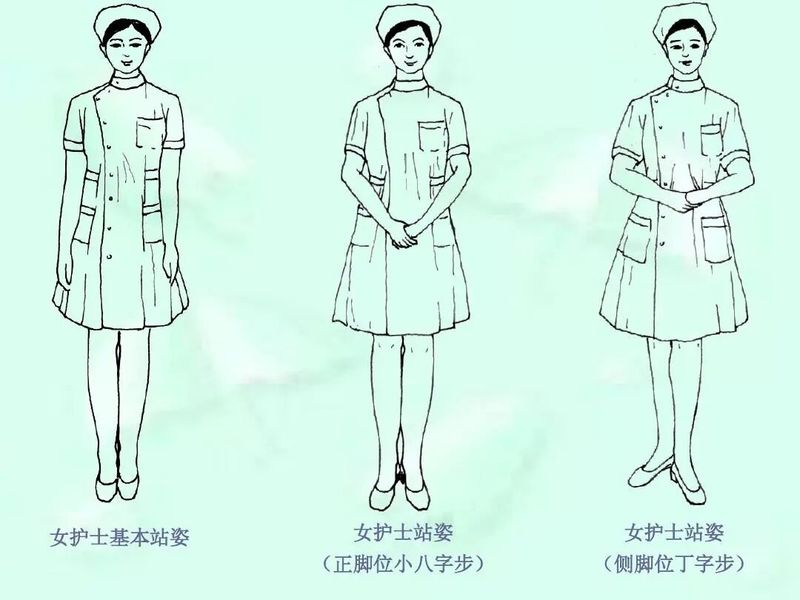
1. Standing taboos:
One, i'm not good enough
Two, two legs too big
3. Free movement
"4: free expression
Nurse sits:
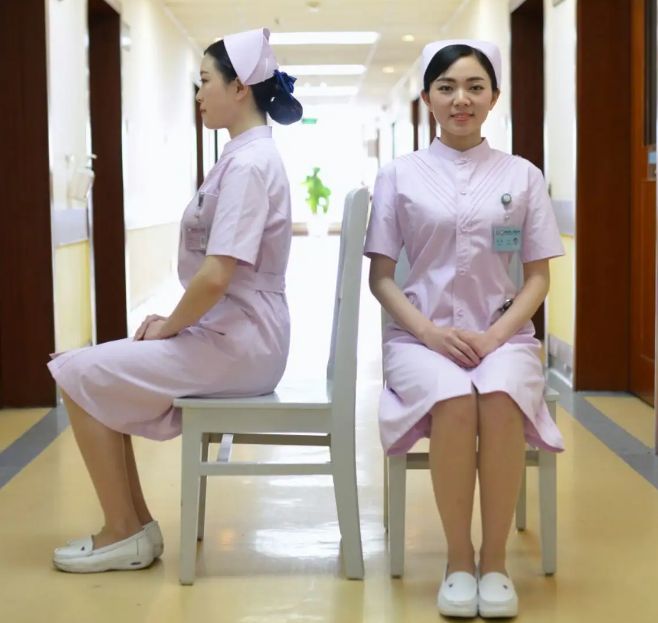
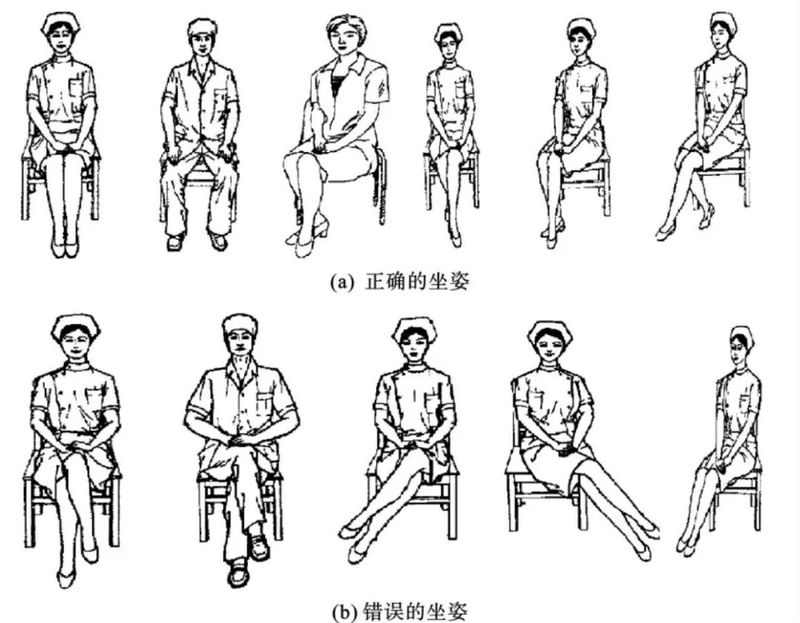
Take standing postures, move half-step behind the right foot, put one hand or two hands on a dress, sit in front of the chair by two thirds, with two eyes flat, with two eyes on the chest, with a 90° to the body and thigh, thigh and calve; put two feet on the ground, with a tip forward; put both hands down and fold them in the middle of the thigh。
Nurse's position:
The position is used to collect, help others or take care of themselves. Basic methods: one knee dot; two-legged main taboos: face-to-face, back-to-back, parallel forklift。
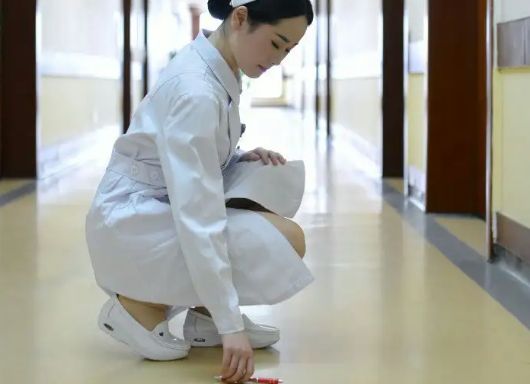
Nurse's posture and standard physical position
1. Nurse's posture:
On the basis of standing position, the toes are straight forward, with a close chest, two eyes flattened, two shoulder balances slightly rear, two arms moving or holding on to the chest, with a soft, fast, soft and dynamic foot。
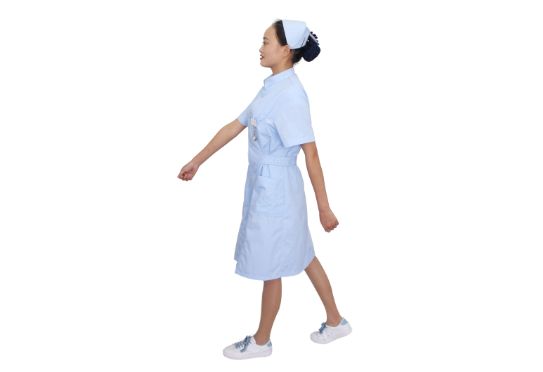
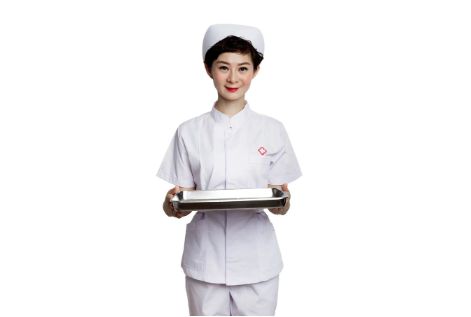
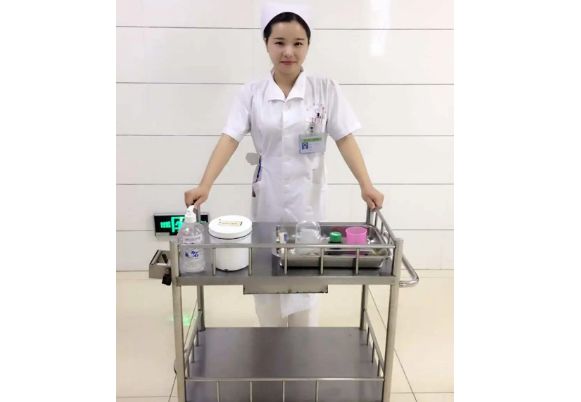
Nurse standard physical position
1. Hands on the plate, with an elbow of 90°, naturally close to the body, approximately 5 cm in front of the chest handle, with the shoulder side door open。
Put your hands up, lean forward, pull over in the room, open the door with your hands, then push the car into the room
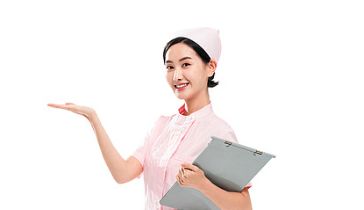
3. Hold folders or record books, left handheld at one third of the top of the side chest, with the right hand moving naturally or the lower right corner of the to beam。
Iii. Nursery protocol
The manner in which you talk at work
Use of polite and accurate language
2. Selection of appropriate conversational content
3. Using effective communication skills
Use polite and accurate language
1. Respect the patient and be mindful that the nurse's psychological appearance when speaking in the language and art is moderate, not exaggerated and intimacy, natural and steady
2. Language is clear, soft, language is precise and simple, grammar is correct and logical
3. Particular confidentiality shall be accorded to the patient's privacy, etc., depending on the patient's particular circumstances, or in a frank or euphemistic manner。
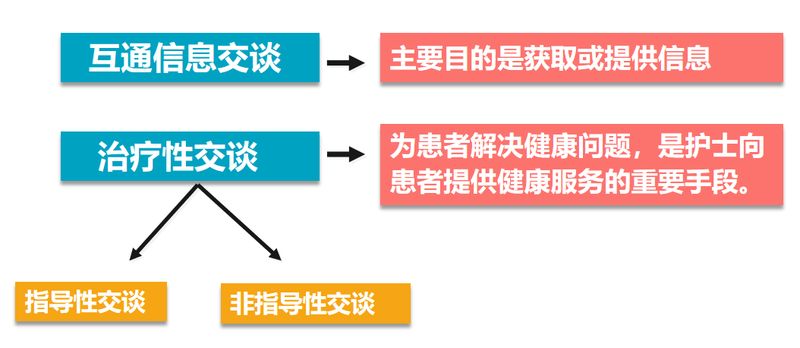
Nursing professional conversation
A sense of proportionality:
The nurse's psychological appearance during the conversation was modest, not exaggerated and intimacy, but natural and steady。
2. The talks focused on:
The need for disease awareness and knowledge varies according to age, cultural background and duration of illness. Nurses treat patients differently and in a more focused manner, without distinction。
3. Understanding patients ' psychology:
Nurses are required to understand the basic needs, special needs of the patients, to provide the necessary assistance and support to meet their needs。
4. Reflecting professionalism:
Increased information-sharing and therapeutic conversation, with minimum use of medical terminology in accessible languages。
Civilization service five
Iv. Presentation of number of number work
The ward nurse has to be eight one
A true smile, a loving name
A clean bed, a pot of fresh water
A drug education, first treatment
A patient introduction
A accurately regulated health assessment
Make new patients feel at home
1. Upon admission, the responsible nurse shall visit the patient at the first hour, arrange for the patient's food and clothing, notify the competent doctor as soon as possible of his arrival, make a presentation and the relevant examination on the day of admission in order to meet the needs of the patient's belonging。
2. In the patient's conversation, if the patient takes the seat, the nurse takes the seat; if the patient takes the seat, the nurse takes the seat, using essentially parallel views, which is more reflective of the nurse's affection and respect for each other。
3. Particular confidentiality shall be accorded to the patient's privacy, etc., depending on the patient's particular circumstances, or in a frank or euphemistic manner。
It's all about the needs of the patient
1. The responsible nurse shall not be asked at the nurse's station about his or her history, blood pressure and body。
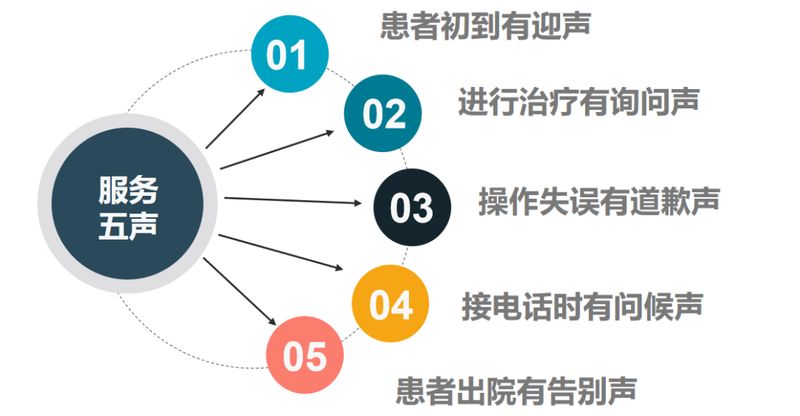
Patients are admitted to the hospital with a “popular voice”. When new patients are admitted to the ward, the nurse should stand up and greet them warmly。
3. Patients should be brought to the ward as soon as possible after processing at the nursing post。
The nurse is in charge
1. Non-deprivation:
Nurses should not seek excuses when the patient has doubts about the treatment or desires to know the condition。
2. Active reception:
As the first nurse to be asked by the patient, the patient should be treated with humanity and efforts should be made to inform the patient of the results。
3. Care of patients:
The primary idea of care is to take care of the patient in good faith and to focus on the patient。
Use polite and accurate language
Patient discharge protocol
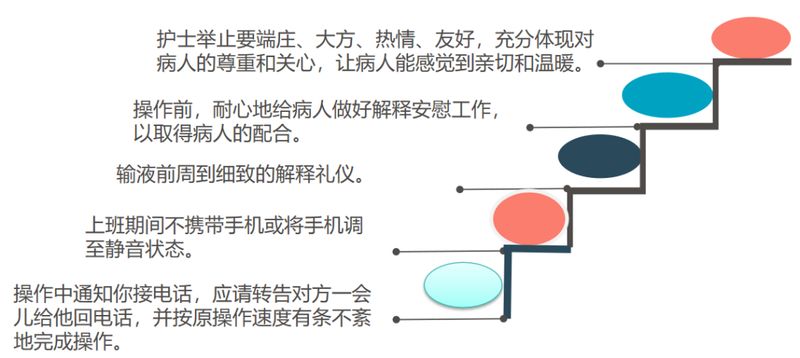
Nurses should assist in the discharge process and inform them about hygiene education and medication。
2. When necessary, a nurse may give written health guidance based on the condition。
3. Proactive provision of expert consultation time to patients, informing them that they are required to come to the hospital for regular review and, in case of ill health, to come to the hospital at any time or by telephone。
Leave is a continuation of our care for our patients. Expression of good wishes at farewell is a good time to enhance caring relations。