1 standard mechanical commons standard for the core professional course [name of course] mechanical commons [applicable professional] this course of course is the first theoretical and practical integration project in the field of electromechanical applications in secondary vocational schools. Its tasks are: to equip students with the basic skills of mechanics (mainly pliers) required to perform the specialized work in electromechanical applications, with the skills to read spare parts and general assembly drawings, and with the corresponding knowledge of theoretical mechanics; to acquire a sense of safety in production and environmental protection; to meet the requirements of the relevant modules of the level 5 criteria for vocational qualifications of “technology for integrated electromechanical applications”; and to lay the foundation for students to learn other types of work in the application of electromechanical applications, improve their overall quality, enhance their ability to adapt to occupational changes and continue their studies. 2. Design thinking 1, practice orientation, curriculum integration, theory and practice integration, and practice integration
Theory. 2. To promote research based on student development. 3. Employment-oriented social studies invite professional specialists to conduct job analyses of the applications of electromechanical technology, in order to determine the full range of competencies and the corresponding specializations of middle-level workers in this profession, and to organize courses by type of work by classifying specialized and integrated competencies. 4. The course consists of a series of typical work projects, topics, specific skills and combined competencies covered by the occupational activities of the mechanically operated primary workers. 5. Curriculum development, subjectization, projects and topics are based on the actual operation of the current enterprise's machinery (mainly torque work), taking into account the needs of enterprise development, taking into account the needs of the tasks performed, defining the content and requirements of the course, taking into account the requirements of the criteria for the qualification of primary workers, and investing in the vocational and integrated abilities of students. The recommended number of hours for this course is 72. 2. Course orientation
3. The teaching of the mission-led programme involves the development of the right professional ideas and concepts, the creation of a sense of safety, the development of innovative thinking skills and scientific methods; the gradual introduction of research studies and the mobilization of students in technical and theoretical studies. 2. 1 capacity structure objective 1, which enforces occupational safety regulations; 2, tools, tools, tools and equipment that use, maintain and maintain commonly used mechanical operations; 3, basic skills in wiring, cutting, sawing, drilling, piercing, piercing, piercing, twirling, wiring, wiring, dressing and cutting; 4, production of simple parts-plugging processes; 5, knowledge of common parts and general assembly maps; 6, assembly, maintenance and simple machinery; and 7, initial capabilities for research learning. 2. 2 knowledge structure objective 1, mastery of the projection base in mechanical mapping, drawing methods, standard and common-use works and their prescribed drawings, parts drawings, assembly drawings, etc
4, master basic knowledge of machinery, components, connections, mobility and simple mechanical principles; 3, basic knowledge of interchangeability and technical measurements; 4, initial knowledge of materials; 5, technical knowledge of safety. 3 the content of the course and the work assignment course requiring serial numbers and the design of the activity by mechanical mapping 1. Basic provisions for mechanical mapping and geometry (1) concept (2) basic provisions for geometry (3) 2 view and break plan (3) other distribution method 4. Representation of commonly used pieces (1) screw (2) key, sale of link returns (3) gears, rolling bearings (5). Geometric precision of parts (1) parts (2) parts (6). Assembly chart
5-physical-chemical performance (physico-chemical performance) (physical) (physical) (physical)
6. Move 3. Spiral movement 4. Mechanical lubrication and sealing (1) mechanical lubrication (2) seal 1 and internet search; 2. Library access 3, combination conveyance 4, measuring gear 40-series job assignment course and required activity design basic skills 1. Adapt to work profile, boundaries (1). Learning workplace regulations and safety civilization requirements; (2) ... Use, maintenance of pliers; (3) awareness of commonly used labour, quantities, blades; (4) knowledge sites and equipment: pistons workshops and their equipment. 2 sawning (1), reading drawings; (2), measuring lines; ... Sawing; (4), mass testing site preparation. 3. Slash (1). Read parts map; (2). Use lithium knife technology; (3). Lithium position and methodology; (4). Watch roughness, flatness, verticality, parallelity, size accuracy detection technology; (5). Slash
7. Percentage table, rough module usage and maintenance techniques. 4. Hole processing (1). Drill bed use and maintenance technology; (2). Drill, copper, dumpling technology; (3). Blade grinding drilling technology; (4). Sand turbine use technology; (5). Hole size, precision measurement technology. 5. Process screw (1), twirl, twirl technology; (2), cutting fluid selection technology; (3), twirl, twirl tool maintenance technology. (4) spline quality detection and matching techniques. 6. Integrated production (1), reading parts, and (2) mechanical product processing. Basic skills (7) packagings with simple machines (1), reading simple machines (2), processors reading simple parts (2), simple process documents and related technical standards (3), testing: a. Oil roadb. Connections to complete equipment c-table coating mass d. Air rotation test e. Precision 1. Dismantling, maintenance of tigers
8. Crackers; 2. In relation to the use of plier tools and equipment; 3. Bats, pipes, sheeting and deep sawing techniques. . . . . . . . . . . . . . . . . . . . . . . . . . . . . . . . . . . . . . . . . . . . . . . . . . . . . . . . . . . . . . . . . . . . . . . . . . . . . . . . . . . . . . . . . . . . . . . . . . . . . . . . . . . . . . . . . . . . . . . . . . . . . . . . . Total course hours of 2304, implementation of recommendation 4. 1, material development (1) must be based on this curriculum standard. The curriculum should fully reflect the concept of curriculum design based on student development, project mandate orientation and practice orientation. (2) strengthening of practical content through basic functional training, spare parts production, simple mechanical assembly and maintenance, with the systematic hands-on training project as a clear line, with the simpler and more systematic professional theory as a hidden thread, and the organization of the corresponding professional theoretical knowledge, as required, in the various work projects, the theoretical knowledge is more “what” and “how” than “why”. (3) teaching materials should reflect the student's main consciousness
9. The student-centred approach, based on student development, enables students to develop autonomously, conscientiously, faster and better. Word expression is based on the pupils ' ability to read and understand, and its content is well-written, visual, artistic and life-oriented, values the use of modern teaching methods, elaborates the learning process, leads students to research, develops research curricula to the extent possible, and invests in their motivation and motivation in learning. At the same time, the education of moral and entrepreneurship should be infiltrated by the training of cross-career students on comprehensive quality indicators, with a view to improving overall quality. (4) educational materials are developed in consultation with industries and enterprises, using new standards and norms to the extent possible, reflecting fully new technologies, equipment, materials, new knowledge, and keeping pace with business needs and trends. Extensive research is needed to create a “public dimension” between business needs, development objectives and the actual students, with attention to and follow-up on the coherence and consistency of curricula and the operationalization of the design of activities. I'm sorry
10, 5) in the preparation of teaching materials, learning objectives, work assignments, work preparation, operational steps (including activity orientation), quality testing (including self-measurement) and special tips (points of attention), knowledge palaces (doctrinography), small encyclopedia (extension of knowledge), experience activities (including classroom or after-school exercises, exploration, etc.) and, at the beginning of each project, generally a text that stimulates, attracts students to study this part of the content, and at the end, the results of the project are evaluated, the outcomes are summarized, etc. 4. 2. Teaching advice (1) teachers shall study students in depth, in a variety of ways, to stimulate them to study technical theory and constantly encourage them to overcome themselves and to transcend themselves; to promote learning based on the development of their professional abilities, the use of project-based teaching and the application of individual appraisals; to promote research, cooperative learning, the creation of job scenarios, the use of modern teaching tools and practical teaching aids, teaching aids, and the organization of study competitions to stimulate students
Interest in learning; guidance on learning methods to enable students to learn. (2) teachers shall organize and organize their teaching activities on the basis of the typical products of the work assignment. Teachers are better equipped to teach theory and practice, organize on-site teaching, interact with teachers and students, guide learners to complete the project and integrate knowledge, skills and professional ethics and emotional attitudes. Teachers need to be disciplined and theoretically sound and mentored. Teachers organize and lead students in research studies. Teachers should prepare project mission letters in accordance with the project's learning objectives. The terms of reference of the project should specify the content of the instruction (or demonstration) given by the teacher; clarify the requirements of the learner's pre-learning; propose the overall organization of the project and the timing, content, etc. Of the training of the subjects. The requirements for grouping and group discussion (or operation) should also be clearly defined when learning in group form. (3) classrooms integrated with practical training rooms, required
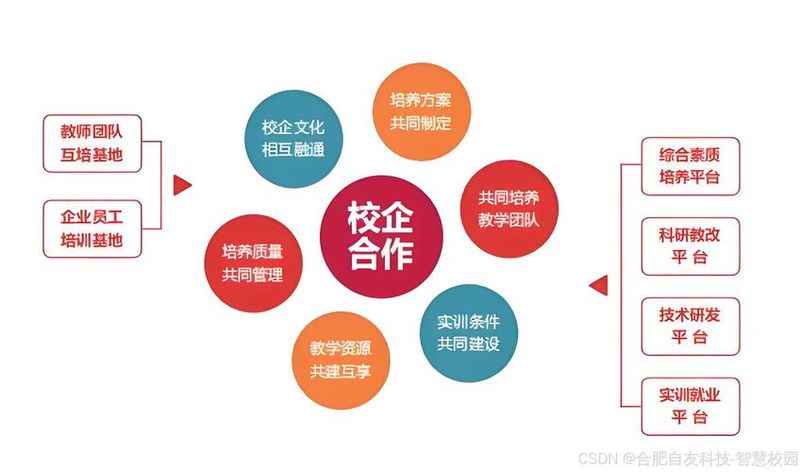
12. The equipment and conditions required in the curriculum standards and sufficient computers for students to learn online. (4) in the teaching of project i, students are organized to train in electro-mechanical enterprises and technical staff of enterprises are invited to give presentations and lectures. Teachers are required to maintain good contact with enterprises and follow the trends of new technologies, techniques, equipment and materials in this field of specialization, so as to bring training programmes and content closer to the production site. The theoretical content of mechanical mapping, mechanical infrastructure, metal materials, etc., is taught throughout the projects and topics. It is necessary to guide students in the process of training their basic skills. (b) increasing the level of operational training, combining the requirements of the vocational skills examination, in an effort to improve the vocational skills of students to the appropriate level of national vocational standards for the respective categories of work. (5) strengthen the development and utilization of course resources and establish a multimedia course resource base to work towards the sharing of multimedia resources. In addition to the usual resources for the development of courses, it is important to keep track of course implementation in time
13. Lessons learned, careful reflection of the sense of hindsight, “curricular change”, make curriculum reform a permanent theme in teaching. 3 teaching evaluation (1), change evaluation tools and methods. It is recommended that requests be made for a combination of teacher and learner evaluations, process and outcome evaluations, in-curricular evaluations and off-the-curricular evaluations, theoretical and practice evaluations, and in-school and out-of-school evaluations, with as clear a behavioural verb as possible to describe the criteria for the examination of the course's knowledge, skills and professional ethics and emotional attitudes. The process is valued and evaluated on the basis of the quality of the project actually completed by the student, with the result being a stage examination and a vocational skills assessment for the fifth grade. (2) the examination of students ' ability to analyse problems and solve practical problems should be focused, and students who are innovative in learning and application should be specifically encouraged to achieve results if they are inventive in the relevant field or are awarded an award for participation in the relevant competition. (3) the assessment of students ' civilization, safe construction, cooperative capacity and environmental awareness should be strengthened. (4) a student who has acquired vocational skills and relevant theoretical knowledge of the course during a holiday or other time, or who has taken part in part-time work, shall be exempted from the course if his or her achievement is above satisfactory and shall receive the corresponding credits. 4 development and utilization of course resources (1) development of a multi-media teaching resource bank and multimedia teaching packages suitable for teaching purposes. (2) make full use of the resources of the co-operative enterprise to provide students with a stage of practical training so that they can sharpen themselves in the real environment and improve their vocational integration. (3) full use of information technology open hands-on training centres to combine teaching and training to meet comprehensive student competency development