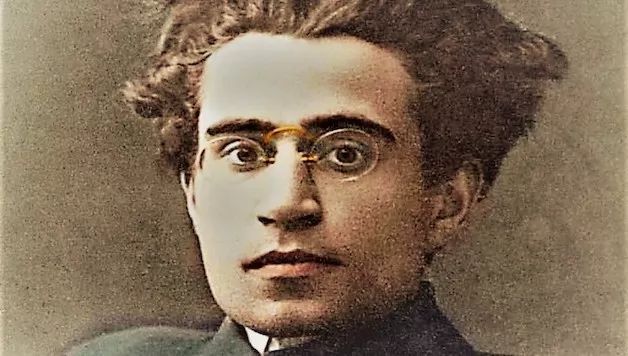
AntoNio gramsci
What is the “maximum” threshold for accepting the term “intellectual”? Can we find a uniform standard for the equitable description of all the different activities of intellectuals, while at the same time being fundamentally distinct from those of other social groups? The most common methodological error is the search for criteria for differentiation in the nature of intellectual activity rather than in the overall relationship system, whereby these activities (and groups of intellectuals embodying them) have a place in the overall social relationship. This article is taken from grange's prison book, translated by tsao lei, kang li, and zhang yi。
Is the intellectual community an autonomous and independent social group, or does every social group have its own special and specialized intellectual category? This is not a simple question. For so far, the real historical process of shaping different intellectual categories has taken different forms。
Two of these forms are essential:
1. Each social group, which is derived from the basic functional areas of the economy and society, has at the same time organically created one or more intellectual classes, which give homogeneity and recognition to their own functions, not only in the economic sphere but also in the social and political sphere. Capitalist entrepreneurs work with themselves to create industrial technicians, political and economic experts, new cultures and organizers of new legal systems. It should be noted that entrepreneurs themselves represent higher-level social products characterized by some kind of managerial and technical (i. E. Intellectual) competence: he must have some technical capacity, not only in his limited areas of activity and development, but also in other areas at least those closest to economic production. He must be the organizer of the crowd; he must also be the investor who organizes his business, the employer of his products and others who give him “trust”。
If not all entrepreneurs, the elite, at least among them, must have the capacity to organize society as a whole, including all complex service institutions, to the extent that government institutions are capable, because it is necessary to create conditions that are most conducive to the expansion of their class; or at least they must have the ability to select agents (special employees) so that they can be entrusted with the organization of relations outside the business in general. As can be seen, “organic” intellectuals, created by each new class together and further refined in their own development, are mostly “professionals” who are part of the basic activities of the new society that are visible to the new class。
Even the feudal lords have a special technical capability, namely military capability, which began at a time when the nobility lost its monopoly on technology-military capability. The formation of the intellectual community in the feudal society and in the classical society before it needs to be studied separately: the ways in which they are formed and developed must be specifically studied. It should therefore be noted that, despite their essential role in the production world, farmers have not created their own “organic” intellectual community; nor have they “assimilated” any “traditional” intellectual class, despite the fact that many of their intellectuals have been absorbed by other social groups and that a large proportion of traditional knowledge is of peasant origin。
However, every “important” social group that has moved from the past economic structure to the historical stage and is an expression of its development finds (at least for the entire history to date) a long-standing category of intellectuals that does seem to represent a historical continuum that has not even been interrupted by the most complex and drastic political and social changes。
The most typical of these intellectual categories is the clergy class, which has long monopolized many important public services (through the entire historical period with some of that monopolistic character): religious ideology, then philosophy and science, as well as schools, education, ethics, justice, charity, social assistance, etc. The clergy can be regarded as intellectuals who are organically integrated with the land-holders. It has the same legal status as a nobility, may exercise title to feudal land and may apply state privileges linked to assets. However, the exercise of the monopoly held by priests in the sphere of upper-rise construction is not uncontroversial, nor is it unlimited, so that the other categories have been created in different forms (specifically investigated), and it is the growing centralization of the monarchy that has contributed to their expansion. In this way, we see the formation of the toga nobility with its own privileges, the formation of the hierarchy of administration, and the formation of scientists, theorists, philosophers of the non-religious class, etc。
These different traditional knowledge molecules feel their unbroken historical continuity and their own identity through a “council spirit” and therefore feel autonomous and independent of the dominant social groups. Such self-evaluation would have no ideological or political implications and would have far-reaching implications. All mind-based philosophy is very easily linked to the position of the intellectual social group and is seen as an expression of the social utopia, which intellectuals see themselves as “independent”, autonomous and self-contained, etc。
It should be noted, however, that if the pope and the leadership of the church believe that they are more closely connected to christ and the apostles than to the senators of anelli and benni, so will qintiri and crozi, for example, who feels that he is particularly connected to aristotle and plato, but on the other hand, he does not conceal his ties to the senators of anelli and beni, and it is in this context that we see the most salient features of the crozi philosophy。
What is the “maximum” threshold for accepting the term “intellectual”? Can we find a uniform standard for the equitable description of all the different activities of intellectuals, while at the same time being fundamentally distinct from those of other social groups? In my view, the most common methodological error is the search for criteria of distinction in the nature of intellectual activity, rather than in the overall relationship system, whereby these activities (and the intellectual groups that embody them) have a place in the overall social relationship. Indeed, the distinguishing feature of workers or the proletariat, for example, is not that they are engaged in manual or instrumental labour, but rather that he is engaged in it under certain conditions and in a particular social relationship (not taking into account the statement that pure physical labour does not exist, even taylor's so-called “incorporated ape” is a metaphor used to indicate the limits of one aspect: in any manual work, even in the lowest and most mechanical work, there are minimum technical requirements, i. E. Minimum creative intellectual activity. We have seen that an entrepreneur, by virtue of his own functions, must have a certain amount of intelligence, even though his role in society is not determined by those capacities, but depends on the overall social relations that clearly indicate his position within the enterprise。
Thus, we can say that all people are intellectuals, but not all have intellectual functions in society。
When we distinguish between intellectuals and non-intellectuals, what is meant is simply the direct social function of the profession of intellectuals, i. E. Whether their particular professional activity tends to be intellectual or muscular-neurological. This means that while we can speak of intellectuals, we cannot speak of non-intellectuals, because they do not exist. Even the relationship between intellectual-mental work and muscle-neurological work is not unchanged, so there is a degree of variation in specific intellectual activity. There is no human activity that can exclude all forms of intellectual participation: the person who is the manufacturer (homo faber) cannot be separated from the person who is the thinker (homosapiens). In the end, each individual carries out some form of intellectual activity outside his or her professional activity, that is to say, he is a “philosophist”, an artist and a man of taste who possesses a special world view, a conscious moral act that helps to support or transform a world view, i. E., to help shape new ways of thinking。
Therefore, the problem of creating a new intellectual class is a critical interpretation of the intellectual activity of each individual with a certain degree of development, making intellectual activity and muscle - the relationship between neuro-labour has become a new equilibrium and ensures that muscle-neuro-labour itself (as long as it is an element of the general practice, in the world of constantly renewing material goods and society) forms the basis of a new whole-world view. Traditional and mediocre types of intellectuals are given by humans, philosophers and artists. As a result, journalists who claim to be civilists, philosophers and artists also see themselves as “real” intellectuals. In modern societies, technological education, which is closely linked to industrial labour (even the most primitive and unqualified industrial labour), must form the basis of new intellectuals。
On that basis, the weekly newspaper of the new order was committed to developing certain forms of neo-sensorism and to defining their new concepts, but that was not the reason for their success, since such a concept was consistent with potential aspirations and with the development of real forms of life. The way to become a new intellectual no longer depends on rhetoric, but on the external and temporary dynamics of emotion and passion, and active participation in real life is not just an eloquent one, but rather a constructionist, organizer and “continuous lobbyist” (which also goes beyond abstract mathematicalism); our ideas have gone from being a work-oriented technology to being a science-based, to being a humanitarian historical view, without which we would have remained “experts” rather than “leaders” (experts and politicians)。
This has historically led to the creation of a specific context for the implementation of intellectual functions. Their formation is linked to all social groups, particularly those that are important, and these are more broadly and complexly elaborated in their links to dominant social groups. One of the most important features of any group seeking domination is its struggle for assimilation and “ideological” conquest of traditional knowledge, which is faster and more effective as it succeeds in the construction of its organic intellectuals。
The importance of the functions and scope of the intellectuals of contemporary society is demonstrated by the large-scale development of educational activities and organizations in the broad sense of the society that began in the middle ages. Similar to attempts to deepen and expand the “intellectual” of each intellectual, attempts have been made to increase and diversify the diversity of professions. This is demonstrated by the existence of institutions at all levels of education and organizations that promote so-called “high culture” in all fields of science and technology。
Schools are a tool for training intellectuals at all levels. The complexity of intellectual functions in different countries can objectively be measured by the number and level of specialized schools: the wider the “areas” covered by education, the more “vertical” “levels” of schooling, the more complex the cultural community and the degree of civilization in a country. A point of comparison can be found in the field of industrial technology: the degree of industrialization of a country can be measured by the technical equipment of its machine manufacturing industry and by the more sophisticated instruments in its possession for manufacturing machines and other manufacturing tools, etc. Countries that manufacture instruments for scientific laboratories and have the best equipment for the production of instruments to be used as first-class instruments for detection can be described as the most technologically advanced industrial countries, highly civilized countries, etc. The same applies to the training of intellectuals and the schools established for that purpose; institutions with a high culture are similar. In this area, quantity and quality are inseparable. Expanding primary education to the extent possible and making every effort to increase the number of secondary education cannot be attuned to the requirements of high-tech-cultural specialization. Of course, providing the broadest basis for the selection and development of high-level intellectual professionals, i. E. A democratic structure that confers high-quality culture and cutting-edge technology, is not without disadvantages: the possibility of mass unemployment in the middle intellectual class is actually widespread in today's society。
It is noteworthy that the intellectual class in a particular reality is not created on the basis of abstract democracy, but rather to adapt to specific traditional historical processes. The traditionally “generated” classes of intellectuals have been formed, corresponding to those devoted to “reserve” intellectuals, i. E. The small- and medium-sized bourgeois class that owns land and some small and medium-sized urban bourgeois classes. The different distribution of schools (classical and professional) in the “economic” sphere and the different aspirations of these groups determine the creation of different sectors of intellectual specialization, or the form of production provided to them. Thus, in italy, the rural bourgeois class is dominated by public servants and professionals, while the urban bourgeois class produces industrial technicians. Thus, technical personnel are mainly in northern italy, while civil servants and professionals are in the south。
The relationship between the intellectuals and the productive world is not as direct as that with the major social groups, but is, to varying degrees, “mediated” by the structure of society as a whole and the architecture of the upper hierarchy, which is precisely the “civil servant” of the upper hierarchy. It is possible to measure the “organism” of the different intellectual classes and the extent of their relationship with the same major social group, and to establish a hierarchy of their functions and superstructures from top to bottom (from structural basis). For the time being, we can identify two “classes” of upper-level architecture: one that can be called “civil society”, that is, the sum of what is often called “private” organizations, and the other that is “political society” or “state”. These two classes are equivalent, on the one hand, to the “hegemonic” functions exercised by the ruling bloc through society and, on the other hand, to the “direct domination” or jurisdictional functions exercised through the state and the “judicial” government. These functions are organized and interrelated. The intellectuals are the “agents” of the ruling bloc, exercising the subordinate functions of social hegemony and political domination. These include:
The “spontaneous” acceptance given by the general public to the general direction of social life imposed by the dominant blocs was triggered by the “historical” prestige (and the resulting trust) enjoyed by the ruling class by virtue of its position and function in the production world。
“legally” imposed on groups that are neither active nor passive as “consents”. This institution was created for the sake of spontaneous consent, a society in crisis of jurisdiction and domination。
This approach to questions has resulted in a significant expansion of the intellectual concept, but it is also the only way to bring people closer to reality. It contradicts hierarchical stereotypes. The function of organizing social hegemony and state domination is, of course, the cause of a division of labour and, consequently, the hierarchy of the entire profession, some of which do not have guidance or organizational functions. For example, there is a range of manual and tool-based work (non-managerial, non-official and civil servants ' agents) in social and state leadership structures. Such a distinction was clearly necessary, just as other distinctions were necessary. Indeed, the distinction between intellectual activity must also be based on its intrinsic characteristics and on the representation of the class of true quality differences in extreme opposition. – at the highest levels are the creators of science, philosophy, art, etc., while at the lowest levels are the lowest “managers” and promoters of long-established, traditional, and increasingly accumulated intellectual wealth。
In modern societies, the realm of intellectuals so understood has expanded unprecedentedly. Most of the functions arise from a democratic-bureaucratic system, and their existence is not evidenced by the needs of productive societies, although it is demonstrated by the political needs of the dominant ruling groups. This leads to the concept of unproductive “workers” in loria (but who and what methods of production are unproductive?), which can partly be justified if we take into account the fact that these groups use their position to extract huge sums from national income. The formation of groups has led to individual standardization, both psychologically and in terms of individual capabilities, and has created the same phenomenon as other standardized groups: the necessary competition for organizations that defend their peers, unemployment, overproduction in schools, migration, etc。
I'm in prison
António grange
Zhao luang, kang li, zhang zhang zhen