The worst thing to do is not to do it, but to be blindly confident and self-righteous。
Many of the project losses were not a drawing problem, not an a-barrel price, but a technical guard that was free to weaken critical construction processes in order to pre-empt this indicator。
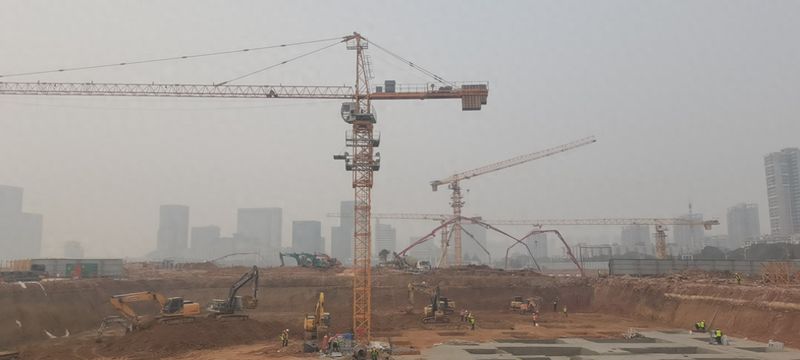
Today we share a case of a real base pit crash: the project proactively optimized the water-control programme, trying to save hundreds of thousands of dollars, and finally lost out of control on the ground, making a direct loss of 1. 41 million. This is the top grade of the annual reverse course。
I. The original design is as stable as tarzan
The site survey showed that the field was thick, groundwater was rich and permeable, and that there was an extremely high risk of a base pit being dug。
Based on geological conditions, the design complex produced a double-excavation high voltage shut-off programme。
It is clear to all who know about the base pits: double-swirling water-jet-resilver, closed, largely free of water surges, landslides, landslides and the most secure life-saving solution for the rich sands。
The only shortcomings were high construction costs and high investment in construction。
Ii. Project is blindly effective and significantly simplified
In order to complete the quarterly technical downscaling, the project technical team began to “calculating the results”:
Could it be simplified to have double-swirl spray material, too much work
Ultimately, the self-regulation programme is not designed for review, without expert justification and without formal change:
Remove a line of high-voltage voltage stakes from the outer side and replace them with: single-temperature + enhanced precipitation in the pit。
At the time, the whole crew thought they were making money:
A small row of stakes saves a large amount of machinery and materials; the opening of additional precipitation wells is extremely low-cost and can be a complete substitute for water containment。
All of us believe that the wave is a perfect technological innovation and that it will not be lost。
No one could have expected this: this self-absorptional optimization, which directly causes a fatal hazard to the base pit。
Three, dig or roll over! The ground is falling out of control
When the pits were dug, nightmares broke out。
The thickness and length of the single-temperature spray screen is sorely inadequate that it is unable to withstand the high water pressure of the sand layer and there is extensive water seepage in the gap between the pillars。
There is a serious problem with the continuous influx of sub-surface sands into the base pit:
The walls of the pits continue to flow with water, the base is turned to drums and the earth is emptied and disturbed。
The most deadly engineering error was thoroughly verified:
It's always water-rich sand
Inverted at the end of the project, replacing the water with precipitation, only the more sand is drawn and the more it is dug up, completely contradicting the underlying logic of the construction of the base pit。
There was an emergency stoppage and backfilling of the earth, or there would be a slide and a collapse of the base pit at any time and the consequences could not be envisaged。
Iv. Costs of remedies! Ended correct corrects 1. 14 million
When problems arise, there is no low-cost repair programme, which can only be remedied and reversed:
1. Full backfilling of the ground and stopping all excavations
2. External refilling of a full wave of high voltage water suppression curtains and restoration of original design standards
3. Base level silt, refilled, dryed and reinforced
4. Additional precipitation equipment, ramp reinforcement, manual bottling
Final accounting: this blind optimization is a net loss of 1. 41 million yuan, not only for a penny。
Simple disassembly loss:
Additional water stoppage costs of $0. 720 million, retrofitting of the base floor of $0. 380,000, and loss of spare time for the construction of the workshop machinery of $0. 31 million。
And the most firm saying: no loss, no loss
V. Depth rediscovery: 4 fatal efficiency errors that engineers must avoid
Ignoring geological risks and weakening critical life-saving processes
Double-drain water is a secure reserve for thick sand layers and high water pressure. It is a core life-saving process and cannot be reduced by private means。
The effect is to optimize redundancy and not cut off safety。
2 data only, not risk repatriation
The technicians were able to save only “how much less than a row of stakes” and completely ignore the daily cost of leaking, distilling, returning to work, and delays in working。
The cost of the site is always the most expensive。
3. Construction, regardless of license, no change, personal change
All technology optimization is not counted for internal self-assessment。
Programme adjustments without design confirmation, expert justification and formal change are irregular and risky, with all problems at their own expense and without audit recognition。
Empiricalism outweighs normative logic
Precipitation can be judged on the basis of construction experience as a substitute for water stoppage, contrary to the specifications for the construction of sand-bed base pits and typical technical self-confidence。
Blood and tear advice: real engineering works, never risk savings
18 years of practice summed up the truth:
The real effect is to stabilize quality and manage risk
Blinding programmes and the downfall of gambling are suicide effects。
In order to make a technical reduction, it is possible only to optimize redundant structures, optimize redundant processes and optimize inefficient processes。
The core structure, the base pits, the support system, the water protection against osmosis must not be allowed to weaken
This 1. 14 million pit, i hope all project managers, technicians, construction teams will never step on it again
#project works # base pit construction # project pit shelter # project management # project manager