1. What is a blue 4. 2-metre truck and what are its advantages
Blue 4. 2 m light card means a cargo truck with a blue licence plate (total mass not exceeding 4. 495 tons and car length not exceeding 6 m). With a c1 license to drive, and with fewer restrictions within the city than a big yellow truck, blue cards are able to drive directly into most of the non-core closed city streets, making them the most preferred truck for city-to-city distribution。
What is the rated load of the 6. 8-metre truck and the 9. 6-metre truck
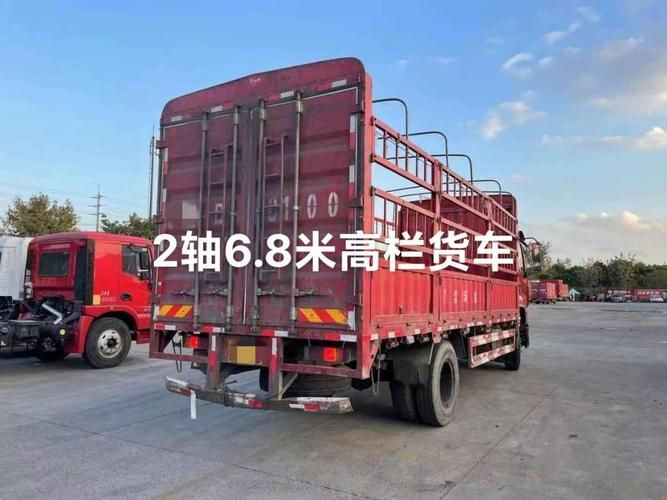
6. 8-metre medium cargo (usually double-axis) is rated as carrying between 8 and 10 tons; 9. 6-metre heavy cargo (e. G., the first four and the last four-axis) is rated as having a heavy load limit of about 15 to 18 tons (the total weight of the vehicle is limited to 31 tons), subject to national standards。
3. What is the difference between vans and pick-up trucks (microcards)
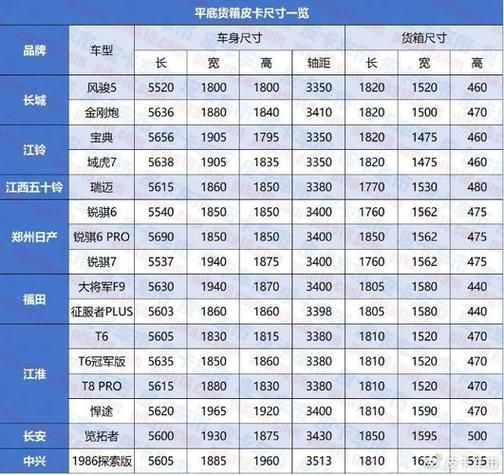
Bread vans (e. G., pentagon, iveko, etc.) integrated with the driver's room (often closed) are highly restricted and generally contained only in portable boxes within 2 - 2. 7 metres long and within 2. 5 - 6 cubic metres; small trucks (e. G., 3. 2 m microcards) are stand-alone compartments with open boards suitable for large and irregular construction materials, furniture, etc。
4. Why can the volume of the consignment not be equal to the volume of the van
Mathematically, long wide and high-phases receive nominal volume, but when the actual package is loaded, the “airload” occurs because of differences in the shape of the goods, the tightness of the boxes, the space occupied by the zazor belt and the gap in the cardboard code. For insurance purposes, it is proposed that the actual volume of the goods be pre-positioned to be within 80-85 per cent of the physical volume of the trunk。
5. What are the common categories for a 13-metre-and-a-half trailer
The 13-metre-and-a-half trailers are divided into flat-bed semi-mounted vehicles (fit for containers, heavy steel equipment), high-column semi-mounted vehicles (with fences, fit for fruit farming, large packages) and van semi-mounted vehicles (all enclosed, fit for dry line express delivery)。
6. Why is a 17. 5-metre trailer called “big car” and what is its width
The 17. 5-metre slab, usually a flat-bed vehicle with a width of 3 metres (manifestly wide (2. 4-2. 55 metres wide) and a maximum volume of approximately 130-150 cubic metres, is well suited for large volumes of bubbles (e. G. Mattresses, foam sheets, car-package) or ultra-wide machinery。
7. Was the truck restricted according to the gross weight of the vehicle or the weight of the cargo
National law enforcement overloads are accounted for in accordance with ** the total quantity of vehicles** (i. E. Gross weight of vehicles plus total weight of goods). For example, the total mass limit for two-axis light trucks is 4. 495 tons (including vehicles) and if the vehicle has reached 2. 5 tons of body weight, its actual net cargo load limit is only 1. 995 tons, which is illegal overload。
How can the transport of goods be dealt with by the “high railer” overbroad
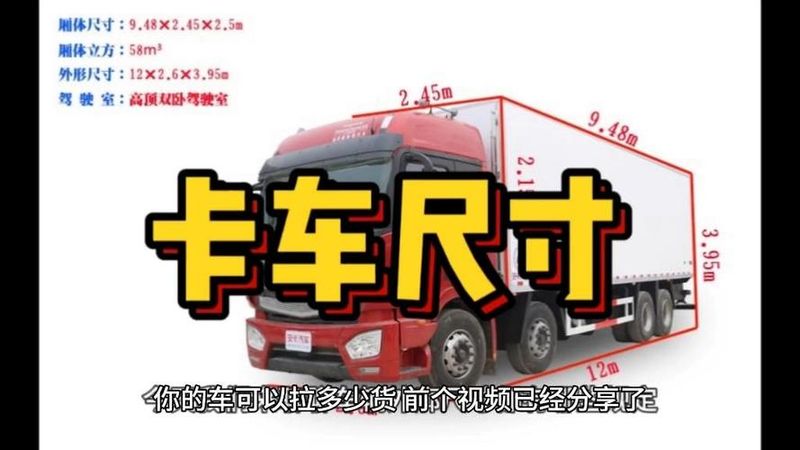
If the width of the goods exceeds the internal width limit of the truck (e. G., approximately 2. 4 metres inside the normal medium yellow-licensed vehicle), the heavy-coated and vans will not be able to comply with the vehicle because of the frame restrictions. This must be done by moving to a flat-bed trailer (the flat-bed car is not surrounded by two sides, the board is paved to allow for a slight expansion of ultra-widesible cargo and the use of a lasso security system)。
9. The urban high shelf is 2. 8 m high and can the 4. 2 m truck walk
The vast majority of the empty vans of 4. 2 metres are at physical heights of about 2. 85 metres - 3. 1 metres, and the weight-carrying decompression of tyres is also above 2. 8 metres,** and therefore cannot pass through the 2. 8-metre limit bridge fence**. Drivers must bypass conventional ground lanes in advance to avoid crashes with high limits。
10. How can trucks be supplied with the least cost-effective cargo
Goods should be shipped in full use of truck loads to match volume gold. In the case of pure bubbles (heavy weight), select high bars or bulk vans/board trailers; in the case of pure weights (heavy weight), the flatbed truck shall be carried high. As far as possible, the whole vehicle capacity and weight ratio is 80-90%, with the most cost-effective transport cost per ton or cubic。