Have you ever thought that the savings of a whole year and the “fresh beans” that have been saved over countless insomnia nights may come to nothing in the end? In underground city and the warrior (dnf), the discussion about the “graduation” of the old jar is in no small measure called a blue topic in the game. A can of 192 red beans, a single investment equals six months of effort; an opening may bring nothing but a “decomposition”. But: is it worth risking three years at a time? What choice can we make in the crossfire between red beans and luck

In game design and player games, we saw a seemingly absent saw war. On the one hand is the design of a “silent” probabilities design — a can, a 1% chance of perfect graduation. Sounds like a big prize, but there's a bigger chance in this 1%. On the other hand, the players who can't help but chop off their hands and cry out for their lives. It's a delicate game that makes people look at, but it's full of trouble。
And for those “kryptonians” who don't miss the red beans, maybe eight cans are just broken up, like a gambler, and they're just a daily sport of gambling. But what about ordinary players? For these 192 red beans, it may cost millions of livers and stay up late, even to the point where they have to struggle. The question arises: is it worth it? There's a truth hidden in math that might make you reconsider, but we'll put an ambush here。
When someone tanned on the public screen and opened up the old school, the curtain burst: part of it was envious: "man dies more than man, and goods throw!" and the other part is a joke: it's good to be old, not customised, but chicken。
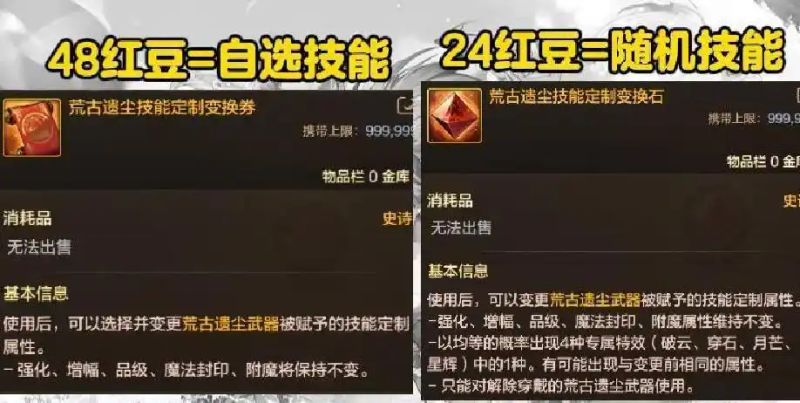
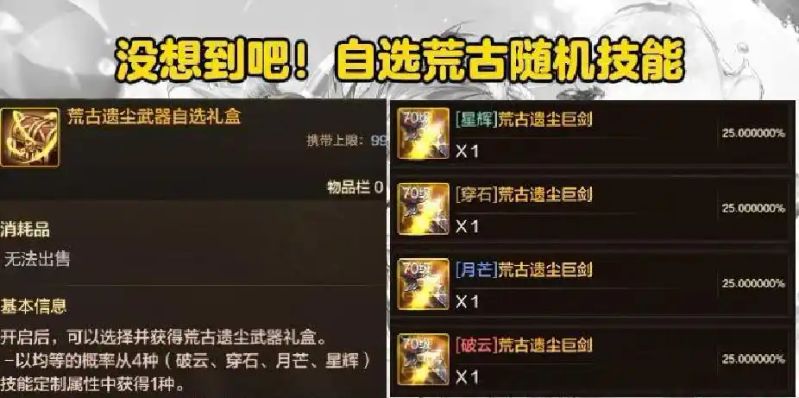
It's not over yet. As we all know, antiquated weapons have specialized skills based on occupation, such as the pursuit of the moon by the warriors, rather than the “twilight clouds”. So even if you use last century's luck to save eight cans, even if you open a perfect weapon and open up the skills of random distribution, it's likely you're still close. So what? The plan gave you a little bit of hope. Buy a skill coupon! It's a good price, 48 red beans, two and 96 red beans. Is this to tell you that even when a graduated weapon is driven by the sky, customizing is an essential procedure
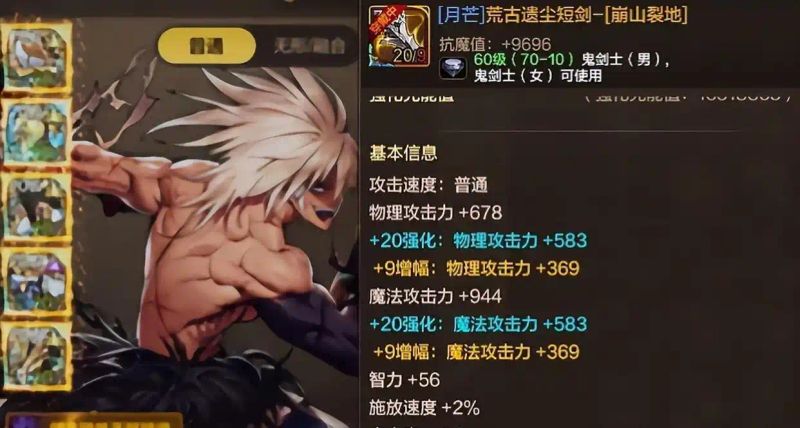
And when ordinary players run eight cans in a row, these “realtiest” experiences spread through the forums as if they were drawing an ambitious modern economic cartoon on the “worried wall” of the playing community. There was a lively discussion, and the team made it clear that some people were committed to the "unfinished promise of perfection" and others chose the tactical alternative: "forget it, just give it a hand, and then plan for free benefits!"
At one point, the controversy over the old cans gradually subsided. A number of players seem to have accepted the reality of this probabilities game, turning to routine tasks that are more directly effective. It was said, "in the old days, it's the life of the shaving, and the clearance is based on technology." it sounds like we're getting some sort of apparent calm. Wrong, all wrong。
In probabilistic terms, the confusion and lack of understanding by players of the behaviour of “cans” is essentially a category of “unreasonable gaming decisions”. Psychologically, there is a well-known theory of “sink costs” — people are often reluctant to stop at the previous stage and are willing to devote more money or time to it. That's why many players get caught in the cycle of dying when it comes to cans。
But you think only players are anxious? It's urgent to plan. For a “long-life net trip” like the dnf, the player's motivation, loss rate is the command stick of the plan. Players don't play cans, red beans are overstocked, and the pressure on the game economy is multiplying. If you want to keep the game alive, you'll have to test the psycho-acceptance range by controlling the replacement rights

And the story comes out here, and there's actually a huge reversal. Is it hard to graduate from an old can? Or do we not know the rules? Only a handful of players appear to be able to “go in” and graduate absolutely from the perfect weapon. This series of practices appears to be “random”, but it is true that behind it is a sophisticated calculation of the order of the game by the planners。
172 red beans and old cans. Is that fair or not? It's crazy to spend eight cans of probability on perfect weapons that are almost impossible, but the inner core that designs a “coin system” is to continue and stretch the game. Whether it's a rush to get through a high level of risk, or simply to get rid of the bad luck of gambling, the large-scale purchase of coupons is itself another consumption site in the game。

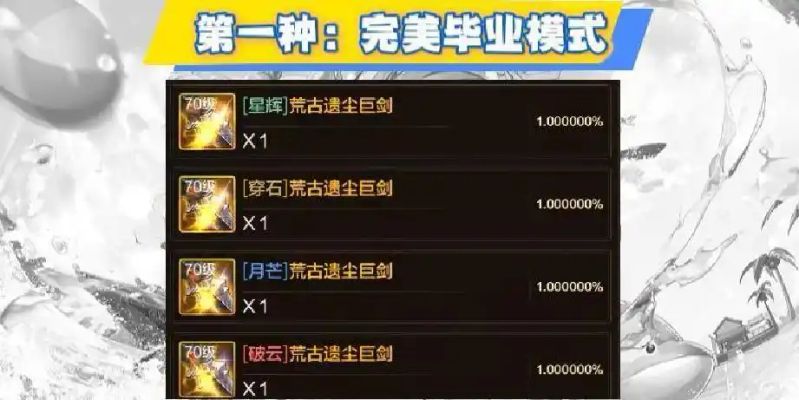
Even more interesting is the fact that, from the point of view of the career of the warriors, the sword is completely abandoned, leaving four categories of weapons with a potential for graduation of up to 16 per cent and eight cans folded, with a total success rate of 75. 21 per cent. Do you think the scheme has managed to make good use of gambling psychology in the "small probability push-off" scenario
Despite the fact that the data level seems to reveal some hope, is the question of its nature still difficult to understand? Several years of experience in the operation of games has taught old players that, as the pace of subsequent updates accelerates, even if they do not have the perfect weapons to graduate, the end result of planning is to “give” high-quality equipment directly to the event。

And that's why some of the players gave up their fight for the first game to finish. There is also a growing polarization among players in the community. White says, "i can't play, i can't move my liver, i can't do it, i can't open the can, i can't do it."
It's also a question of whether some sort of symbolic “leaving suit” has been misdirected into the vagaries of the probability of a player who's been under pressure to save her beans all year. The pursuit of scarce attributes through luck is no longer a preferred option, but a test of fishing and only a matter of patience and determination to make up for the rules of the system。
So can we be certain now? So-called strategic decision-making can be deconstructed into two questions: one is a deep understanding of probabilistic science, and the other is a “shockdown” of human mental limits. Planners and players have been stuck around each other's necks for years, which could be described as a complete madness. It goes on like this, and it's just -- either people become real, they don't expect a double fantasy to graduate, or they plan a game next time, and they're going to give the jars a big bowl。
This custom-made and ordinary red bean trade weight is also hypocritical when separated. Players must not miss the odds, but rather struggle to grow more utilitarian. In other words, there is an extremely precise algorithm for estimating the operating costs of instinctal pains in humans, which is behind the recasting rule。
If the red beans were still so difficult next year, would you choose to bite your teeth and wait for cool welfare, or bet on graduation or fall apart? Who's the final winner and is not worth the time to struggle with